
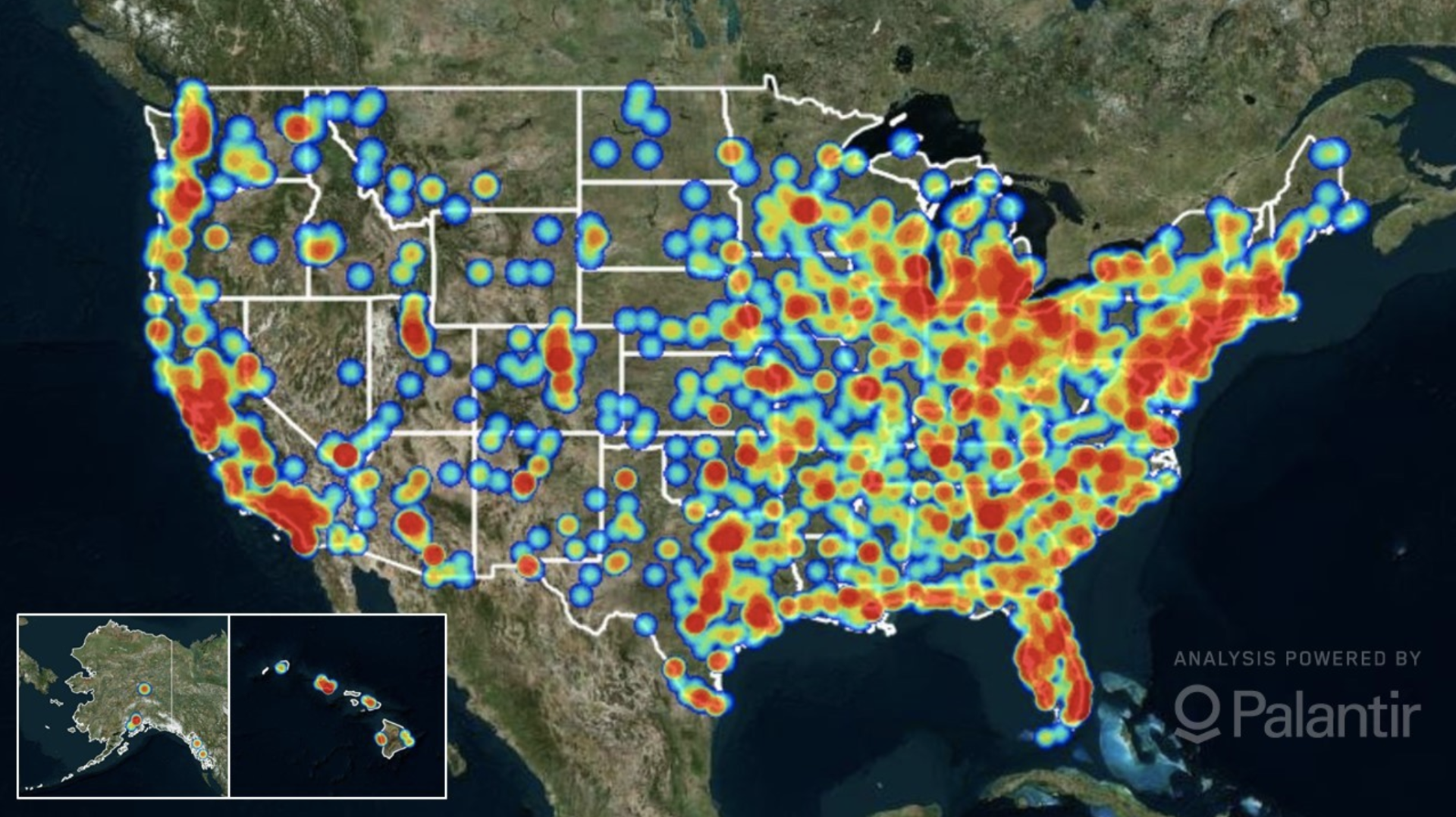
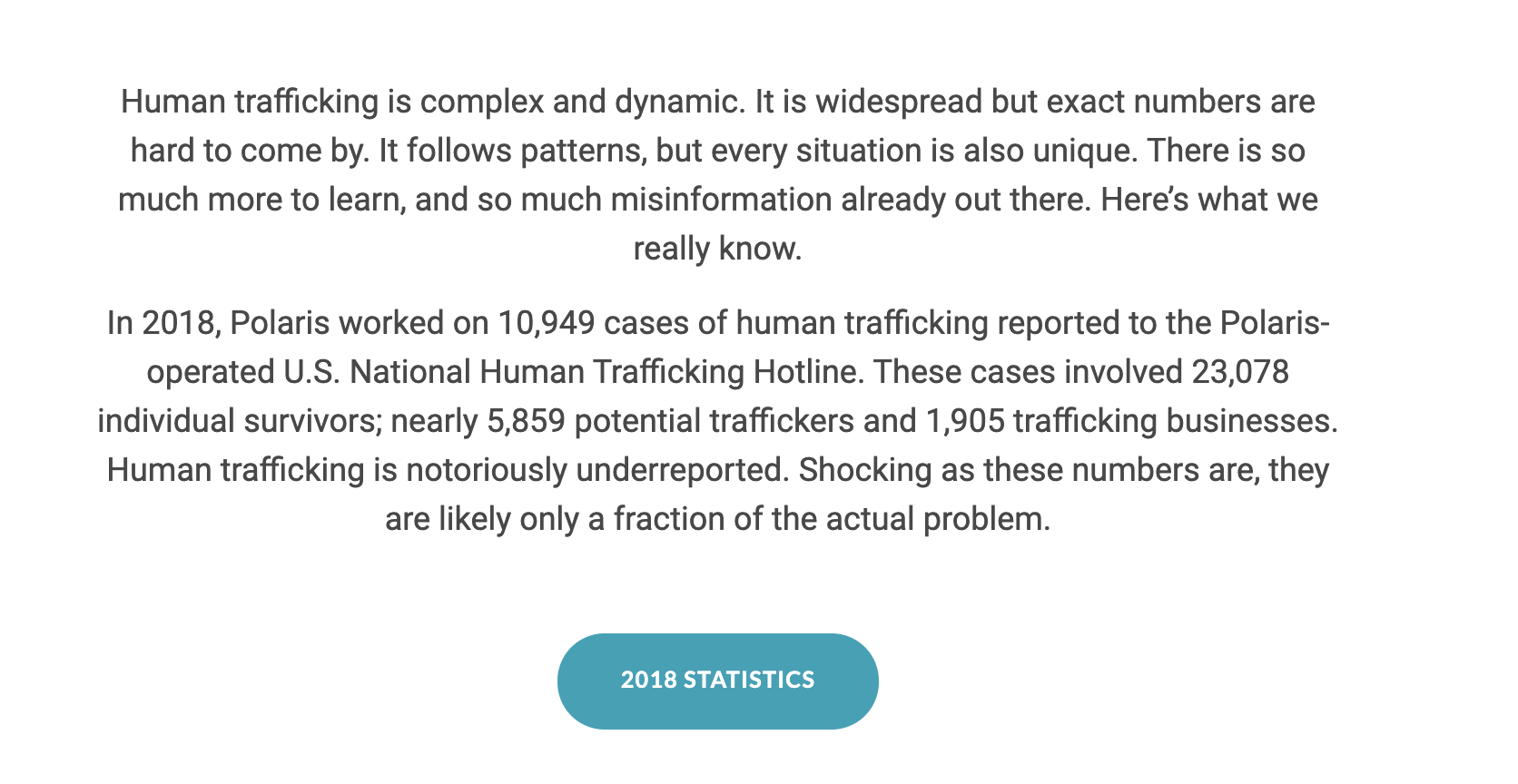
This interactive site offers information on human trafficking facts and statistics. The page includes a map of human trafficking in the United States along with a statistical analysis.

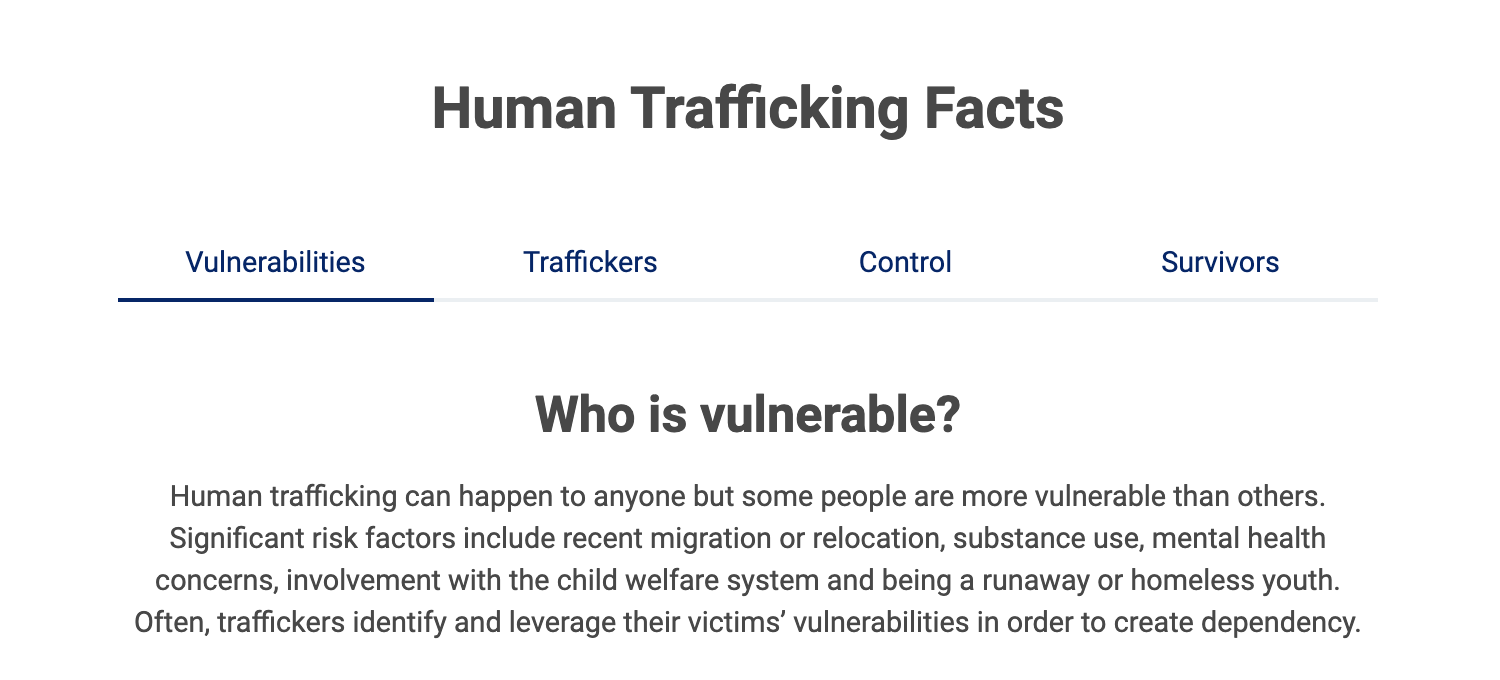
Further down the page the user can click on four different tabs to read some basic facts on human trafficking.

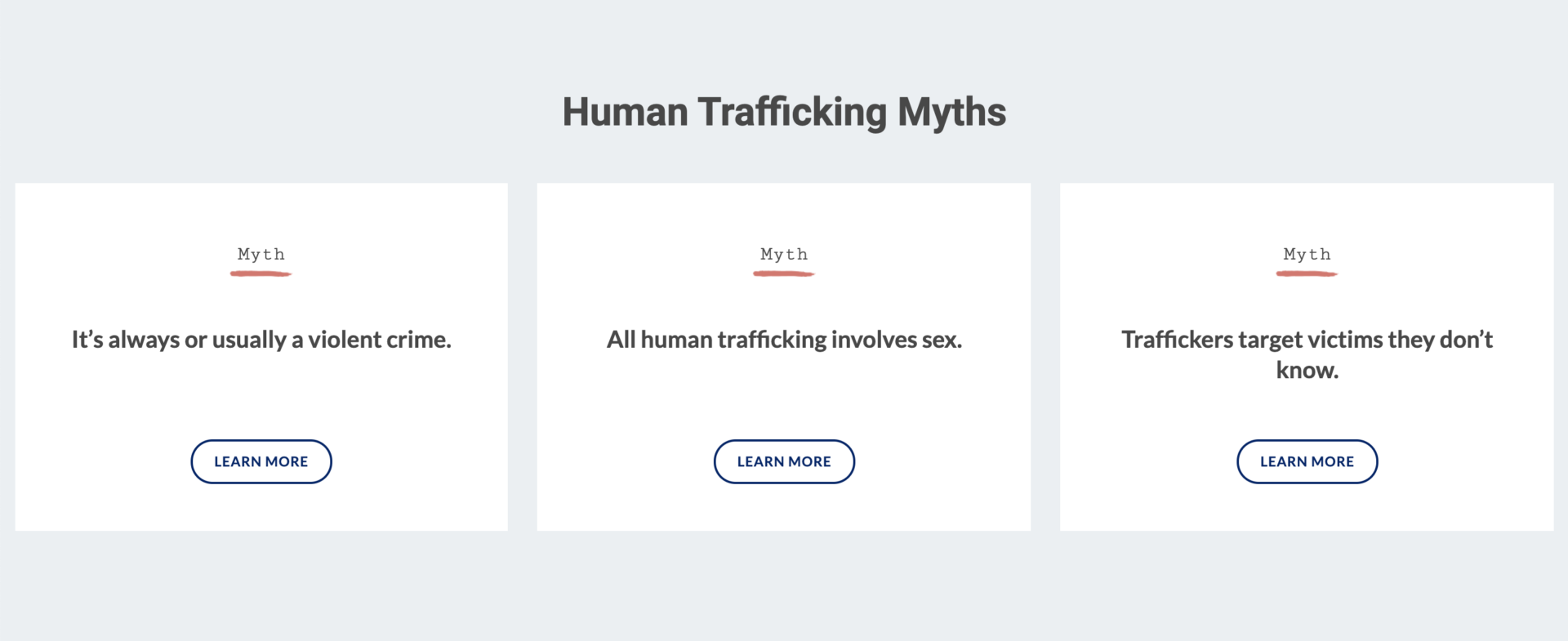
The last section of the page presents a series of myth usually associated to human trafficking, allowing the user to click learn more in order to read about the reality behind those assumptions.

You can visit the website here.

post

page

attachment

revision

nav_menu_item

custom_css

customize_changeset

oembed_cache

user_request

wp_block

wp_template

wp_template_part

wp_global_styles

wp_navigation

wp_font_family

wp_font_face

acf-taxonomy

acf-post-type

acf-field-group

acf-field

ai1ec_event

exactmetrics_note

Repayment of Recruitment Fees to Workers: 4 Emerging Best Practices
Online ToolsGuidanceGood PracticesPublications

A growing number of global brands and retailers are adopting ethical recruitment policies stipulating, among other things, that all costs and fees related to labour recruitment are paid by the employer and not by the workers being recruited. Employe...Read More

TAGS: Asia
Appropriations Guide
Online ToolsGuidanceGood Practices

This regularly updated website includes links to different reports and guides produced by the Alliance to End Slavery & Trafficking (ATEST), all of which provide funding recommendations to Congress to fight human trafficking. You can...Read More

Social Responsibility Resources
Online Tools

Social Responsibility Resources is an online library which is aimed at collecting resourcing supporting social responsibility in the fisheries. The library collects tools which are displayed as shown in the preview below and is easy to access. ...Read More

83 Countries are More Ocean Than Land
Online Tools

The 1982 UN Law of the Sea was the largest ever annexation of our planet and our ocean. In one stroke, one-third of our planet was formally designated as 'exclusive economic zones', giving coastal countries rights to 200 miles of ocean around their ...Read More