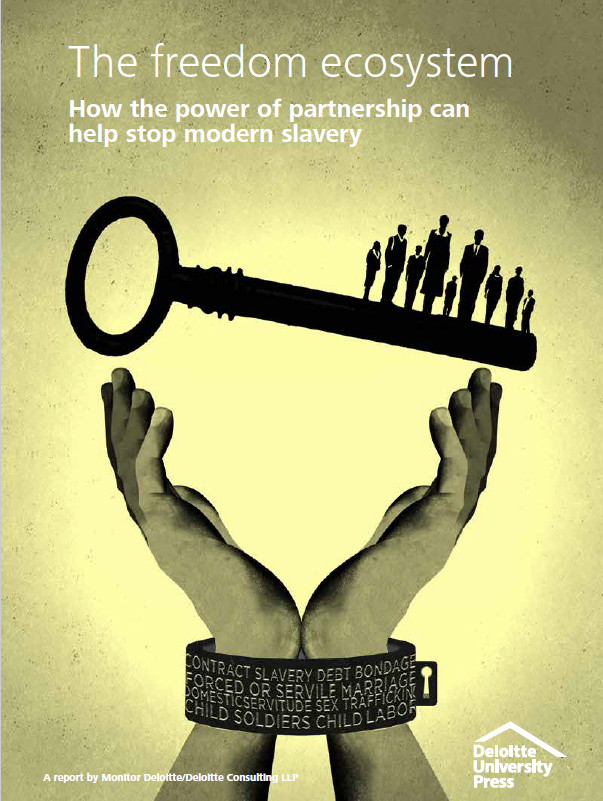
While the problem of modern slavery is a persistent and hidden crime, those working to end it are crippled by three significant challenges: prevailing gaps in collecting and sharing data, limited resources to address slavery, and a challenging policy environment.

The freedom ecosystem comprises a dynamic and diverse network of actors, with the shared goal of removing the conditions that allow slavery to persist and empowering slavery’s victims and survivors to own their personal path to freedom. Anti-slavery allies from the private, public, and nonprofit sectors converge to advance freedom in the face of predators and accomplices who engage in the illicit networks that allow slavery to persist.

It will likely take the entire freedom ecosystem—businesses, governments, NGOs, academia, multilateral organizations, private investors, civil-society groups, and consumers—working together to abolish practices that challenge the best intentions to promote a freer world.

post

page

attachment

revision

nav_menu_item

custom_css

customize_changeset

oembed_cache

user_request

wp_block

wp_template

wp_template_part

wp_global_styles

wp_navigation

wp_font_family

wp_font_face

acf-taxonomy

acf-post-type

acf-field-group

acf-field

ai1ec_event

exactmetrics_note

ITUC Global Rights Index
Graphics & InfographicsPublications

The breakdown of the social contract is exposed in the 2020 ITUC Global Rights Index with violations of workers’ rights at a seven-year high. The trends by governments and employers to restrict the rights of workers through violations of collecti...Read More

What Works: Lessons in the Use of Cash Transfers
Publications

Cash transfers are used as a tool to empower and protect vulnerable individuals, households, and other groups from shocks and to mitigate vulnerabilities, such as low and variable income. These transfers can also be used to encourage positive change...Read More

Addressing the Human Cost of Assam Tea: An Agenda for Change to Respect, Protect and Fulfill Human Rights on Assam Tea Plantations
Publications

Workers on tea plantations in the Assam region of India are systematically denied their rights to a living wage and decent working and living conditions. The fact that they are unable to meet their basic living costs is starkly illustrated by our fi...Read More

Assessing Labor Risk for Workers Migrating from the Philippines to Europe
GuidancePublications

Millions of people from the Philippines have migrated abroad for employment, seeking a better life and improved economic status for themselves and their families. Today, over 10 million Filipinos are estimated to live and work internationally, with ...Read More