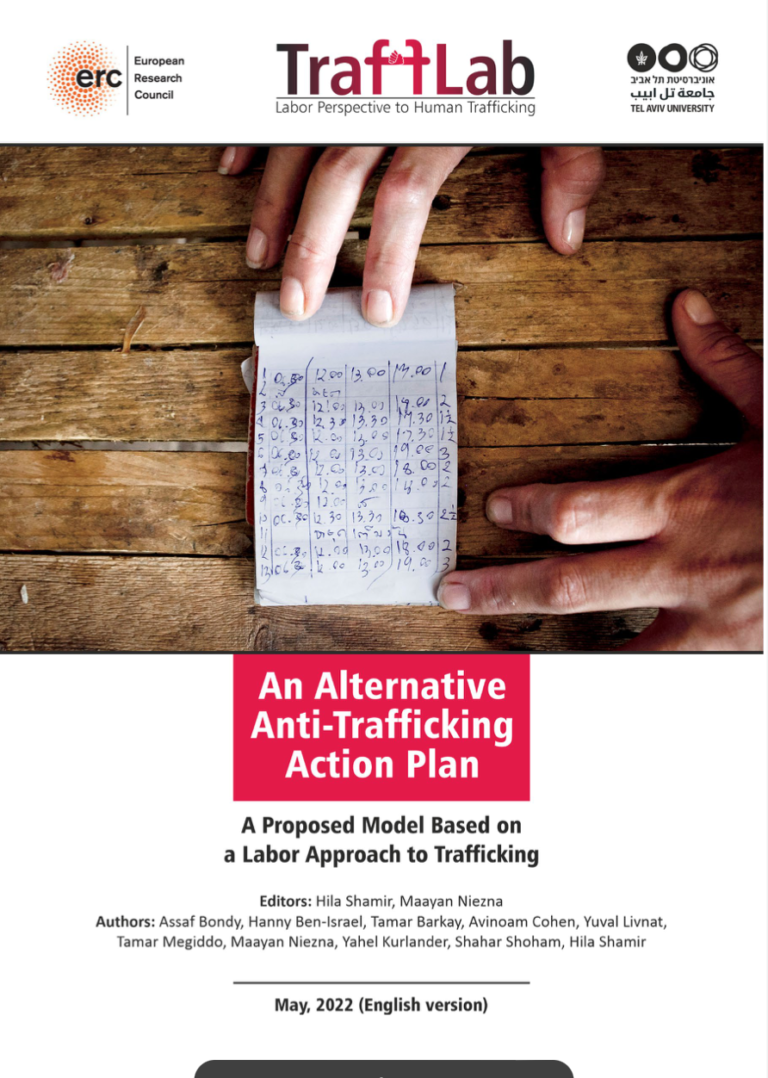
TraffLab’s Alternative Anti-Trafficking Action Plan (the “Alternative Plan”) provides a labor-based alternative approach to the new Israeli national plan to address human trafficking 2019-2024, published by the Ministry of Justice in January 2019. The Alternative Plan outlines the directions we believe need to be taken in order to address the structural problems that underlie serious phenomena that we are witnessing in the Israeli labor market today, and that we do not believe the accepted approach to combating human trafficking addresses. The Alternative Plan as a whole reflects a vision, an ambitious action plan for a possible future, which on the one hand is firmly rooted in the legal situation in Israel, and on the other seeks to offer new thinking in the field to locate and identify human trafficking engines. The program has three parts: prevention, enforcement, and partnership, all of which reflect the need to address the root causes of severe forms of labor market exploitation. Each section contains a number of short chapters which focus on different aspects of the immigration regime and labor market regulation in Israel, that create structural vulnerability to human trafficking, and offers concrete policy proposals for change. Along with more familiar elements for practitioners in the field -such as aspects of tied visas, debt and recruitment fees, and bilateral agreements – the Alternative Plan includes a discussion of many other aspects including, among others, discussions on how employment structures – private bureaus, manpower agencies, and construction agencies – and exclusion from protective legislation and lack of workers’ rights enforcement create vulnerability to exploitation and human trafficking, as well on the need for a comprehensive reform of the victim identification system in Israel. The program also addresses the potential role of labor unions in representing and supporting workers in sectors prone to trafficking, and the responsibilities of corporations for human trafficking down their supply chains.

An Alternative Anti-Trafficking Action Plan: A Proposed Model Based on a Labor Approach to Trafficking - TRAFFLab (Tel Aviv University), May 2022 DOWNLOAD
An Alternative Anti-Trafficking Action Plan: A Proposed Model Based on a Labor Approach to Trafficking - TRAFFLab (Tel Aviv University), November 2020_Hebrew DOWNLOAD

post

page

attachment

revision

nav_menu_item

custom_css

customize_changeset

oembed_cache

user_request

wp_block

wp_template

wp_template_part

wp_global_styles

wp_navigation

wp_font_family

wp_font_face

acf-taxonomy

acf-post-type

acf-field-group

acf-field

ai1ec_event

exactmetrics_note

National Hotline 2017 South Carolina State Report
Graphics & InfographicsPublications

The data in this report represents signals and cases from January 1, 2017 through December 31, 2017 and is accurate as of July 11, 2018. Cases of trafficking may be ongoing or new information may be revealed to the National Hotline over time. Conseq...Read More

TAGS:
Modern Slavery Act 2015 – Impact on Supply Chains and the role of Procurement and Actions Required to Support the Organisation (CIPS)
Publications

The UK Modern Slavery Act came into force in 2015. The insight gives an overview of the Act, focusing on the impact on supply chains and the role of procurement and actions required to support the organizations. The document also makes reference to o...Read More

Combatting Modern Slavery through Data, Technology and Partnerships
Publications

Many valuable, but often fragmented models are currently used in the fight against human trafficking. Building from the themes raised in a five-part webinar series hosted by Freedom Collaborative last fall, this paper argues that data should be used...Read More

TAGS:
National Hotline 2017 Georgia State Report
Graphics & InfographicsPublications

The data in this report represents signals and cases from January 1, 2017 through December 31, 2017 and is accurate as of July 11, 2018. Cases of trafficking may be ongoing or new information may be revealed to the National Hotline over time. Conseq...Read More