
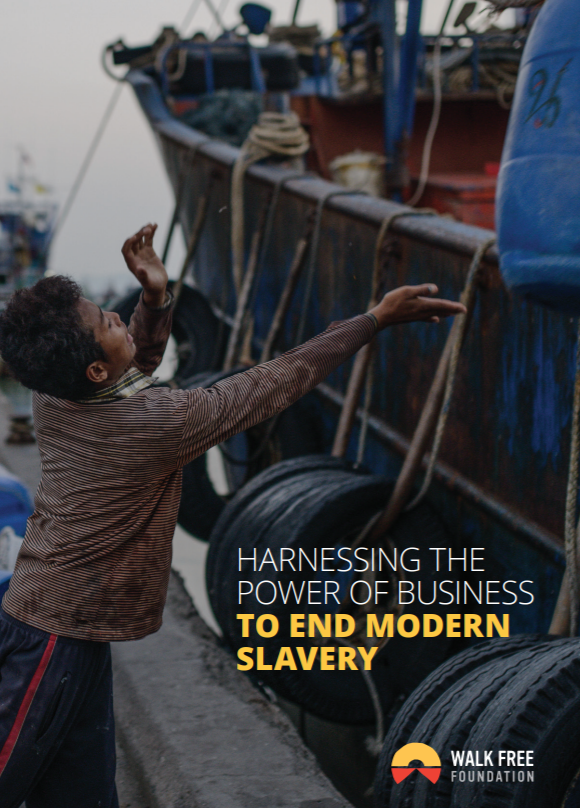
In this report, case studies highlight how widespread modern slavery is today and its relevance to businesses. Examples include the widely reported abuses in the textiles and garments sector in Brazil, the investigative journalists undercovering horrific abuses in the Thai seafood industry, forced labour of many construction workers in the Middle East, modern slaves producing electronic goods in Asia that implicates the supply chains of many household brands for smart phones and computers, and the migrant workers being forced to work in factories in the UK.

Harnessing the Power of Business to end Modern Slavery DOWNLOAD

post

page

attachment

revision

nav_menu_item

custom_css

customize_changeset

oembed_cache

user_request

wp_block

wp_template

wp_template_part

wp_global_styles

wp_navigation

wp_font_family

wp_font_face

acf-taxonomy

acf-post-type

acf-field-group

acf-field

ai1ec_event

exactmetrics_note

Migration and Mobility
Publications

Edited by Julia O’Connell Davidson and Neil Howard. This is the fifth volume of the series Beyond Trafficking and Slavery Short Course. Mobility is and always has been an essential part of humanity’s economic, social, cultural and politi...Read More

TAGS: Global
Corporate Human Rights Benchmark – 2018 Key Findings
Publications

The 2018 Corporate Human Rights Benchmark assesses 101 of the largest publicly traded companies in the world on a set of human rights indicators. The companies from 3 industries – Agricultural Products, Apparel, and Extractives – were chosen fo...Read More

Sextortion: Findings from a Survey of 1,631 Victims
Publications

Janis Wolak and David Finkelhor Sextortion is defined as threats to expose a sexual image in order to make a person do something or for other reasons, such as revenge or humiliation. In an effort to better understand the threat of sextortion and ...Read More

Country Profile: Romania – Abuses in Garment Sector
Publications

Garment workers, mostly women, earn some of the lowest wages in the world while making clothes for some of the biggest fashion brands. Romania has about 300,000 oficial garment workers, who usually earn a minimum wage of about 230 EUR after tax. Wor...Read More