
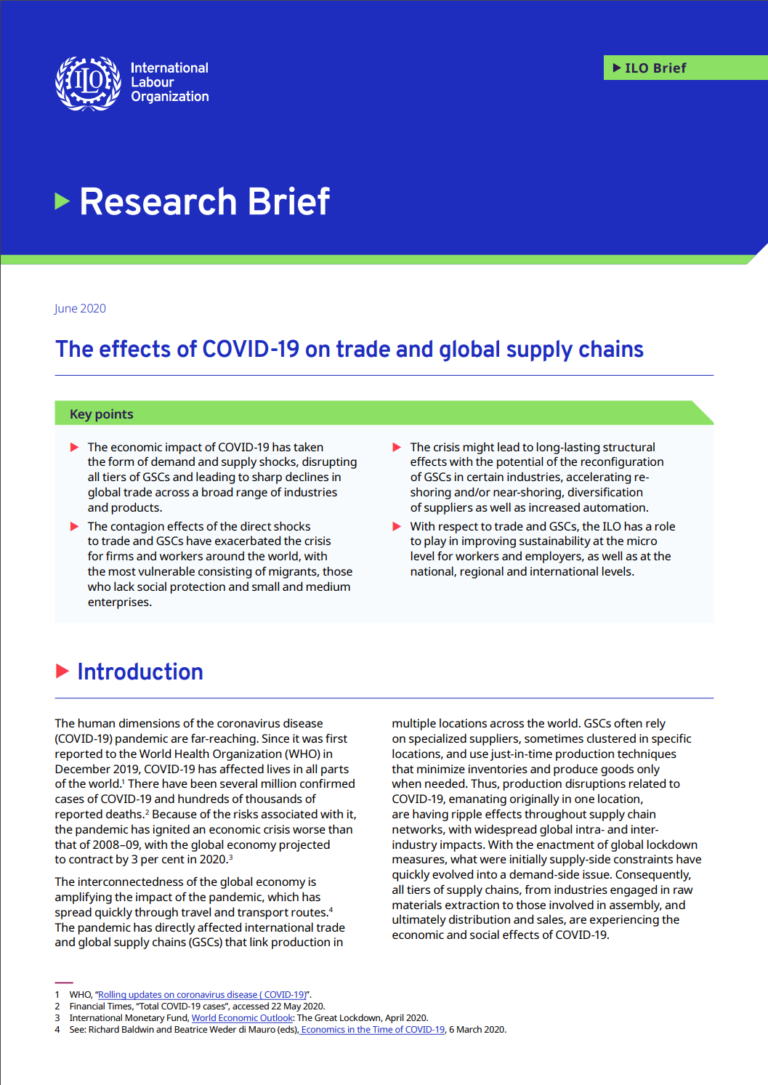
The purpose of this brief is to provide an analysis of the near-term effects of the COVID‑19 pandemic on enterprises and workers engaged in trade and GSC-related activities and to explore the medium and long-term implications of the pandemic on supply chain sustainability and implications for the world of work. The analysis suggests that the pandemic presents an important opportunity to enhance the resilience and sustainability of GSCs and to strengthen their contribution to inclusive economic growth in developing and emerging economies.

The Effects of COVID‑19 on Trade and Global Supply Chains - International Labour Organization, 2020 DOWNLOAD

post

page

attachment

revision

nav_menu_item

custom_css

customize_changeset

oembed_cache

user_request

wp_block

wp_template

wp_template_part

wp_global_styles

wp_navigation

wp_font_family

wp_font_face

acf-taxonomy

acf-post-type

acf-field-group

acf-field

ai1ec_event

exactmetrics_note

Legislating human rights due diligence: opportunities and potential pitfalls to the French duty of vigilance law
Publications

By Anna Triponel and John Sherman Introduction On the evening of 23 March 2017, just as the deadline for a decision was approaching, the French Constitutional Court declaredthat the French law on the duty of vigilance (or duty of care) owed by pare...Read More

Sexual Exploitation: New Challenges, New Answers
Publications

The Fondation Scelles is publishing its 5th Global Report. Since 2012, year after year, this “world tour” of sexual exploitation aims to detect and anticipate its evolutions. What can we see today? Never have the factors of vulnerability been so...Read More

TAGS: Global
Responsible Mining Index
Publications

The Responsible Mining Index (RMI) supports the principle that minerals and metals mining should benefit the economies, improve the lives of people and respect the environments of producing countries, while also benefiting mining companies in a fai...Read More

Fishing For Data
Publications

Marine fisheries are critical resources for coastal developing countries. They are also difficult to manage sustainably. Almost a third of global fish stocks are degraded from overfishing, and a further 60% are ‘fully exploited’ (FAO, 2016). Ille...Read More