
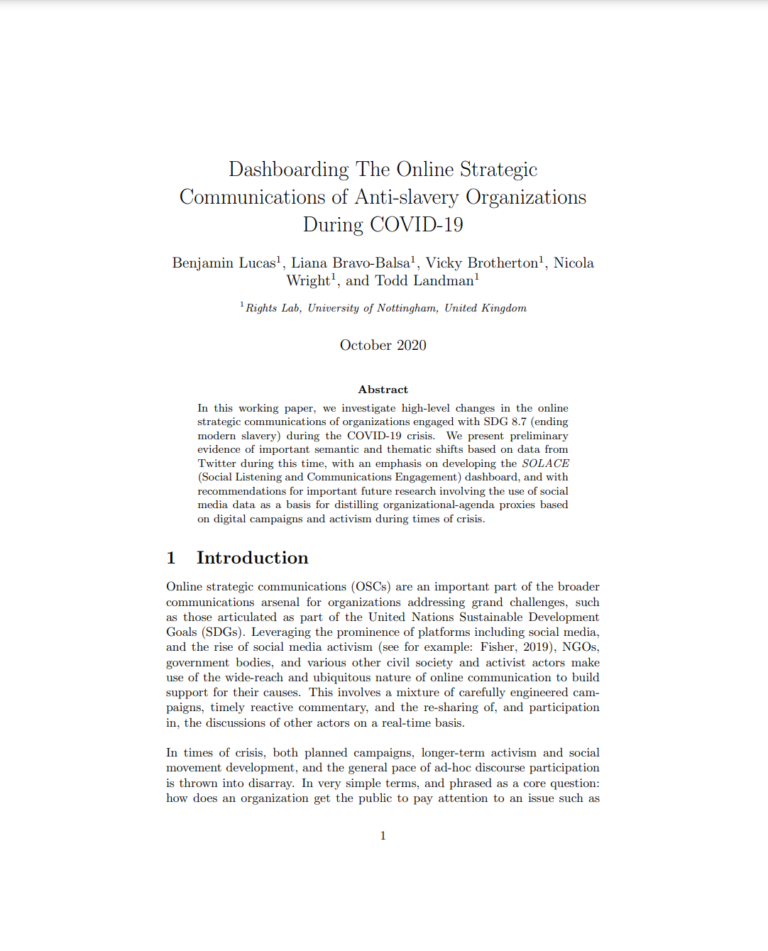
In this working paper, we investigate high-level changes in the online strategic communications of organizations engaged with SDG 8.7 (ending modern slavery) during the COVID-19 crisis. We present preliminary evidence of important semantic and thematic shifts based on data from Twitter during this time, with an emphasis on developing the SOLACE (Social Listening and Communications Engagement) dashboard, and with recommendations for important future research involving the use of social media data as a basis for distilling organizational-agenda proxies based on digital campaigns and activism during times of crisis.

Dashboarding The Online Strategic Communications of Anti-slavery Organization During COVID-19 - Rights Lab, 2020 DOWNLOAD

post

page

attachment

revision

nav_menu_item

custom_css

customize_changeset

oembed_cache

user_request

wp_block

wp_template

wp_template_part

wp_global_styles

wp_navigation

wp_font_family

wp_font_face

acf-taxonomy

acf-post-type

acf-field-group

acf-field

ai1ec_event

exactmetrics_note

NetClean Report 2020
COVID-19 resourcesGuidance

NetClean develops world-leading technology solutions that protect businesses IT environments against child sexual abuse material, safeguarding against crime in the workplace. The NetClean Report – COVID-19 Impact 2020, is the sixth report from Net...Read More

COVID-19 and Modern Slavery within the Hospitality Sector
COVID-19 resourcesGuidance

The COVID-19 outbreak has been affecting Asia since January 2020. It is now a global pandemic, with over 5.7 million cases detected in 168 countries and over 352,000 deaths globally as of 27 May 2020. Much of the world has implemented severe quarant...Read More

COVID-19: Access Challenges and the Implications of Border Restrictions
COVID-19 resourcesPublications

The COVID-19 pandemic has required States to implement exceptional measures to curb the spread of the virus and to protect public health. While border restrictions or closure may be justified, exceptions are needed to safeguard basic rights, includi...Read More

Un(der)paid in the Pandemic: An estimate of what the garment industry owes its workers
COVID-19 resources

First, in January, when the transportation of raw materials from China to other garment producing countries was suspended, many factories were forced to close temporarily. The next wave hit as the pandemic spread to Europe and the United States (US)...Read More