

Stop the Traffik App
Online ToolsA tool to enable people across the world to join the fight against human trafficking and modern slavery. child labour More information on the app can be found here. ...Read More
Modern slavery is a global issue that requires a coordinated global response. This is the case both for the work to eradicate it in the long term, and in the immediate, to help individual survivors find freedom right now. The NGOs, multilateral institutions, government stakeholders, and law enforcement agencies working to combat modern slavery must be to find each other and to connect across borders.
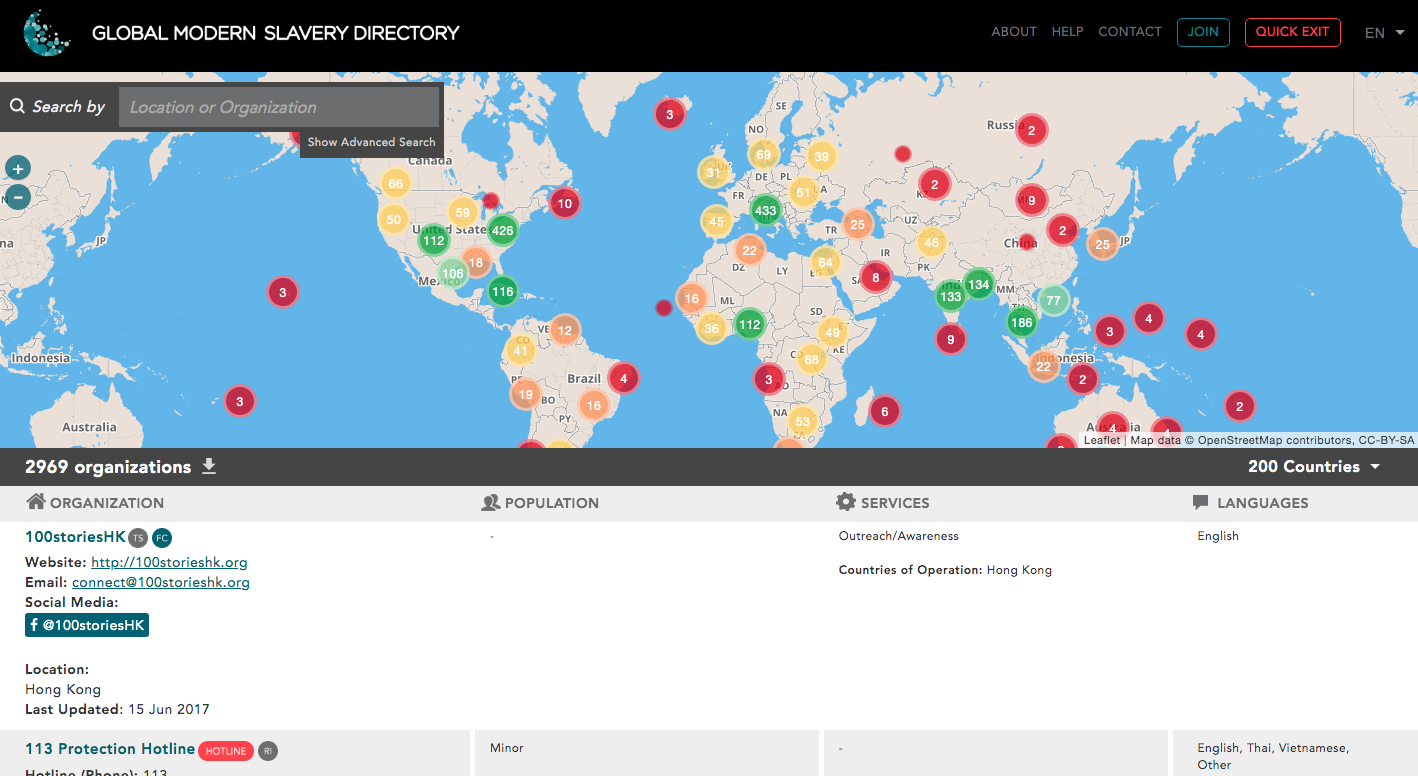
With this goal in mind, Polaris has created the Global Modern Slavery Directory (GMSD, https://www.globalmodernslavery.org/), an interactive, publicly searchable map and database of organizations and agencies across the globe that address the issue of modern slavery and human trafficking. The GMSD also provides a visualization of the global safety net so that stakeholders and researchers can observe where there are gaps in services for vulnerable populations and connect to respond accordingly.
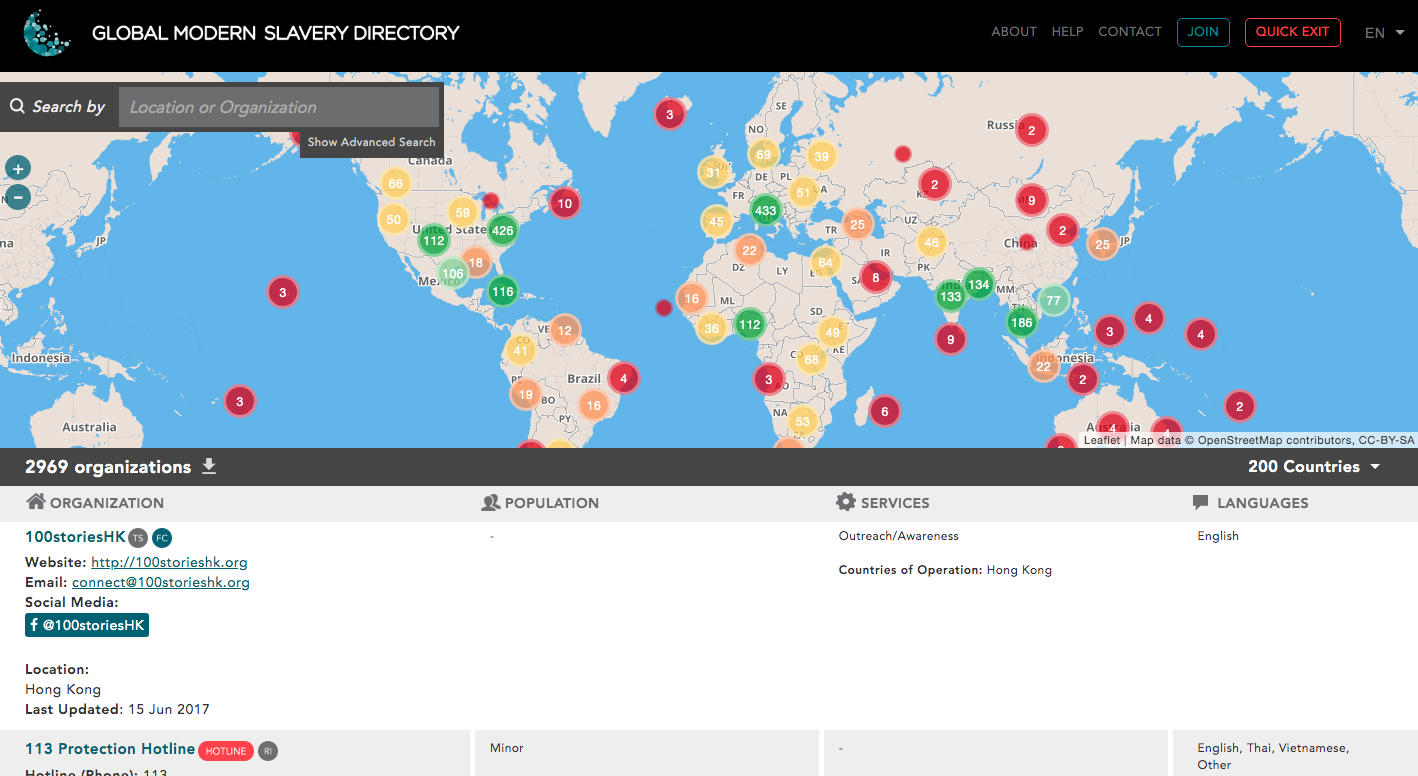
The GMSD includes organizations that address all types of human trafficking, including sex trafficking, forced labour and debt bondage, forced marriage and child marriage, child labour, sexual exploitation of children, organ trafficking, trafficking within international adoption, and international marriage brokering mechanisms (“bride trafficking”).
Organizations include direct service providers, as well as groups that carry out awareness, advocacy and prevention efforts, or organizations that may assist victims of trafficking while addressing related issues, such as labour exploitation, child protection, or domestic violence.
The Global Modern Slavery Directory is designed to be a useful tool for all stakeholders in the global anti-trafficking field: service providers, potential victims, survivors, community members, researchers, students, and others looking to identify or connect with resources.
A tool to enable people across the world to join the fight against human trafficking and modern slavery. child labour More information on the app can be found here. ...Read More
A continuing study by Katarina Schwarz and Jean Allain. To assess the extent to which slavery and related forms of human exploitation have been prohibited in domestic law, the Antislavery in Domestic Legislation Project compiles the constitution...Read More
The Responsible Sourcing Tool is a free web platform created to help visualize and understand the risks of human trafficking in supply chains. Created by Verité, Made in a Free World, and the Aspen Institute, with support from the U.S. State Depart...Read More
The sub-Saharan region of Africa has acted as a supplier of labour and raw materials to the rest of the world for centuries, often under terms that have resulted in harm to African people and nations. Corporations and governments have a responsibili...Read More


2025 © Copyright, RESPECT International. All Rights Reserved. Website Disclaimer | Privacy Policy