
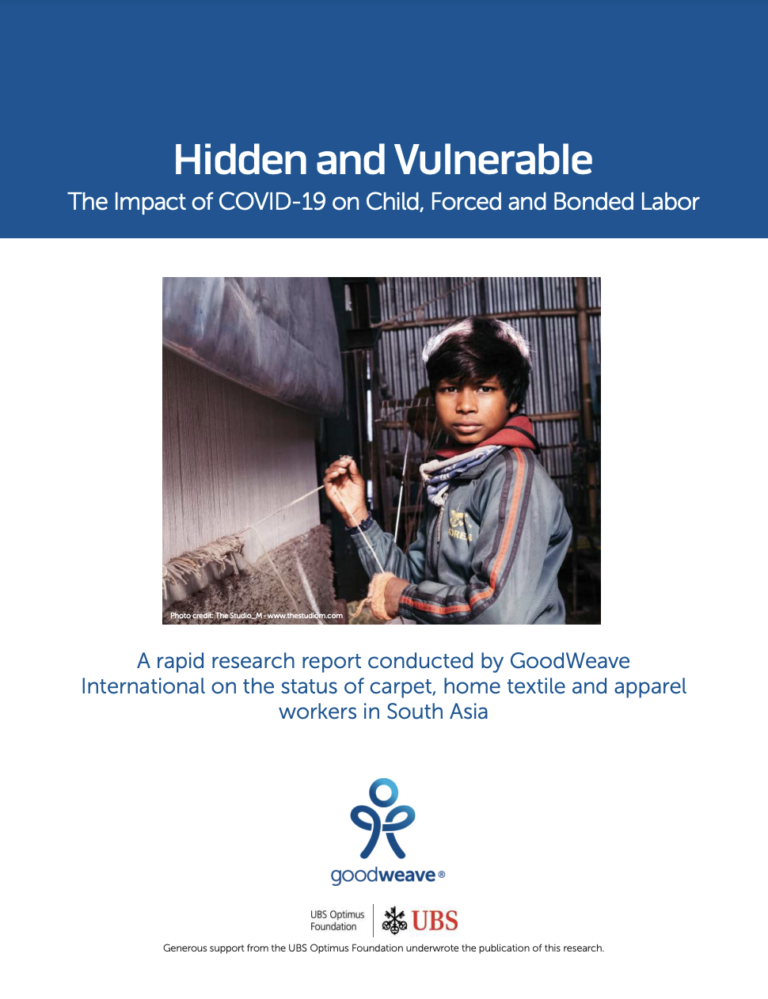
This research report conducted by GoodWeave International on the status of carpet, home textile, and apparel workers in South Asia confirms that the impacts of COVID-19 have resulted in extreme hardship for informal workers and their families. Documented income loss, indebtedness, school closure, and migration are all indications there will be an uptick in child, forced, and bonded labor conditions. For some, their very survival is at stake.

Hidden and Vulnerable: The Impact of COVID-19 on Child, Forced and Bonded Labor - GoodWeave International, 2020 DOWNLOAD

post

page

attachment

revision

nav_menu_item

custom_css

customize_changeset

oembed_cache

user_request

wp_block

wp_template

wp_template_part

wp_global_styles

wp_navigation

wp_font_family

wp_font_face

acf-taxonomy

acf-post-type

acf-field-group

acf-field

ai1ec_event

exactmetrics_note

COVID-19 – Crisis Upon Crisis In Africa: An Eco feminist Perspective
COVID-19 resourcesGuidance

The novel Coronavirus has triggered a significant global crisis, with the harshest impacts being felt by the poor and working classes across the world. On the African continent, this ‘new’ pandemic encounters numerous other crises of climate hea...Read More

Union Busting & Unfair Dismissals: Garment Workers during COVID-19
COVID-19 resources

Millions of vulnerable workers in the garment industry have been laid off or have lost wages as a result of order cancellations and non-payment by apparel brands in the context of the COVID-19 pandemic. Recent reports from worker groups and media sh...Read More

Worked to Debt: Over Indebtedness In Cambodia’s Garment Sector
COVID-19 resourcesPublications

Tens of thousands of garment workers in Cambodia will struggle to repay microfinance debts during work stoppages and factory suspensions caused by COVID-19, creating a mounting human rights crisis as they struggle to feed their families and hold ont...Read More

A Vulnerable Workforce: Migrant Workers in the COVID-19 Pandemic
COVID-19 resourcesPublications

This report analyses the labour conditions of migrant workers in the EU in the context of the COVID-19 epidemic. By looking at the prevalence of temporary contracts, the position in the income distribution and the likelihood that jobs can be conduct...Read More