
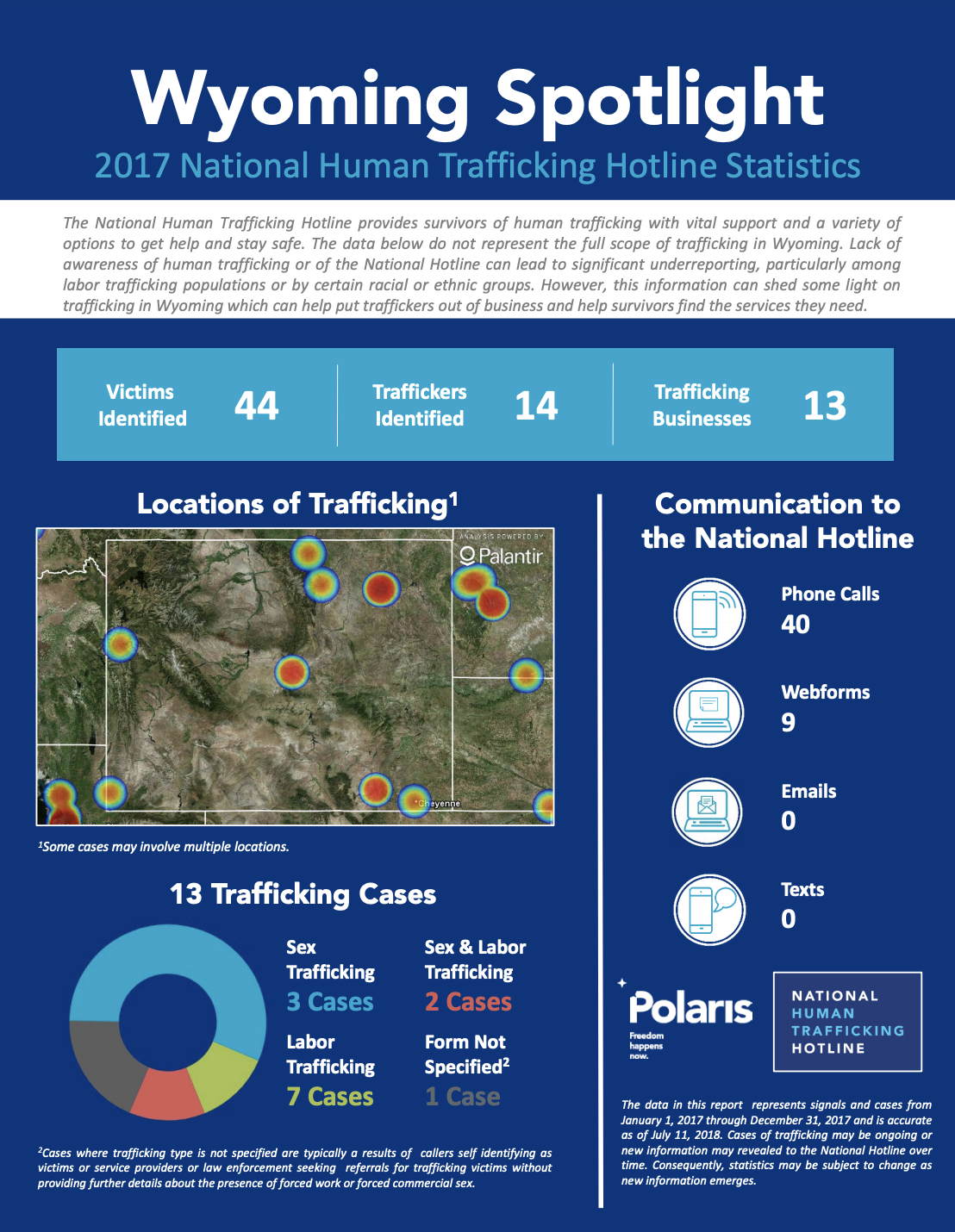
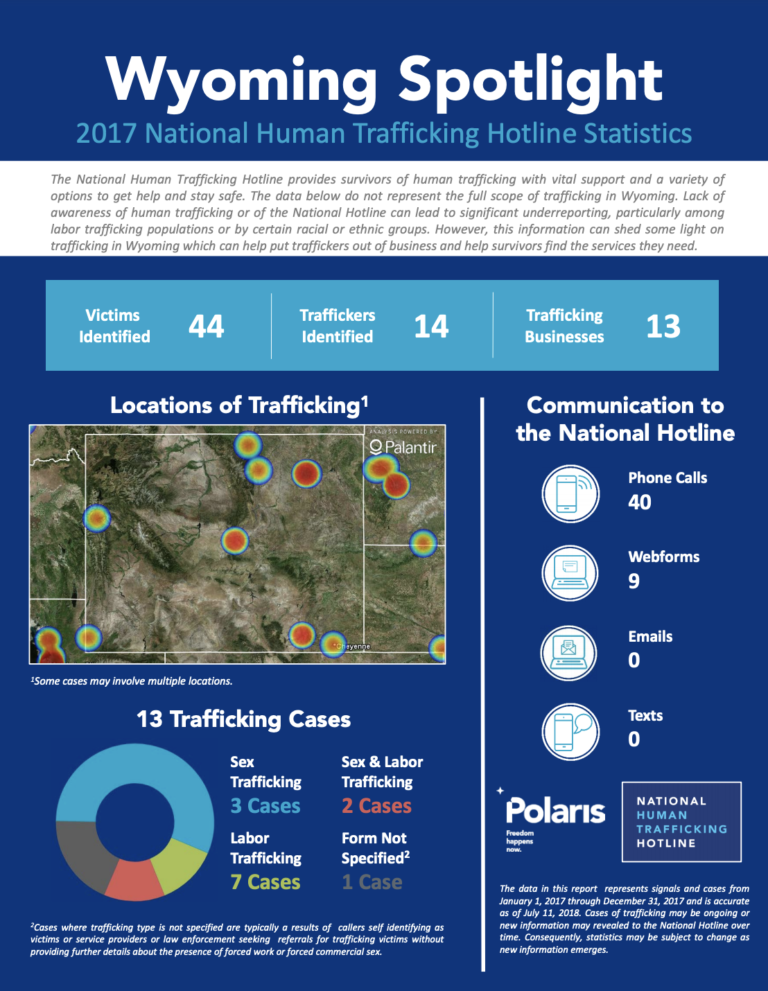
The data in this report represents signals and cases from January 1, 2017 through December 31, 2017 and is accurate as of July 11, 2018. Cases of trafficking may be ongoing or new information may be revealed to the National Hotline over time. Consequently, statistics may be subject to change as new information emerges.

You can download the report infographic below.

National Hotline 2017 Wyoming State Report - National Human Trafficking Hotline, 2018 DOWNLOAD

post

page

attachment

revision

nav_menu_item

custom_css

customize_changeset

oembed_cache

user_request

wp_block

wp_template

wp_template_part

wp_global_styles

wp_navigation

wp_font_family

wp_font_face

acf-taxonomy

acf-post-type

acf-field-group

acf-field

ai1ec_event

exactmetrics_note

The International Legal Definition of Trafficking in Persons: Consolidation of research findings and reflection on issues raised
Publications

Until December 2000, the term “trafficking in persons” was not defined in international law, despite its incorporation in several international legal instruments.The long-standing failure to develop an agreed-upon definition of trafficking in pe...Read More

TAGS:
Fishing industry factsheet, Modern Slavery factsheet: A Briefing
Graphics & Infographics

Modern slavery can take many forms including the trafficking of people, forced labour, servitude and slavery. Recent statistics show that 47% of all potential victims who cite the UK as the location of exploitation, were trafficked into forced labou...Read More

Modern Slavery in Company Operation and Supply Chains: Mandatory transparency, mandatory due diligence and public procurement due diligence
Publications

Modern slavery is everywhere, but cleaning it up is possible. Due diligence and transparency is the key to ending modern slavery in supply chains. The report gives an insight into the growing body of law and practice from international standards t...Read More

Hidden Chains: Rights Abuses and Forced Labour in Thailand’s Fishing Industry
Publications

The report by Human Rights Watch describes how migrant fishers from neighboring countries in Southeast Asia are often trafficked into fishing work, prevented from changing employers, not paid on time, and paid below the minimum wage. Migrant workers ...Read More