
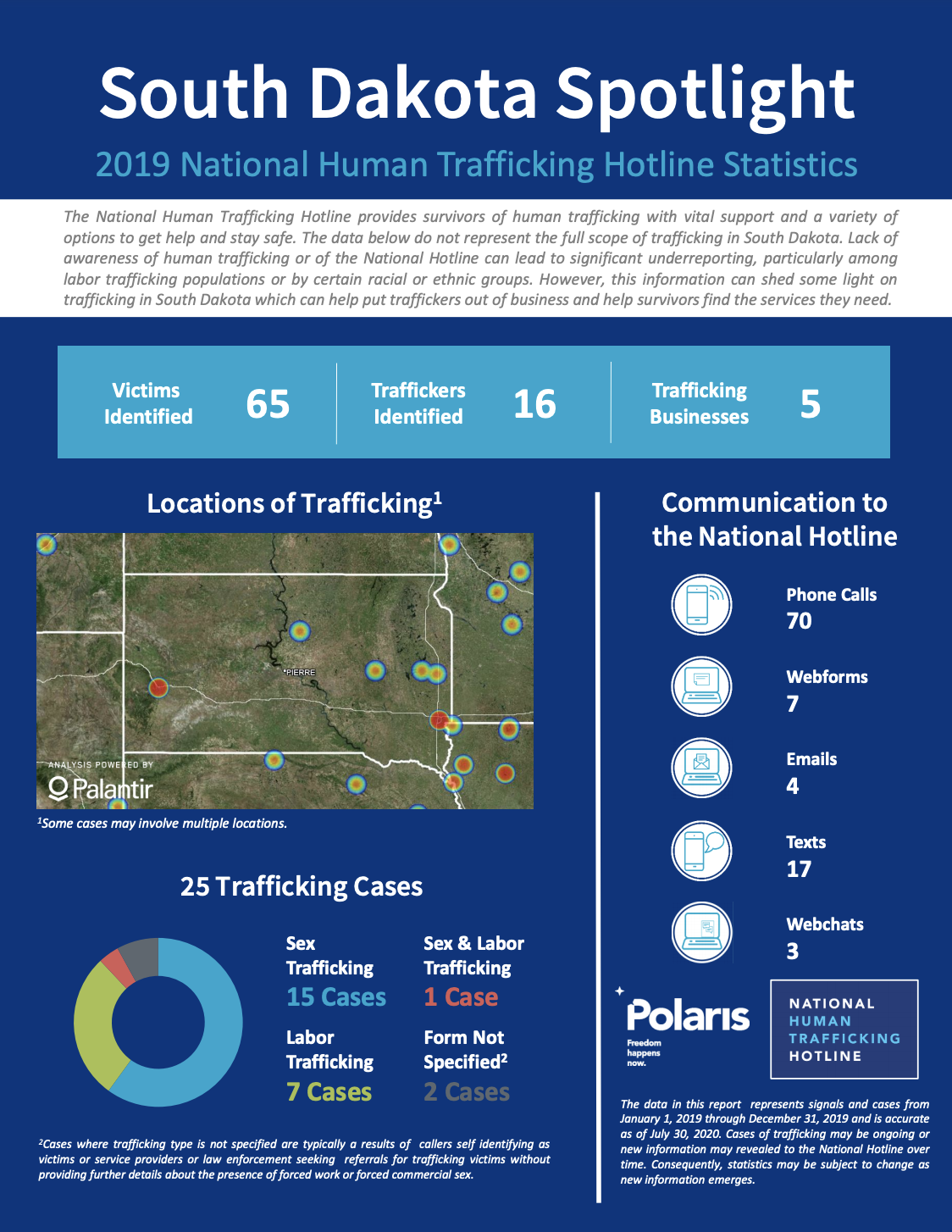
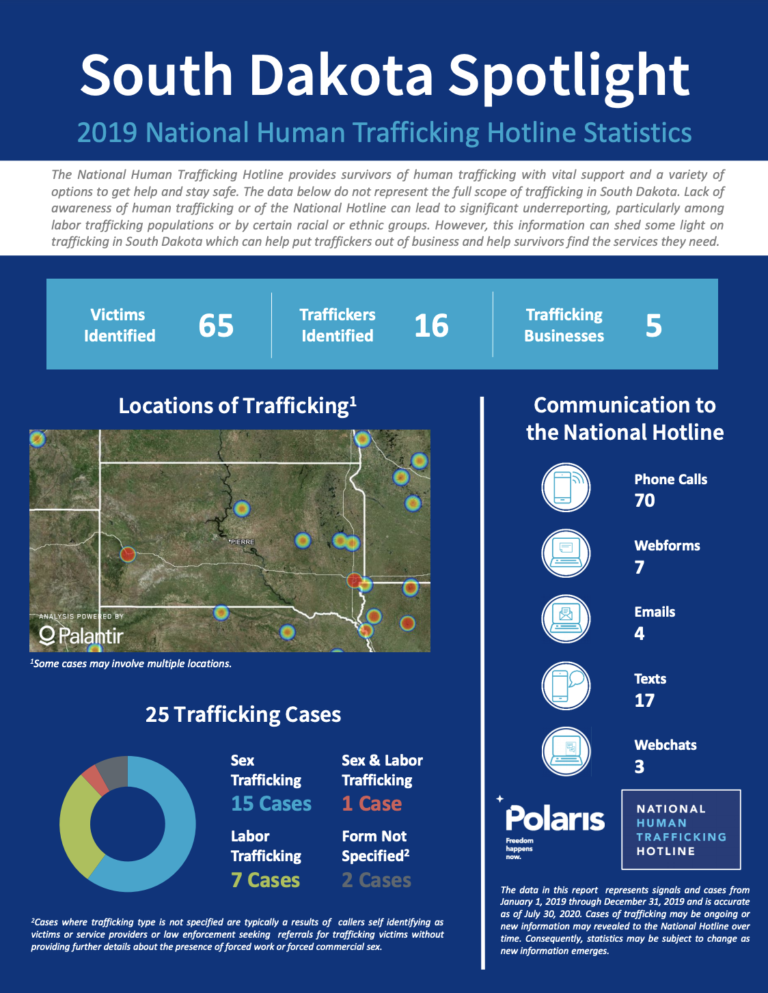
The data in this report represents signals and cases from January 1, 2019 through December 31, 2019 and is accurate as of July 30, 2020. Cases of trafficking may be ongoing or new information may revealed to the National Hotline over time. Consequently, statistics may be subject to change as new information emerges.

You can download the report infographic below.

National Hotline 2019 South Dakota State Report - National Human Trafficking Hotline, 2020 DOWNLOAD

post

page

attachment

revision

nav_menu_item

custom_css

customize_changeset

oembed_cache

user_request

wp_block

wp_template

wp_template_part

wp_global_styles

wp_navigation

wp_font_family

wp_font_face

acf-taxonomy

acf-post-type

acf-field-group

acf-field

ai1ec_event

exactmetrics_note

National Hotline 2016 Nevada State Report
Publications

The following information is based on incoming communication with the National Human Trafficking Hotline from January 1, 2016 – December 31, 2016 about human trafficking cases and issues related to human trafficking in Nevada.  ...Read More

Human Trafficking and Risky Migration Routes Data Collection: A Case Study from Kenya
Publications

For the first time, comprehensive data is available for human trafficking and high risk migration routes relating to Kenya. The data identifies 38 countries as origin, transit and destination locations for abuse of victims - including eight countrie...Read More

TAGS: Africa
No Worker Left Behind: Protecting Vulnerable Workers From Exploitation During and After the Coronavirus (COVID-19) Pandemic
COVID-19 resourcesPublications

This briefing examines the impact of the Coronavirus pandemic on the risk of labour exploitation in low-paid and insecure employment in the UK. Drawing on interviews with workers and frontline services, it proposes emergency measures to ensure all w...Read More

TAGS: Europe
Meneshachin scoping study: A global synthesis and analysis of responsible recruitment initiatives targeting low-wage, migrant workers
Publications

This review was conducted as a “scoping study” of two distinct areas of recruitment policy and programming: (1) current government policies and initiatives to improve recruitment standards for low-wage migrant workers; and (2) current non-govern...Read More