
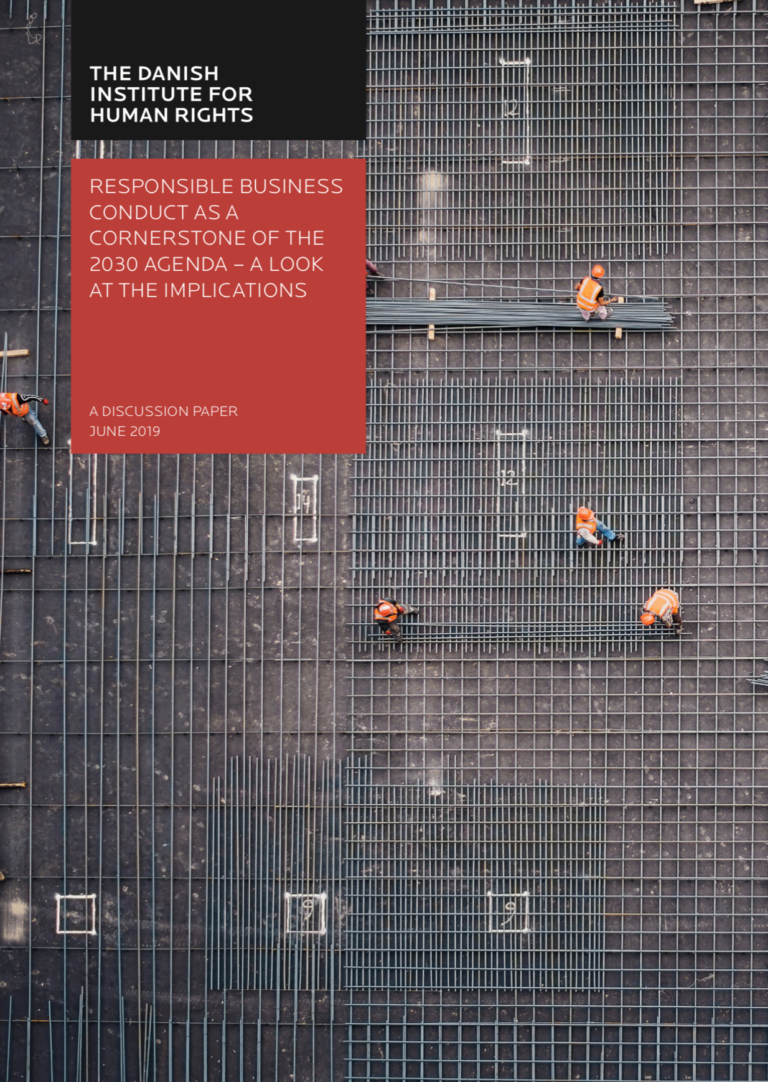
This discussion paper aims to provide practitioners working with business, human rights and/ or sustainable development with an overview of the connections between human rights, responsible business conduct and the 2030 Agenda for Sustainable Development (2030 Agenda), the opportunities an integrated approach brings for the realisation of human rights and sustainable development and the possible implications of an integrated approach in practice.

Responsible Business Conduct as a Cornerstone of the 2030 Agenda - A Look at the Implications DOWNLOAD

post

page

attachment

revision

nav_menu_item

custom_css

customize_changeset

oembed_cache

user_request

wp_block

wp_template

wp_template_part

wp_global_styles

wp_navigation

wp_font_family

wp_font_face

acf-taxonomy

acf-post-type

acf-field-group

acf-field

ai1ec_event

exactmetrics_note

Online child sexual exploitation
Publications

ECPAT International is a global network of civil society organisations working together to end the sexual exploitation of children (SEC). ECPAT comprises member organisations in over 100 countries who generate knowledge, raise awareness, and advocat...Read More

Data Collection in the Context of Trafficking in Human Beings and Exploitation in Germany
Publications

The report contains a first evaluation of the KOK data tool with over 700 cases of human trafficking and exploitation entered between January 2020 and the end of June 2021. Compared to the situation report on human trafficking published annually by ...Read More

‘Easy to Borrow, Hard to Repay’ Credit and Debt in Ho Chi Minh City’s Sex Industry
Publications

This study examines the inner workings of credit and debt in the sex industry in Ho Chi Minh City, the megalopolis of Southern Vietnam. It argues that credit is widely available to financially excluded sex workers, but that this availability comes w...Read More

Beyond Compliance in the Hotel Sector: A Review of UK Modern Slavery Act Statements
Publications

There is a highrisk of exploitation within the hotel sector due to its vulnerable workforce, complex supply chains with little transparency, and limited oversight from brands and multinational hotel companies as a result of extensive franchising. In...Read More