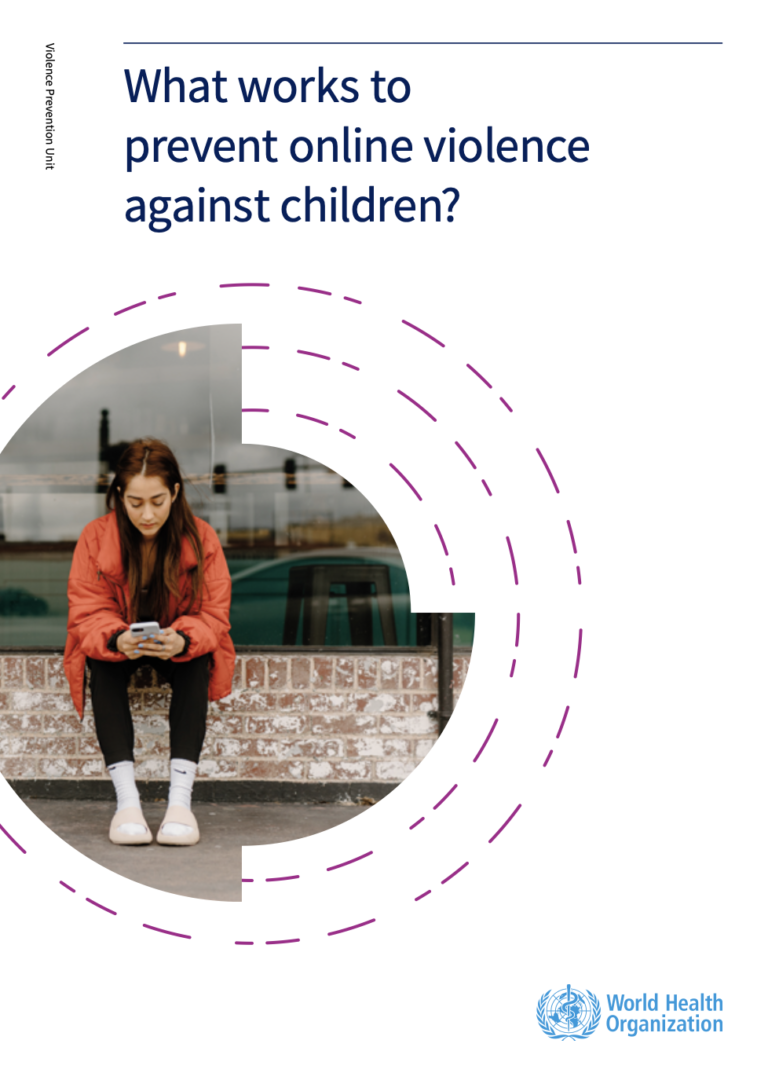
The report, What works to prevent online violence against children, presents ways to address the growing worldwide concern of keeping children safe online, with a specific focus on two forms of online violence: child sexual abuse including grooming and sexual image abuse; and cyber aggression and harassment in the form of cyberbullying, cyberstalking, hacking and identity theft.  The report recommends implementing school-based educational programmes that have multiple sessions, promote interaction among youth and engage parents. It highlights the need for improvements in several areas including:

  • the need for more violence prevention programmes that integrate content about online dangers with offline violence prevention, given the overlap of these problems and their common approaches to prevention; 
  • less emphasis on stranger danger as strangers are not the sole or even the predominant offenders in online violence against children;
  • more emphasis on acquaintance and peer perpetrators, who are responsible for a majority of offenses; and
  • more attention to healthy relationship skills, since romance and intimacy-seeking are major sources of vulnerability to online violence. 

What works to prevent violence against children online? - World Health Organization, 2022 DOWNLOAD

post

page

attachment

revision

nav_menu_item

custom_css

customize_changeset

oembed_cache

user_request

wp_block

wp_template

wp_template_part

wp_global_styles

wp_navigation

wp_font_family

wp_font_face

acf-taxonomy

acf-post-type

acf-field-group

acf-field

ai1ec_event

exactmetrics_note

Third-party monitoring of measures against child labour and forced labour during the 2017 cotton harvest in Uzbekistan
Publications

There is no systematic use of child labour in the cotton harvest in Uzbekistan and significant measures to end forced labour are being implemented. The annual cotton harvest in Uzbekistan is a unique large-scale effort. In 2017, an estimated 2.6 mil...Read More

The Role of Agents and Brokers in Facilitating Ethiopian Women into Domestic Work in the Middle East
News & AnalysisPublications

Large numbers of Ethiopian women seek domestic work in the “Middle East Corridor”—a signifcant social trend that reflects a key livelihood strategy used by Ethiopian families and communities in the face of widespread poverty (Kuschminder, Ande...Read More

Pathways for children to exit commercial sexual exploitation in Kathmandu
Publications

Commercial sexual exploitation of children (CSEC) affects an estimated 1.8 million children globally. In Nepal, the adult entertainment sector (AES) is recognised as a high-risk environment for children where sexual exploitation is known to occur. Th...Read More

Briefing Paper on the Sexual Exploitation of Children in Nepal
Publications

This briefing paper has been compiled using information included in the Out of the Shadows Index and the ECPAT Country Overview for Nepal. The brief describes Nepal's score on the Out of the Shadows Index, which measured the country...Read More