
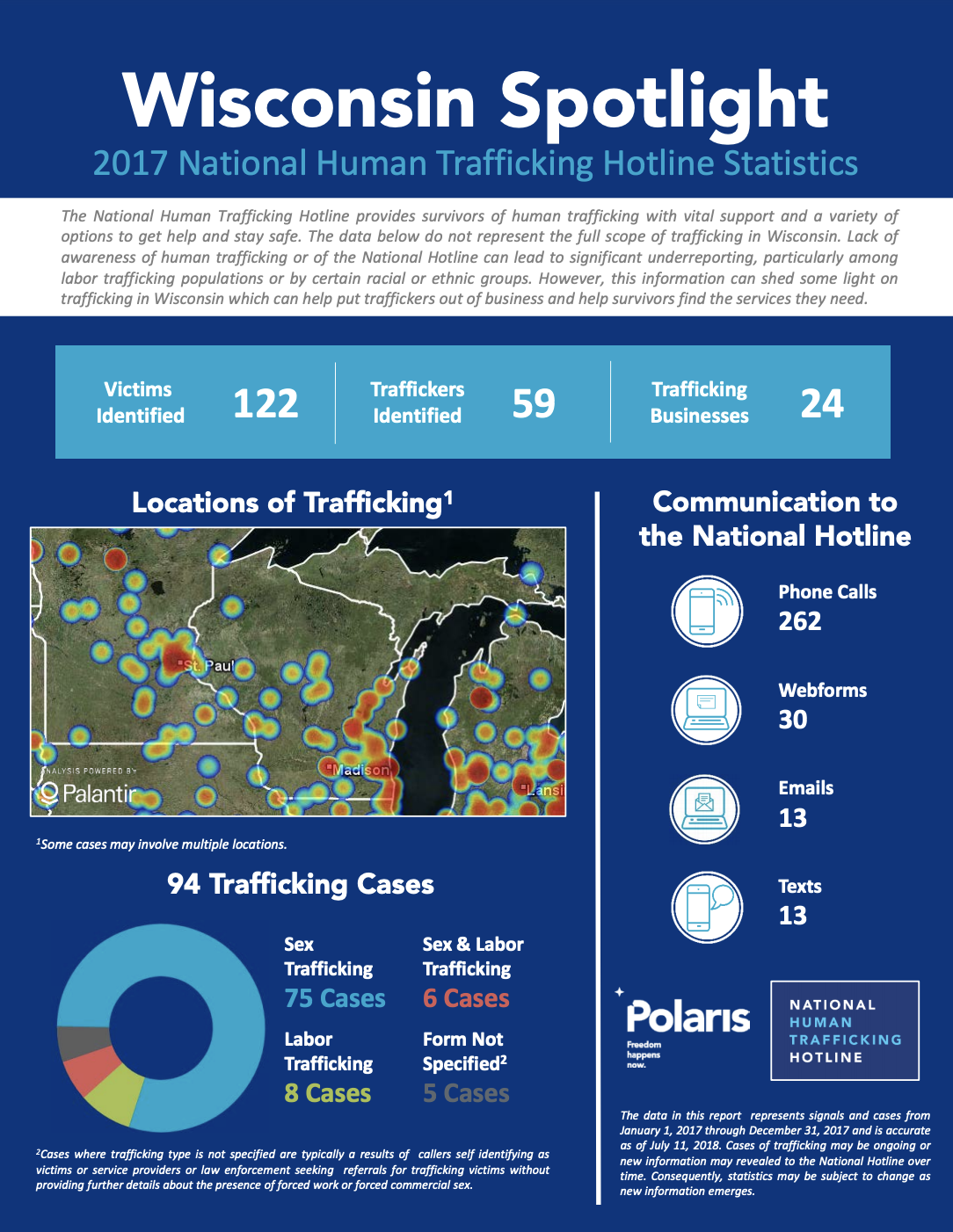
The data in this report represents signals and cases from January 1, 2017 through December 31, 2017 and is accurate as of July 11, 2018. Cases of trafficking may be ongoing or new information may be revealed to the National Hotline over time. Consequently, statistics may be subject to change as new information emerges.

You can download the report infographic below.

National Hotline 2017 Wisconsin State Report - National Human Trafficking Hotline, 2018 DOWNLOAD

post

page

attachment

revision

nav_menu_item

custom_css

customize_changeset

oembed_cache

user_request

wp_block

wp_template

wp_template_part

wp_global_styles

wp_navigation

wp_font_family

wp_font_face

acf-taxonomy

acf-post-type

acf-field-group

acf-field

ai1ec_event

exactmetrics_note

Maximizing Benefits from a Sustainable Supply Chain – BSR
Standards & Codes of ConductPublications

The case studies described in this brief reveal that there are benefits for suppliers to implementing social and environmental improvement programs, including improved workforce productivity, cost savings, and stronger competitiveness. Buyers also b...Read More

Forced Labor in the Production of Electronic Goods in Malaysia: A Comprehensive Study of Scope and Characteristics
Publications

Malaysia’s electronics sector workforce includes hundreds of thousands of foreign migrant workers who come to Malaysia on the promise of a good salary and steady work – an opportunity to make a better life for themselves and their families. But ...Read More

Freedom of movement for persons identified as victims of human trafficking: An analysis of law, policy and practice in the ASEAN Region
GuidancePublications

Author: Marika McAdam Sheltering victims of trafficking require a complex balance to be achieved between the rights of victims (including to freedom of movement and liberty), and the sometimes competing interests of other stakeholders. This Study...Read More

Tobacco’s Hidden Children: Hazardous Child Labour in United States Tobacco Farming
Publications

Methodology This report is based on interviews with 141 children ages 7 to 17 who said they had worked in tobacco farming in the United States in 2012 or 2013. During multiple field research trips between May and October 2013, Human Rights Watch ...Read More