
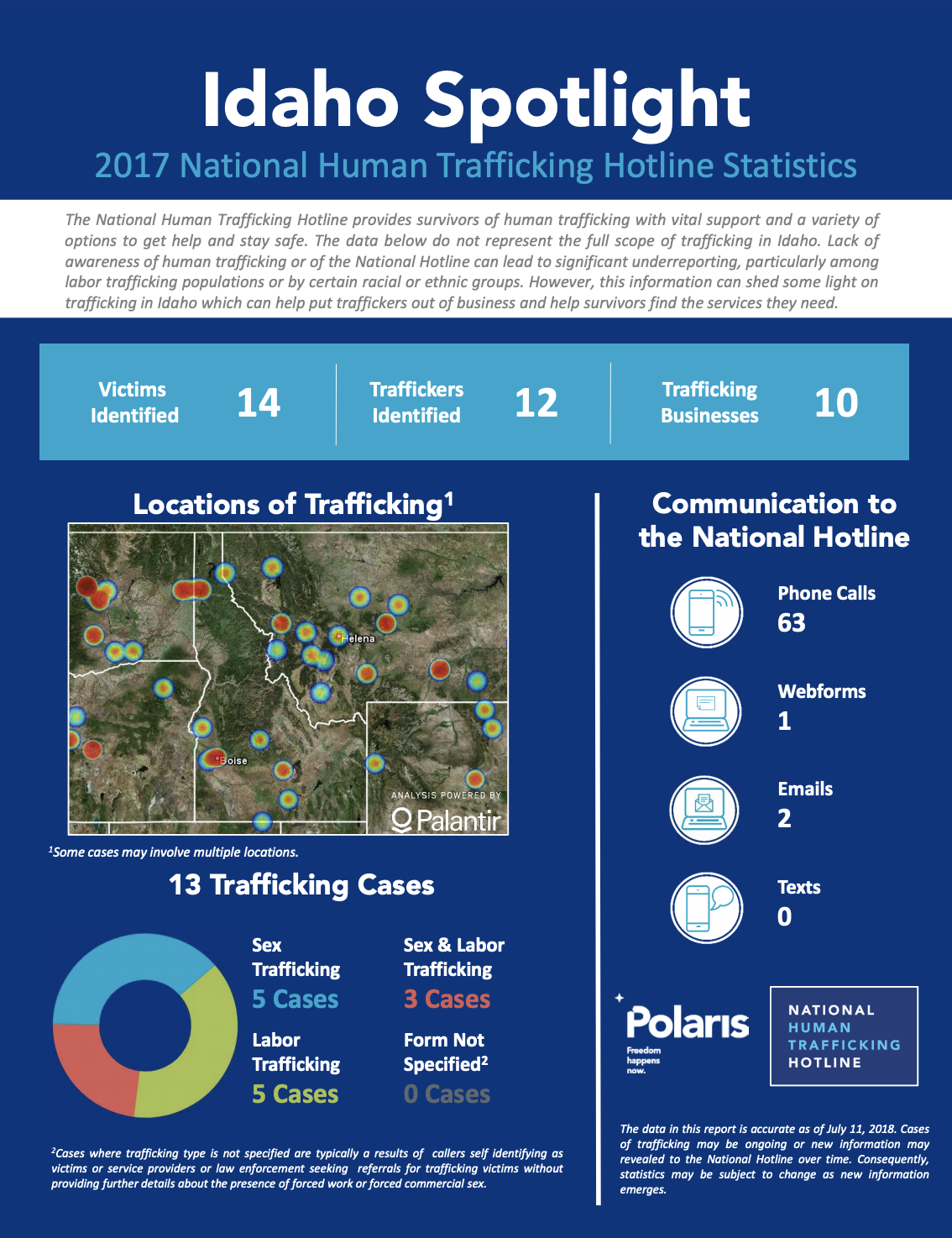
The data in this report represents signals and cases from January 1, 2017 through December 31, 2017 and is accurate as of July 11, 2018. Cases of trafficking may be ongoing or new information may be revealed to the National Hotline over time. Consequently, statistics may be subject to change as new information emerges.

You can download the report infographic below.

National Hotline 2017 Idaho State Report - National Human Trafficking Hotline, 2018 DOWNLOAD

post

page

attachment

revision

nav_menu_item

custom_css

customize_changeset

oembed_cache

user_request

wp_block

wp_template

wp_template_part

wp_global_styles

wp_navigation

wp_font_family

wp_font_face

acf-taxonomy

acf-post-type

acf-field-group

acf-field

ai1ec_event

exactmetrics_note

In Harm’s Way: How Systems Fail Human Trafficking Survivors
Publications

The National Survivor Survey is the largest and most significant effort to date to learn directly from survivors of sex and labor trafficking. This report uses the findings from this study to paint a detailed picture of the arc of trafficking – fr...Read More

What is the Role of Financial Sanctions in Tackling Modern Slavery and Human Trafficking?
News & AnalysisPublications

No country in the world is immune to the devastating impacts of modern slavery and human trafficking. Representing one of the world’s most profitable criminal enterprises, it generates some USD 150 billion per year. Addressing the financial angle...Read More

TAGS: Global
The Emperor has no clothes: Garment Supply Chains in the Time of Pandemic
COVID-19 resourcesPublications

Asia Floor Wage Alliance (AFWA), an Asian labour-led global labour and social alliance, has been monitoring the impact of the COVID-19 pandemic on workers in garment-producing countries through ground reports from AFWA partners and allies in Cambodi...Read More

Reclaiming Migrant Women’s Narratives: A Feminist Participatory Action Research Project on ‘Safe and Fair’ Migration in Asia
Publications

The report shows that Safe and Fair migration cannot happen in a silo – the factors that produce gender segregated labour markets, industries dependent on flexible, underpaid and overworked migrant labour require a systemic change. This change can...Read More

TAGS: