

Addressing the Retention of Identity Documents
GuidanceGood PracticesThis document calls on businesses to prohibit worker document retention and gives best practice guidance.
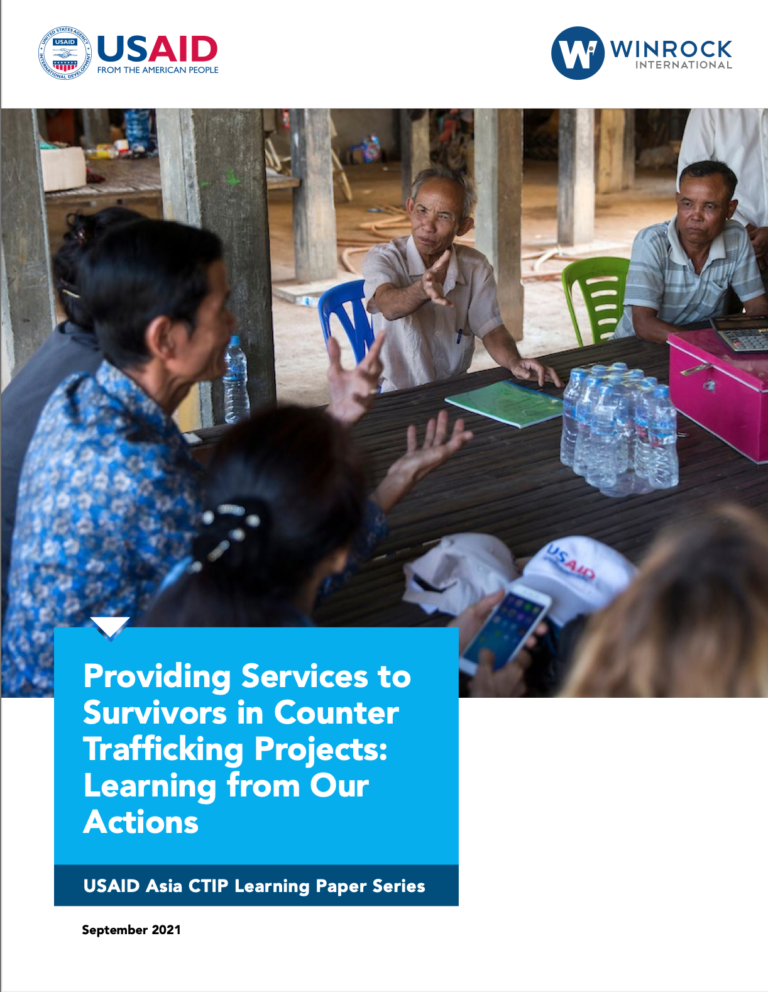
This Learning Paper Series was developed by the USAID Asia Counter Trafficking in Persons (CTIP) project with the overall aim to learn from our current and previous programming to better inform our future work. Winrock In- ternational is the implementing partner of this USAID-funded regional project. Winrock also implements six other USAID CTIP projects in nine countries: Bangladesh, Cambodia, Lao PDR, Kazakhstan, Kyrgyzstan, Nepal, Thailand, Turkmenistan, and Uzbekistan. In addition to this, Winrock is the implementing partner to an additional CTIP proj- ect in Bangladesh, generously funded by the Swiss Agency for Development and Cooperation (SDC).
Based on the wealth of experience coming from the region and the unique perspective of the regional project, USAID Asia CTIP decided to develop this Learning Paper Series to pull out crucial learnings that can be widely disseminated to funders, our teams at home office, our project staff in the field, and anyone else working in CTIP that wants to ensure the highest quality program delivery.
The papers in this series are meant to be small in scope, tackling specific areas of concern in the general program- ming models. In the future, the aim is to address the identified shortcomings with CTIP partners and ensure that ways of working are evidence based and impactful for survivors.
This document calls on businesses to prohibit worker document retention and gives best practice guidance.
In many ways, our understanding of the links between modern slavery and humanitarian crisis is still nascent. Just over five years ago, the United Nations held its first thematic debate on human trafficking, specifically condemning, “in the strong...Read More
Rampant labor exploitation in temporary migration schemes, climate crisis, prevalent vaccine apartheid, trag- edies at borders and in detention centers, everyday pre- carities of undocumented migrants, and the deplorable working conditions of many m...Read More
Prepared by Lisa Rende Taylor, Jarrett Basedow, Mark Taylor, and David Visser. In collaboration with Coventry University, Issara contributed to Fish for Export: Working in the Wild Capture Seafood Industry in Indonesia and distilled additional f...Read More


2025 © Copyright, RESPECT International. All Rights Reserved. Website Disclaimer | Privacy Policy