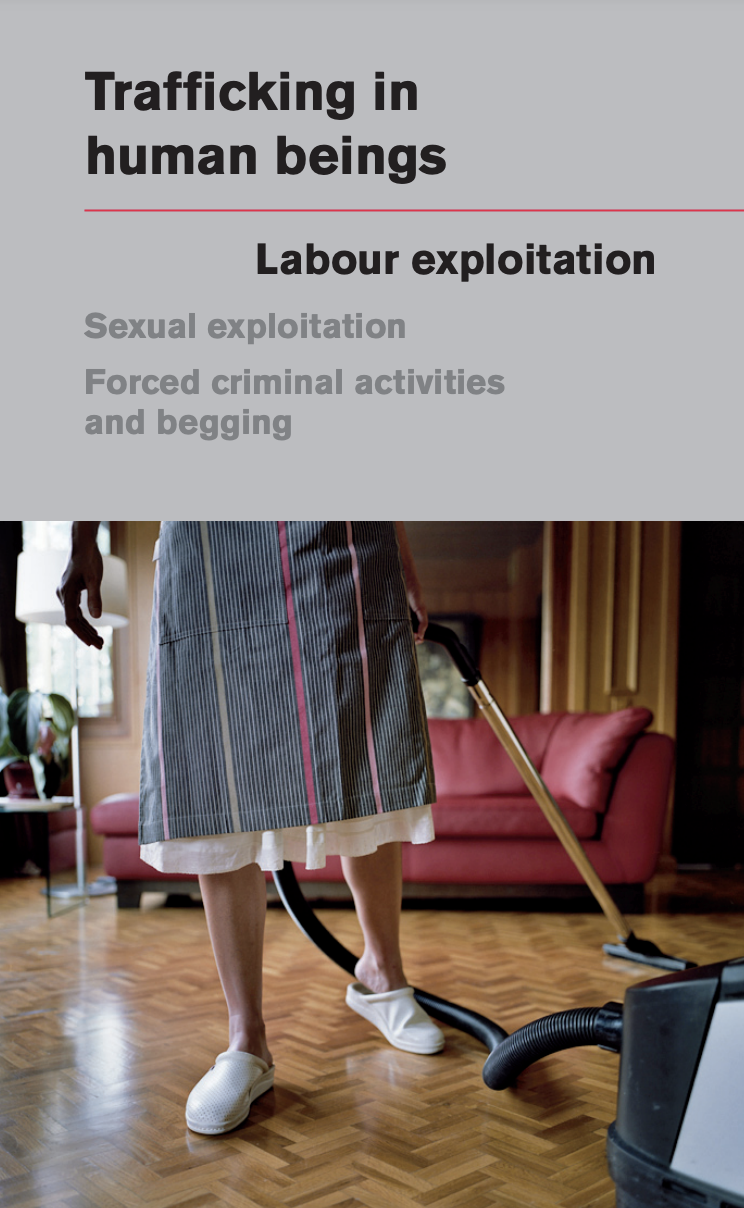
Trafficking in human beings is defined as a situation whereby a person’s predicament is used to trap them in an exploitative situation. This can take various forms and occurs in different areas:

• Labour exploitation

• Sexual exploitation

• Exploitation in marriage

• Forced begging

• Forced criminal activities

• Forced removal of organs

Trafficking in human beings constitutes a serious human rights violation and an offence to the dignity and the integrity of the human being.

For many years, specialised counselling centres have addressed trafficking for the purpose of labour exploitation or exploitative employment relationships as part of their everyday work, alongside cases of trafficking in human beings for sexual exploitation. We are seeing an increasing number of cases in which persons are exploited by being coerced into begging or criminal activities.

This brochure is part of a range of information brochures. Each one aims to take a closer look at a form of exploitation and to provide information about the counselling options and support structures available to trafficked persons in Germany. In particular they will present the services and work carried out by KOK’s members.

This brochure focuses on the phenomenon of trafficking in human beings for labour exploitation.

Trafficking in Human Beings – Labour Exploitation - German NGO Network against Trafficking in Human Beings, 2018 DOWNLOAD

post

page

attachment

revision

nav_menu_item

custom_css

customize_changeset

oembed_cache

user_request

wp_block

wp_template

wp_template_part

wp_global_styles

wp_navigation

wp_font_family

wp_font_face

acf-taxonomy

acf-post-type

acf-field-group

acf-field

ai1ec_event

exactmetrics_note

NetClean Report 2020
COVID-19 resourcesGuidance

NetClean develops world-leading technology solutions that protect businesses IT environments against child sexual abuse material, safeguarding against crime in the workplace. The NetClean Report – COVID-19 Impact 2020, is the sixth report from Net...Read More

How Can I Manage the Risk of Modern Slavery in My Supply Chain? GFEMS Highlights Three Promising Forced Labor Risk Detection Tools
Guidance

The COVID-19 pandemic has increased workers’ vulnerability to modern slavery across global apparel and manufacturing supply chains1. In addition to exacerbating risks to workers, the pandemic has increased consumers’ visibility on where and...Read More

Children’s Rights in the Garment and Footwear Supply Chain
Guidance

This guidance tool is designed to support companies in the garment and footwear sector to integrate child rights into their responsible sourcing programmes. It explores practical steps companies can take – individually and collectively – to ensu...Read More

Underground Lives: Forgotten Children- the Intergenerational Impact of Modern Slavery
News & AnalysisGuidancePublications

Thousands of children affected by modern slavery are being failed by the system. There are at least 5,000 children of modern slavery victims in the UK and the majority are not getting the support they need, with many more potentially lost in the ...Read More

TAGS: Europe