
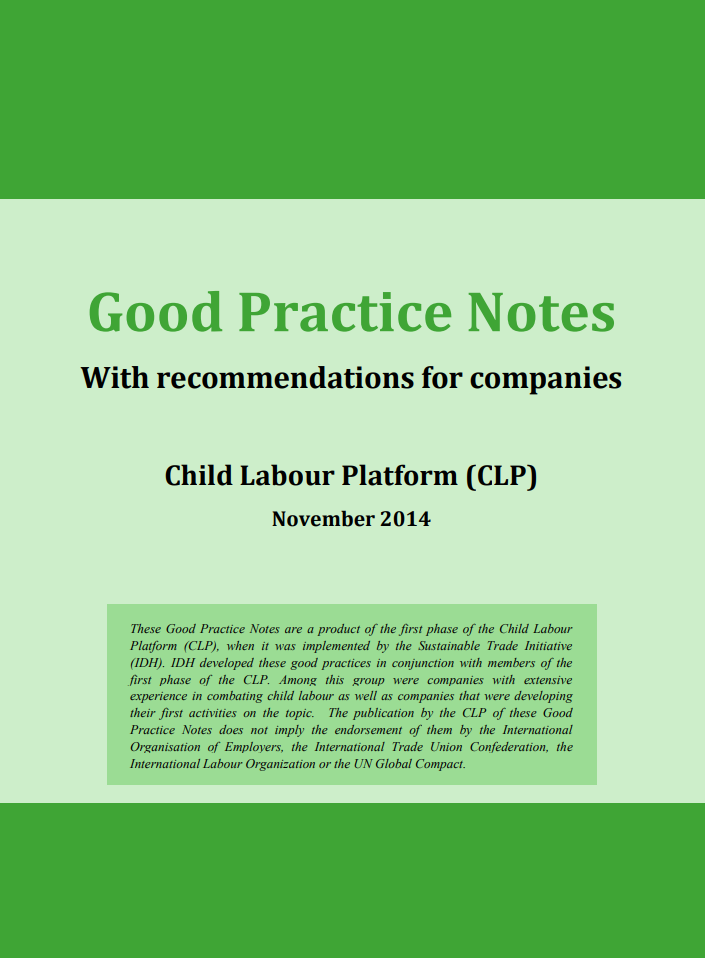
This compilation includes examples of approaches that multiple companies in the textile and garments, cocoa, tourism and/or mining sectors have adopted to prevent and remediate child labour. These examples were identified on the basis of information obtained from the CLP companies, as well as through workshops with a wider group of corporate representatives and other relevant stakeholders.

Child Labour Platform: Recommendations for companies, Child Labour Platform, the Sustainable Trade Initiative (IDH), 2014 DOWNLOAD

post

page

attachment

revision

nav_menu_item

custom_css

customize_changeset

oembed_cache

user_request

wp_block

wp_template

wp_template_part

wp_global_styles

wp_navigation

wp_font_family

wp_font_face

acf-taxonomy

acf-post-type

acf-field-group

acf-field

ai1ec_event

exactmetrics_note

Fig Leaf for Fashion: How Social Auditing Protects Brands and Fails Workers
Publications

This September 2019 report offers an extensive analysis of the corporate controlled audit industry, connecting the dots between the most well known business-driven social compliance initiatives, such as Social Accountability International, WRAP, the...Read More

Missing Home: Providing Safety to Trafficked Children
Publications

Between December 2017 and December 2018, Unseen ran the UK’s first Ofsted registered children’s home for non-UK national children who have experienced trafficking (hereafter referred to as trafficked children). The model we developed was a compl...Read More

A Call to Action: Ending the Use of All Forms of Child Labour in Supply Chains
Publications

This report offers seven recommendations, such as developing incentives for businesses to thoroughly and continually monitor their supply chains for the use of child labour and forced labour, and to share best practices. It also recommends the Gover...Read More

Impact of mobile technology for survivors of modern slavery and human trafficking: A mixed method study
Publications

Enabling access to online services through mobile technology is an essential need for survivors during the Covid-19 pandemic. It should be considered a feasible and necessary element of survivor support packages outside a pandemic. Further research ...Read More