
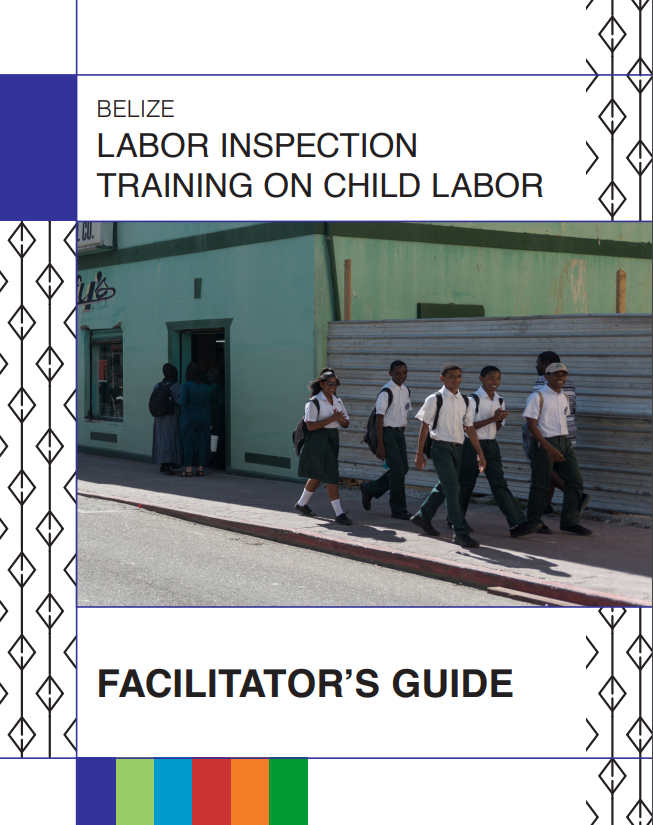
This facilitator’s guide provides tips and advice to help facilitators successfully use the curriculum for Labour Inspection Training on Child Labour in Burkina Faso.

It describes the purpose and objectives of the training; provides an overview of the training structure and format; gives examples of icebreakers and energizers; and includes sample training agendas and course evaluations.

The curriculum is based on a training methodology that encourages participants to play an active role, contributing their professional expertise on how to improve the response to child labor in the workplace.

child labour

Labor Inspection Training on Child Labor - Belize - Verité, 2018 DOWNLOAD

post

page

attachment

revision

nav_menu_item

custom_css

customize_changeset

oembed_cache

user_request

wp_block

wp_template

wp_template_part

wp_global_styles

wp_navigation

wp_font_family

wp_font_face

acf-taxonomy

acf-post-type

acf-field-group

acf-field

ai1ec_event

exactmetrics_note

Forced labor in supply chains: Addressing risks and safeguarding workers’ freedoms
Guidance

Forced labor, trafficking, and modern slavery (referred to collectively herein as forced labor) are human rights abuses persistent in global supply chains. The International Labour Organization (ILO) estimates that, in 2016, 16 million people&n...Read More

Delta 8.7 crisis policy guide
Guidance

In many ways, our understanding of the links between modern slavery and humanitarian crisis is still nascent. Just over five years ago, the United Nations held its first thematic debate on human trafficking, specifically condemning, “in the strong...Read More

ILO indicators of forced labour
Guidance

This booklet presents an introduction to the ILO Indicators of Forced Labour. These indicators are intended to help “front-line” criminal law enforcement officials, labour inspectors, trade union officers, NGO workers and others to identify pers...Read More

Measuring Disclosure Quality of Modern Slavery Statements: A SX300 Companies
Guidance

Modern slavery is a global phenomenon, with 40.3 million victims and $354 billion at-risk products imported by G20 countries in one year alone, according to estimates by the Walk Free Foundation (2018). Australia has historically been complicit in t...Read More