
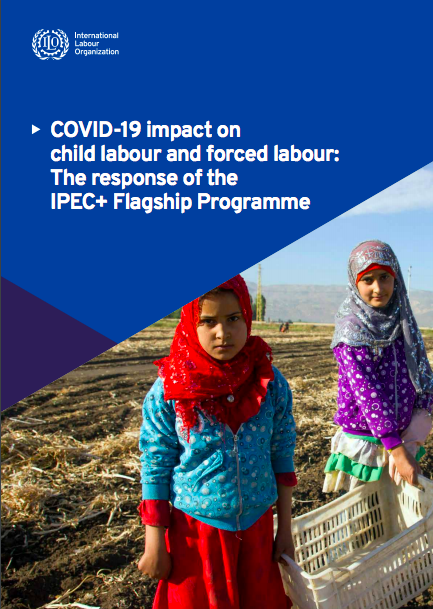
The ILO’s Flagship International Programme on the Elimination of Child Labour and Forced Labour (IPEC+) has ongoing operations in 62 countries, all of which are affected by the COVID-19 pandemic. The programme has developed business continuity plans to mitigate the risks and to repurpose its strategy and is seeking to allocate additional funding to support efforts to monitor the impact of COVID-19 on child labour, forced labour and human trafficking, particularly in relation to school closures, business shut downs, unemployment, the loss of livelihoods in affected communities and a lack of social protection systems.

COVID-19 impact on child labour and forced labour: The response of the IPEC+ Flagship Programme - ILO, 2020 DOWNLOAD

post

page

attachment

revision

nav_menu_item

custom_css

customize_changeset

oembed_cache

user_request

wp_block

wp_template

wp_template_part

wp_global_styles

wp_navigation

wp_font_family

wp_font_face

acf-taxonomy

acf-post-type

acf-field-group

acf-field

ai1ec_event

exactmetrics_note

Worked to Debt: Over Indebtedness In Cambodia’s Garment Sector
COVID-19 resourcesPublications

Tens of thousands of garment workers in Cambodia will struggle to repay microfinance debts during work stoppages and factory suspensions caused by COVID-19, creating a mounting human rights crisis as they struggle to feed their families and hold ont...Read More

Sitting on pins and needles: a rapid assessment of labour conditions in Vietnam’s garment sector
Publications

This report is a rapid assessment of labour conditions in Vietnam’s export-oriented textile and garment sector. The findings of the report, that highlight the risk of forced labour, child labour and child slavery, showcase the need for pan-Europea...Read More

On exploitation, agency and child domestic work: evidence fromSouth-West Nigeria
Publications

The engagement of children in domestic work in third-party households is mostly conceived as a decision that benefits adult actors – employers, intermediaries and/or parents – at the expense of young people. Thus, child domestic workers are ...Read More

TAGS:
Fourth interim report: Legal application of the Modern Slavery Act
Publications

The Modern Slavery Act 2015 (“the Act”) is a ground-breaking piece of legislation. Four years after it received Royal Assent, and as other countries are following our lead and developing similar legislation, it is critical to consider the legal ...Read More

TAGS: