
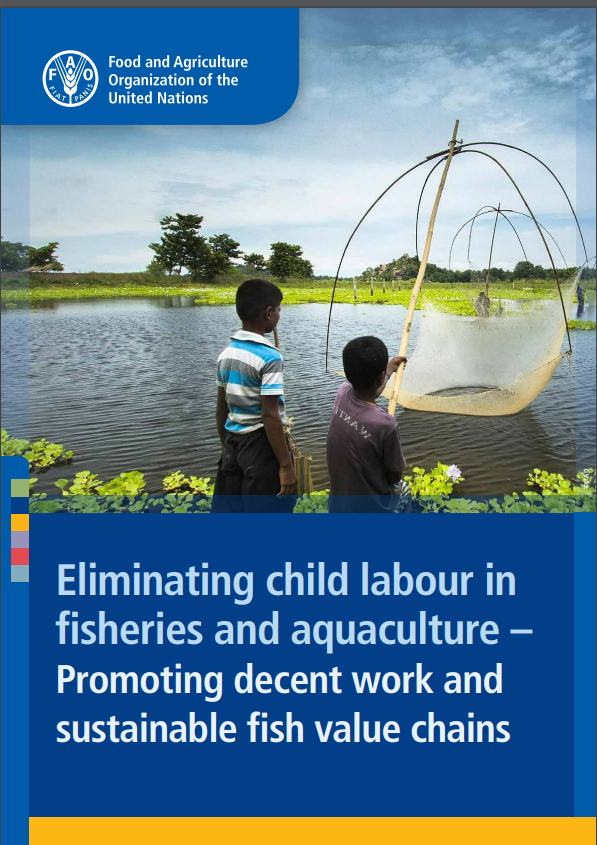
Worldwide, the majority of child labour is concentrated in the agricultural sector, including fisheries and aquaculture. This brief provides an overview of children’s engagement in child labour in fisheries and aquaculture, the risks they are exposed to and what can be done to address the problem, with a particular focus on the role of fisheries stakeholders.

Eliminating child labour in fisheries and aquaculture - Promoting decent work and sustainable fish value chains, Food and Agriculture Organization (FAO), 2018 DOWNLOAD

post

page

attachment

revision

nav_menu_item

custom_css

customize_changeset

oembed_cache

user_request

wp_block

wp_template

wp_template_part

wp_global_styles

wp_navigation

wp_font_family

wp_font_face

acf-taxonomy

acf-post-type

acf-field-group

acf-field

ai1ec_event

exactmetrics_note

Covid-19: Garment Worker Perspectives
COVID-19 resourcesPublications

The coronavirus pandemic and resulting government actions to stem the spread of the virus have severely changed the way people across the world work and live. For Jordan’s garment sector, the national curfew and shutdown of business activity force...Read More

US Supermarket Supply Chains: End the Human Suffering Behind our Food
Publications

Inequality is rampant across the global economy, and the agro-food sector is no exception. At the top, big supermarkets and other corporate food giants dominate global food markets, allowing them to squeeze value from vast supply chains that span the...Read More

The International Legal Definition of Trafficking in Persons: Consolidation of research findings and reflection on issues raised
Publications

Until December 2000, the term “trafficking in persons” was not defined in international law, despite its incorporation in several international legal instruments.The long-standing failure to develop an agreed-upon definition of trafficking in pe...Read More

TAGS:
It’s a Journey We Travel Together: Women Migrants Fighting for a Just Society
News & AnalysisPublications

This report describes the Feminist Participatory Action Research (FPAR) carried out by seven organisations from six countries across Asia and the Pacific region (Kyrgyzstan, Nepal, India, Malaysia, Indonesia and Hong Kong) between 2019 and 2021. The...Read More