
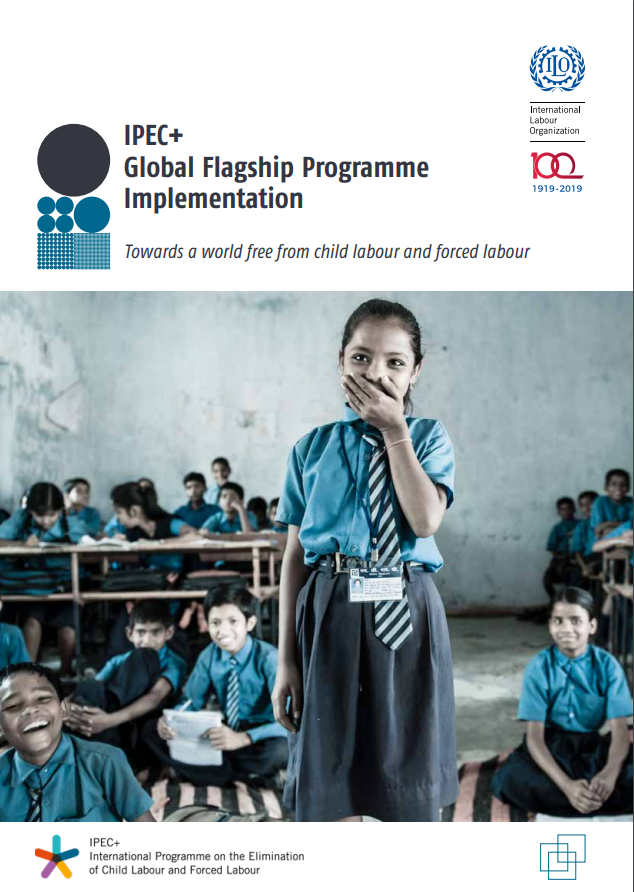
The objective of the IPEC+ Global Flagship Programme – in line with target 8.7 of the 2030 Sustainable Development Agenda, adopted by the United Nations in 2015 – is to provide ILO leadership in global efforts to eradicate all forms of child labour by 2025 and all forms of contemporary slavery and human trafficking by 2030.

It also aims to ensure that all people are protected from – and can protect themselves against – these gross human rights violations. THis report is one of the pubblications at the disposal of the ILO for promoting such goals.

Global Flagship Programme Implementation - International Programme on the Elimination of Child Labour and Forced Labour (IPEC+), 2019 DOWNLOAD

post

page

attachment

revision

nav_menu_item

custom_css

customize_changeset

oembed_cache

user_request

wp_block

wp_template

wp_template_part

wp_global_styles

wp_navigation

wp_font_family

wp_font_face

acf-taxonomy

acf-post-type

acf-field-group

acf-field

ai1ec_event

exactmetrics_note

Forced Labor in the Production of Electronic Goods in Malaysia: A Comprehensive Study of Scope and Characteristics
Publications

Malaysia’s electronics sector workforce includes hundreds of thousands of foreign migrant workers who come to Malaysia on the promise of a good salary and steady work – an opportunity to make a better life for themselves and their families. But ...Read More

It’s a Journey We Travel Together: Women Migrants Fighting for a Just Society
News & AnalysisPublications

This report describes the Feminist Participatory Action Research (FPAR) carried out by seven organisations from six countries across Asia and the Pacific region (Kyrgyzstan, Nepal, India, Malaysia, Indonesia and Hong Kong) between 2019 and 2021. The...Read More

Beyond Compliance in the Hotel Sector: A Review of UK Modern Slavery Act Statements
Publications

There is a highrisk of exploitation within the hotel sector due to its vulnerable workforce, complex supply chains with little transparency, and limited oversight from brands and multinational hotel companies as a result of extensive franchising. In...Read More

Impact of the CARE Tipping Point Program in Nepal on adolescent girls’ agency and risk of child, early, or forced marriage: Results from a cluster-randomized controlled trial
Publications

ackground: Girl child, early, and forced marriage (CEFM) persists in South Asia, with long-term effects on well- being. CARE’s Tipping Point Initiative (TPI) sought to address the gender norms and inequalities underlying CEFM by engaging part...Read More

TAGS: