
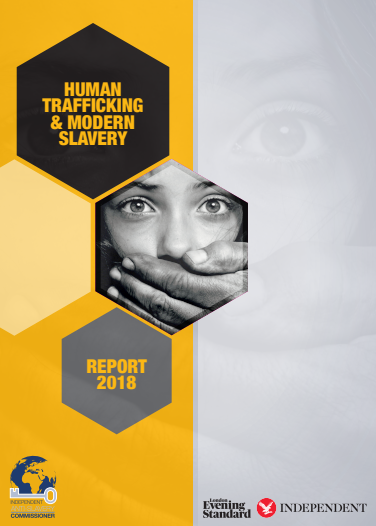
In September 2017, The Evening Standard and The Independent, in partnership with the Independent Anti-Slavery Commissioner, launched a three-month special investigation into the issue of modern slavery. The special investigation, which was personally backed by the newspapers’ proprietor Evgeny Lebedev, was called Slaves On Our Streets.

As part of the Investigation, Cardinal Vincent Nichols convened a round table of experts from business, media, law, finance, philanthropy, law enforcement and victim support. The recommendations of this group are presented in this document.

Human Trafficking & Modern Slavery - 2018 Report DOWNLOAD

post

page

attachment

revision

nav_menu_item

custom_css

customize_changeset

oembed_cache

user_request

wp_block

wp_template

wp_template_part

wp_global_styles

wp_navigation

wp_font_family

wp_font_face

acf-taxonomy

acf-post-type

acf-field-group

acf-field

ai1ec_event

exactmetrics_note

EXPOsed: Discrimination and forced labour practices at Expo 2020 Dubai
Publications

Expo 2020 Dubai could not have taken place without migrant workers who make up more than 90% of private sector employees in the UAE. With more than 40,000 workers employed in the construction process alone. Similarly, the delivery of the Expo requir...Read More

COVID-19 Impact on Child Labour and Forced Labour: The Response of the IPEC+ Flagship Program
COVID-19 resourcesPublications

The ILO’s Flagship International Programme on the Elimination of Child Labour and Forced Labour (IPEC+) has ongoing operations in 62 countries, all of which are affected by the COVID-19 pandemic. The programme has developed business continuity pla...Read More

TAGS: Global
People for Profit: North Korean Forced Labour on a Global Scale
Publications

The practice of sending large numbers of labourers abroad is a direct consequence of the situation the Democratic People’s Republic of Korea (DPRK) faces domestically and is made possible by the international networks that DPRK institutions, busin...Read More

TAGS: Asia
Impact of the CARE Tipping Point Program in Nepal on adolescent girls’ agency and risk of child, early, or forced marriage: Results from a cluster-randomized controlled trial
Publications

ackground: Girl child, early, and forced marriage (CEFM) persists in South Asia, with long-term effects on well- being. CARE’s Tipping Point Initiative (TPI) sought to address the gender norms and inequalities underlying CEFM by engaging part...Read More

TAGS: