
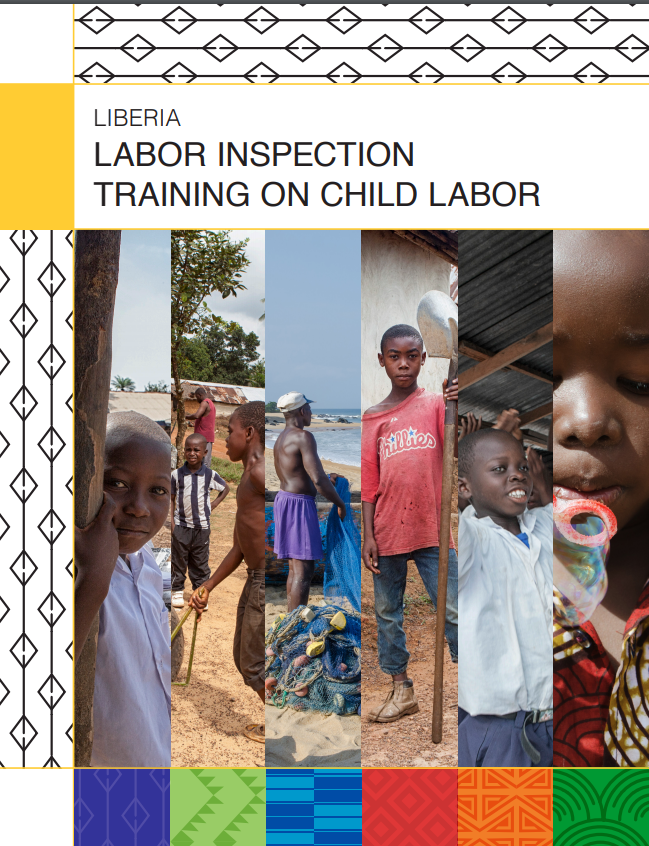
This facilitator’s guide provides tips and advice to help facilitators successfully use the curriculum for Labour Inspection Training on Child Labour in Liberia.

It describes the purpose and objectives of the training; provides an overview of the training structure and format; gives examples of icebreakers and energizers; and includes sample training agendas and course evaluations.

The curriculum is based on a training methodology that encourages participants to play an active role, contributing their professional expertise on how to improve the response to child labour in the workplace.

Labor Inspection Training on Child Labor - Liberia - Verité and Winrock International, 2018 DOWNLOAD

post

page

attachment

revision

nav_menu_item

custom_css

customize_changeset

oembed_cache

user_request

wp_block

wp_template

wp_template_part

wp_global_styles

wp_navigation

wp_font_family

wp_font_face

acf-taxonomy

acf-post-type

acf-field-group

acf-field

ai1ec_event

exactmetrics_note

Navigating the Surveillance Technology System: A Human Rights Due Diligence Guide for Investors
Guidance

As the information and communication technology (ICT) industry rapidly expands, it has the power to support democratic, accountable institutions and the exercise of civic freedoms or perpetuate violations of individual and collective rights. As ...Read More

Labour Inspection and Monitoring of Recruitment of Migrant Workers: Technical Brief
GuidancePublications

Labour migration may benefit employers and workers, and across the world recruitment agencies play an important role in matching migrant workers with available jobs. However, while the cost of recruitment of higher skilled migrant workers tends to b...Read More

TAGS: Global
Migrant Workers at Risk: Trends in Gulf Construction 2018−2019
Guidance

An overview of the risks to migrant workers on construction projects across the Gulf. Migrant workers make up between 60% and 90% of the workforce in the six countries of the Gulf Cooperation Council (GCC). Low-wage construction workers are at parti...Read More

National Referral Mechanisms – Joining Efforts to Protect the Rights of Trafficked Persons: A Practical Handbook
GuidanceGood Practices

National referral mechanisms (NRMs) are the institutional mechanisms that help states identify human trafficking victims and ensure their protection. This handbook provides a guidance model which all OSCE participating States can adapt and apply wit...Read More