
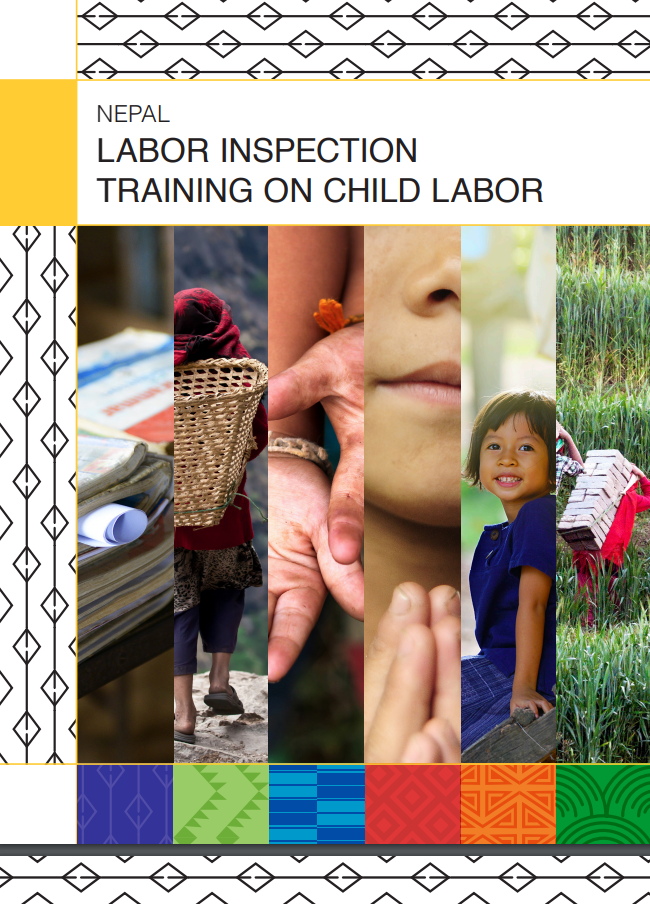
This facilitator’s guide provides tips and advice to help facilitators successfully use the curriculum for Labour Inspection Training on Child Labour in Nepal.

It describes the purpose and objectives of the training; provides an overview of the training structure and format; gives examples of ice breakers and energizers; and includes sample training agendas and course evaluations.

The curriculum is based on a training methodology that encourages participants to play an active role, contributing their professional expertise on how to improve the response to child labour in the workplace.

Labor Inspection Training on Child Labor - Nepal - Verité and Winrock International, 2018 DOWNLOAD

post

page

attachment

revision

nav_menu_item

custom_css

customize_changeset

oembed_cache

user_request

wp_block

wp_template

wp_template_part

wp_global_styles

wp_navigation

wp_font_family

wp_font_face

acf-taxonomy

acf-post-type

acf-field-group

acf-field

ai1ec_event

exactmetrics_note

Health and Human Trafficking in the Greater Mekong Subregion
Guidance

This study drew on a conceptual framework on trafficking and health that highlights the potential health influences of each of the phases of the migration process and their importance to the cumulative health status of individuals who are trafficked...Read More

Preventing and tackling child sexual exploitation and abuse (CSEA): A model national response
Guidance

At the Abu-Dhabi Summit in 2015, governments and organisations agreed to establish and deliver, in their own countries, a coordinated national response to online child sexual exploitation, guided by the WePROTECT Global Alliance Model National respo...Read More

How Can I Manage the Risk of Modern Slavery in My Supply Chain? GFEMS Highlights Three Promising Forced Labor Risk Detection Tools
Guidance

The COVID-19 pandemic has increased workers’ vulnerability to modern slavery across global apparel and manufacturing supply chains1. In addition to exacerbating risks to workers, the pandemic has increased consumers’ visibility on where and...Read More

Worker Voice-Driven Ethical Recruitment Toolkit
GuidanceStandards & Codes of Conduct

First released in November 2017, the Issara Worker Voice-Driven Ethical Recruitment Toolkit has been expanded and updated through the years to meet the needs of suppliers and recruitment agencies in South and Southeast Asia. This new October 2022 v...Read More

TAGS: Asia