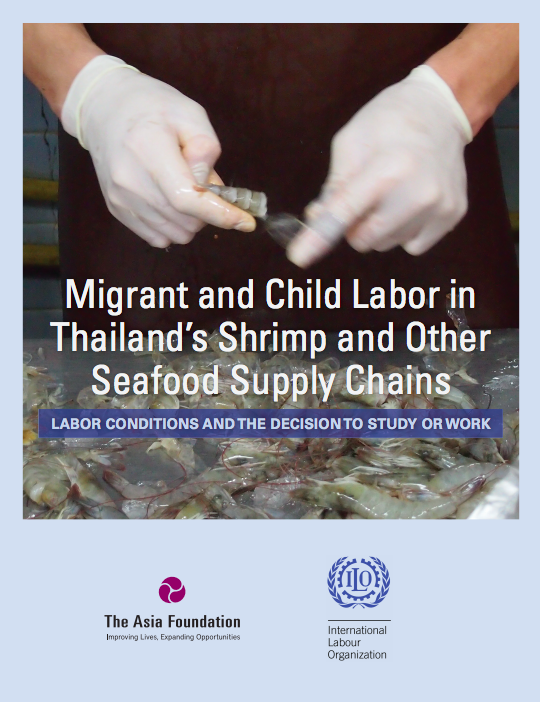
The study aims to strengthen the evidence base on child labour and the labour conditions of migrant workers in Thailand’s shrimp and other seafood supply chains, with a particular focus on communities engaged in these industries. Its objective is to provide practical, empirically grounded policy recommendations that can be discussed with different stakeholders and
considered by both national and provincial governments and industry.

The study draws on a combination of existing evidence and data from the ILO’s work in Thailand and supplementary qualitative information generated through focus group discussions, key informant interviews, and
consultations with stakeholders.

post

page

attachment

revision

nav_menu_item

custom_css

customize_changeset

oembed_cache

user_request

wp_block

wp_template

wp_template_part

wp_global_styles

wp_navigation

wp_font_family

wp_font_face

acf-taxonomy

acf-post-type

acf-field-group

acf-field

ai1ec_event

exactmetrics_note

Developing Freedom: The Sustainable Development Case for Ending Modern Slavery, Forced Labour and Human Trafficking
Publications

40.3 million people – around 1 in every 185 people alive – experienced modern slavery or forced labour in 2016. States have committed to take immediate and effective measures to end modern slavery, forced labour and human trafficking by 2030, an...Read More

Recognising Lived Realities
Publications

This briefing presents the findings of a project, led by University of Liverpool in partnership with FLEX and funded by the British Academy with the Department for International Development. The project assessed how transparency in supply chain...Read More

Unlocking What Works: How Community-Based Interventions are Ending Bonded Labour in India
Publications

New findings from external evaluations of the Freedom Fund’s hotspot programs by leading research organisations have validated our model of working with vulnerable communities. The headline findings from these evaluations are: Between 2015...Read More

TAGS: Asia
Financial Exploitation:Collecting Meaningful Data
GuidancePublications

The vast majority of modern slavery and human trafficking cases involve interaction with finance in some form. In many cases, traffickers exploit their victims financially, taking control of their bank accounts, confiscating wages, and using debt as...Read More