
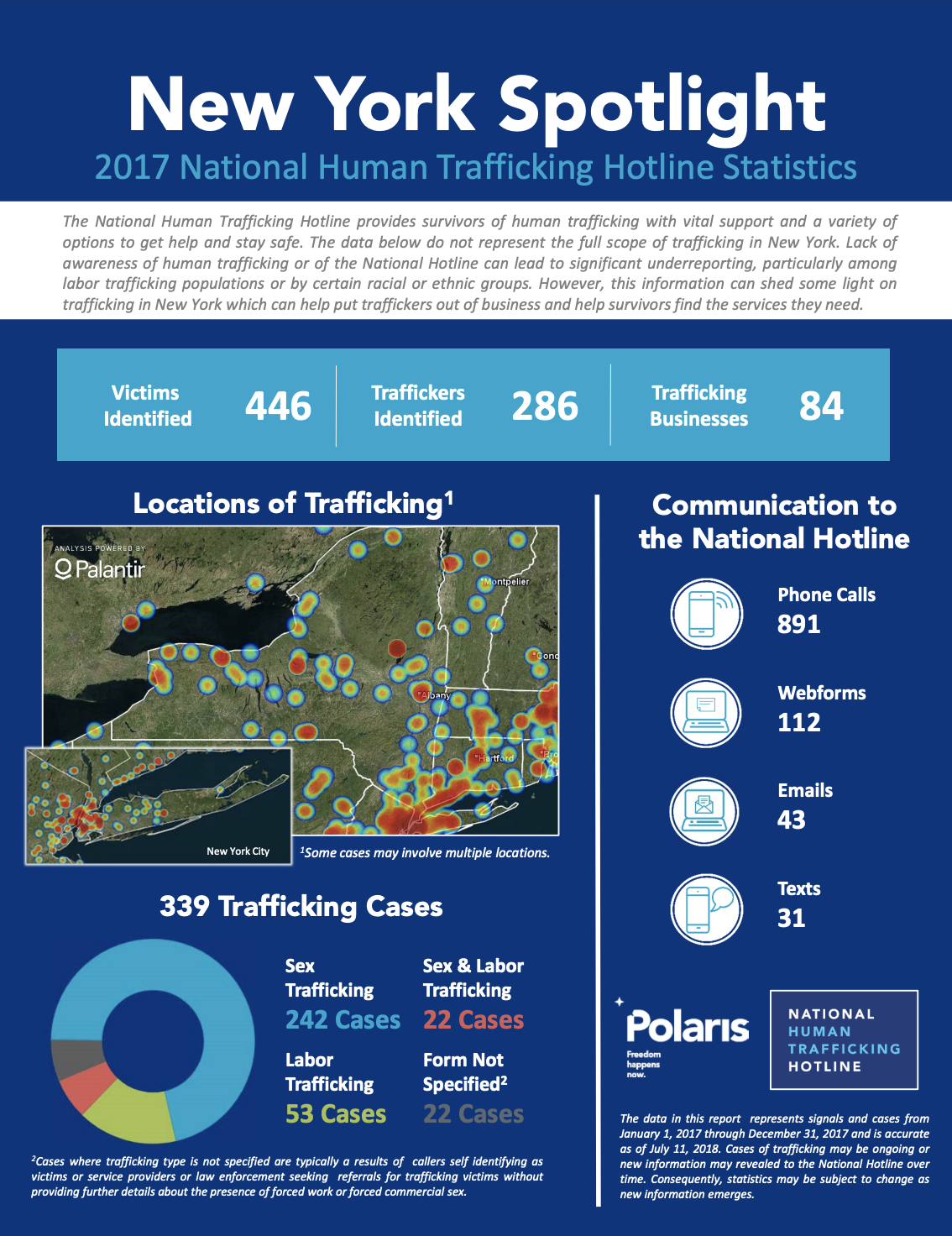
The data in this report represents signals and cases from January 1, 2017 through December 31, 2017 and is accurate as of July 11, 2018. Cases of trafficking may be ongoing or new information may be revealed to the National Hotline over time. Consequently, statistics may be subject to change as new information emerges.

You can download the report infographic below.

National Hotline 2017 New York State Report - National Human Trafficking Hotline, 2018 DOWNLOAD

post

page

attachment

revision

nav_menu_item

custom_css

customize_changeset

oembed_cache

user_request

wp_block

wp_template

wp_template_part

wp_global_styles

wp_navigation

wp_font_family

wp_font_face

acf-taxonomy

acf-post-type

acf-field-group

acf-field

ai1ec_event

exactmetrics_note

Beyond Compliance in the Hotel Sector: A Review of UK Modern Slavery Act Statements
Publications

There is a high-risk of exploitation within the hotel sector due to its vulnerable workforce, complex supply chains with little transparency, and limited oversight from brands and multinational hotel companies as a result of extensive franchising. I...Read More

Child Labour: Global estimates 2020, trends and the road forward
Publications

This report warns that global progress to end child labour has stalled for the first time in 20 years. The number of children aged 5 to 17 years in hazardous work – defined as work that is likely to harm their health, safety or morals – has rise...Read More

Sextortion: Findings from a Survey of 1,631 Victims
Publications

Janis Wolak and David Finkelhor Sextortion is defined as threats to expose a sexual image in order to make a person do something or for other reasons, such as revenge or humiliation. In an effort to better understand the threat of sextortion and ...Read More

Knowledge of and access to frontline workers among poor, rural households in Amhara region, Ethiopia: a mixed-methods study
Publications

Social protection programmes have effectively reduced poverty and improved food security. However, the effects of poverty require an intersectoral approach to adequately address poor nutrition and health. Identifying gaps in knowledge and access to ...Read More

TAGS: