
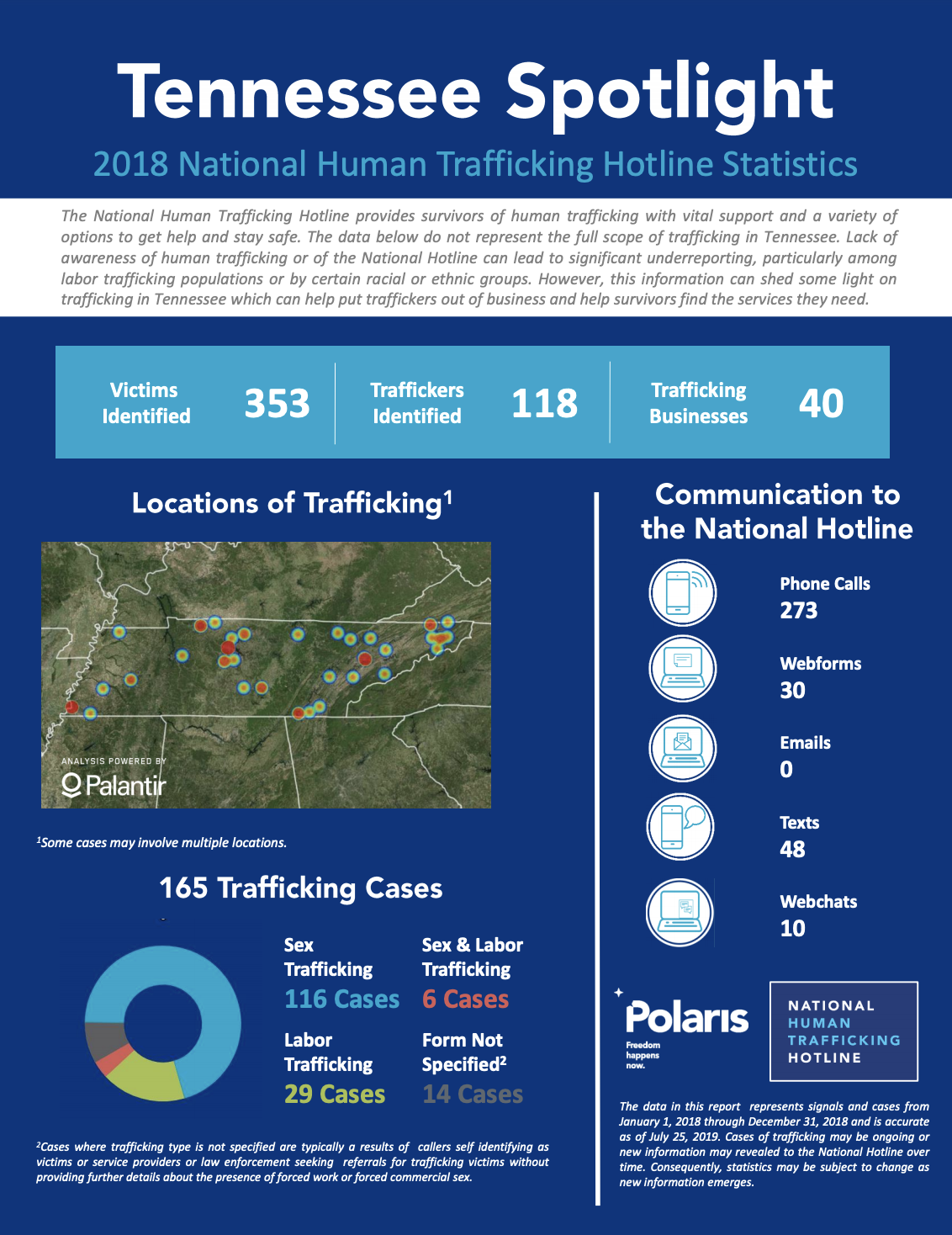
The data in this report represents signals and cases from January 1, 2018 through December 31, 2018 and is accurate as of July 25, 2019. Cases of trafficking may be ongoing or new information may revealed to the National Hotline over time. Consequently, statistics may be subject to change as new information emerges.

You can download the report infographic below.

National Hotline 2018 Tennessee State Report - National Human Trafficking Hotline, 2019 DOWNLOAD

post

page

attachment

revision

nav_menu_item

custom_css

customize_changeset

oembed_cache

user_request

wp_block

wp_template

wp_template_part

wp_global_styles

wp_navigation

wp_font_family

wp_font_face

acf-taxonomy

acf-post-type

acf-field-group

acf-field

ai1ec_event

exactmetrics_note

Addressing the Human Cost of Assam Tea: An Agenda for Change to Respect, Protect and Fulfill Human Rights on Assam Tea Plantations
Publications

Workers on tea plantations in the Assam region of India are systematically denied their rights to a living wage and decent working and living conditions. The fact that they are unable to meet their basic living costs is starkly illustrated by our fi...Read More

The Climate Change–Human Trafficking Nexus
Good PracticesPublications

Climate change increases the risk of natural disasters and places a strain on livelihoods. This may contribute to high-risk behaviours and other negative coping strategies among affected populations, such as resorting to unscrupulous recruitment age...Read More

TAGS: Asia
Aggravating circumstances: How coronavirus impacts human trafficking
COVID-19 resourcesNews & AnalysisGuidanceGraphics & InfographicsPublications

Authors: Livia Wagner, Thi Hoang The policy brief was originally posted here on GI-TOC website, as part of its #CovidCrimeWatch initiative. The coronavirus is not only claiming hundreds of thousands of lives, but is also causing a global econo...Read More

TAGS: Global
Labour on a Shoestring: The Realities of Working in Europe’s Shoe Manufacturing Peripheries in Albania, Bosnia-Herzegovina, Macedonia, Poland, Romania and Slovakia
Publications

Often consumers in Western Europe believe that “Made in Europe” is a synonym for working conditions that are better than in production countries in Asia. This report shows that this is not always the case, and that problematic working conditions...Read More

TAGS: Europe