
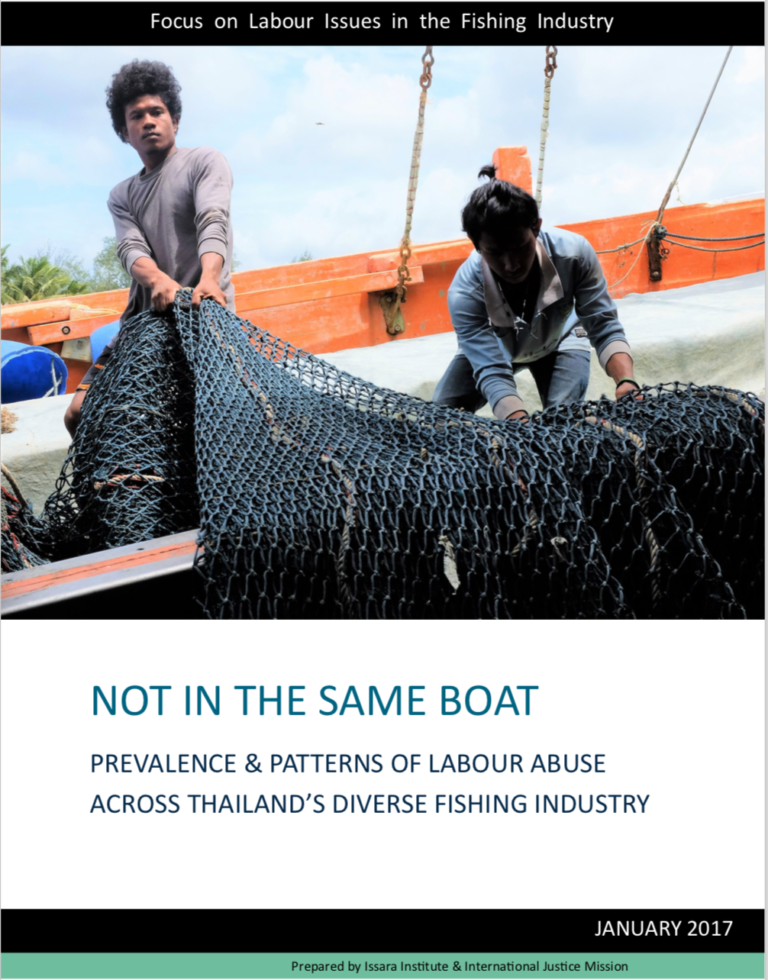
After presenting the research methodology and profile of the fishermen in the sample, this paper presents three key analyses: the first explores the means of control and exploitation of Burmese and Cambodian fishermen on Thai fishing vessels, providing a nuanced picture of the nature of exploitation at sea. The second analysis applies rigorous statistical modeling methods to estimate the prevalence of human trafficking in the Thai fishing industry, as well as key risk factors. The third analysis explores differences in risky labour practices across different types of commercial fishing vessels in the Thai fishing industry, in recognition of how the diversity of fishing operations and gear creates variation in working conditions, treatment, and other key aspects of work.

Not in the Same Boat: Prevalence & Patterns of Labour Abuse Across Thailand's Diverse Fishing Industry - Issara Institute and International Justice Mission, 2017 DOWNLOAD

post

page

attachment

revision

nav_menu_item

custom_css

customize_changeset

oembed_cache

user_request

wp_block

wp_template

wp_template_part

wp_global_styles

wp_navigation

wp_font_family

wp_font_face

acf-taxonomy

acf-post-type

acf-field-group

acf-field

ai1ec_event

exactmetrics_note

The COVID-19 Pandemic Could Increase Child Labour in Latin America and the Caribbean
COVID-19 resourcesPublications

Currently the world is going through an unprecedented health, social, human and economic crisis due to the pandemic caused by the disease COVID-19, catalogued even as the greatest economic and social challenge facing humanity since the Great Depress...Read More

First Year of FTSE 100 Reports under the UK Modern Slavery Act: Towards Elimination?
Publications

The International Labour Organization estimates that illicit profits from modern slavery reach $150 billion a year. In 2016, 16 million people were victims of forced labour in the private economy. Companies are exposed to modern slavery risks through...Read More

What Works: Lessons in the Use of Cash Transfers
Publications

Cash transfers are used as a tool to empower and protect vulnerable individuals, households, and other groups from shocks and to mitigate vulnerabilities, such as low and variable income. These transfers can also be used to encourage positive change...Read More

They said we wouldn’t have to pick and now they send us to the fields – Forced Labour in Uzbekistan’s Cotton Harvest 2018
Publications

Uzbekistan’s 2018 cotton harvest, which concluded in all regions of the country in the last week of November, showcased the enormous challenges in uprooting the country’s deeply entrenched forced labour system. Driven by a commitment to reform a...Read More