
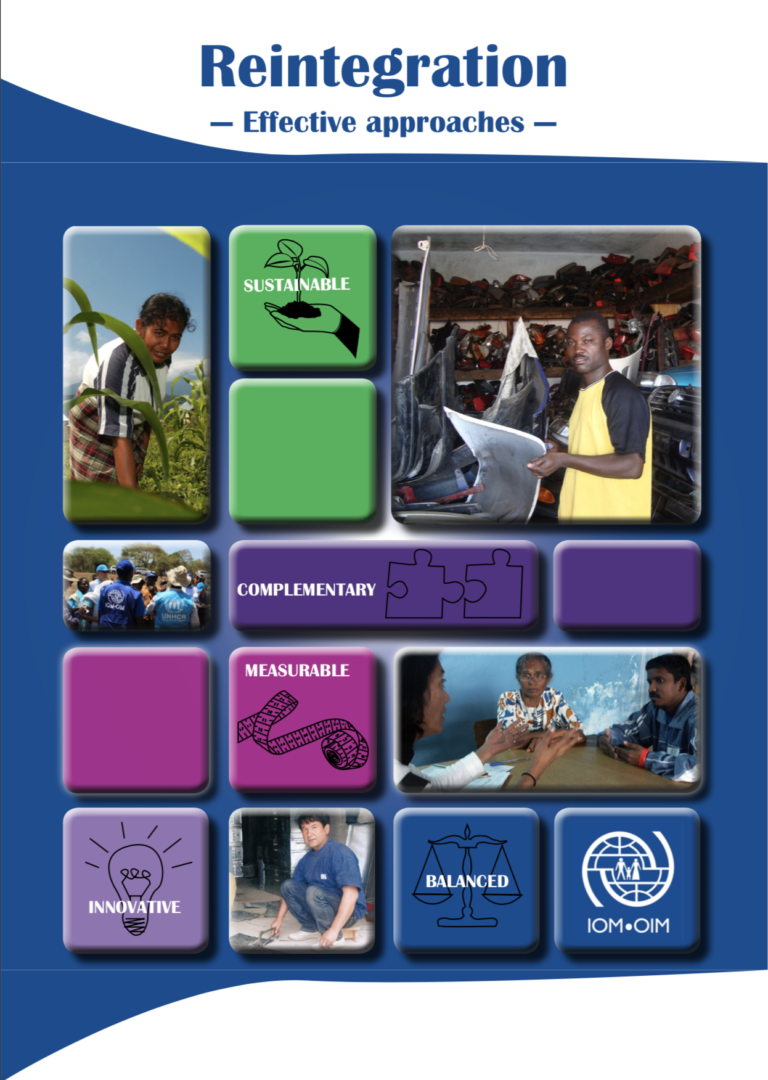
The document provides a snapshot of the current debate around reintegration and portrays various positions and practices that can support practitioners and academics in making further progress.

This paper intends to analyse past and current frameworks to offer inspiration for future ones, conscious that in order to develop sustainable, balanced, complementary, measurable and innovative reintegration schemes, joint approaches building on the expertise of key actors in countries of origin, transit and destination are fundamental.

Reintegration- Effective Approaches DOWNLOAD

post

page

attachment

revision

nav_menu_item

custom_css

customize_changeset

oembed_cache

user_request

wp_block

wp_template

wp_template_part

wp_global_styles

wp_navigation

wp_font_family

wp_font_face

acf-taxonomy

acf-post-type

acf-field-group

acf-field

ai1ec_event

exactmetrics_note

Unlocking Potential: A Blueprint for Mobilizing Finance Against Slavery and Trafficking
GuidancePublications

Unlocking Potential: A Blueprint for Mobilizing Finance Against Slavery and Trafficking is the final report of the Liechtenstein Initiative for a Financial Sector Commission on Modern Slavery and Human Trafficking, which has now formed Finance Again...Read More

Child Labour Platform: Recommendations for companies
Publications

This compilation includes examples of approaches that multiple companies in the textile and garments, cocoa, tourism and/or mining sectors have adopted to prevent and remediate child labour. These examples were identified on the basis of informati...Read More

MAPPING HER JOURNEY: Documenting Widespread Issues Affecting Sierra Leonean Domestic Workers in Oman Using Primary, Real-Time and Near Real-Time Data
Publications

Domestic workers are one of the communities least protected by existing laws and one of the most vulnerable to exploitation in the world. We have documented an array of systemic and widespread abusive practices against Sierra Leonean women domestic ...Read More

TAGS:
Point of No Returns Part II – Human Rights: An assessment of asset managers’ approaches to human and labour rights
Publications

The number of modern slavery victims in global supply chains today is believed to stand at around 16 million, roughly the same number of enslaved people as during the transatlantic slave trade in the 18th century. While this statistic alone is sugge...Read More