By Brian Huerbsch

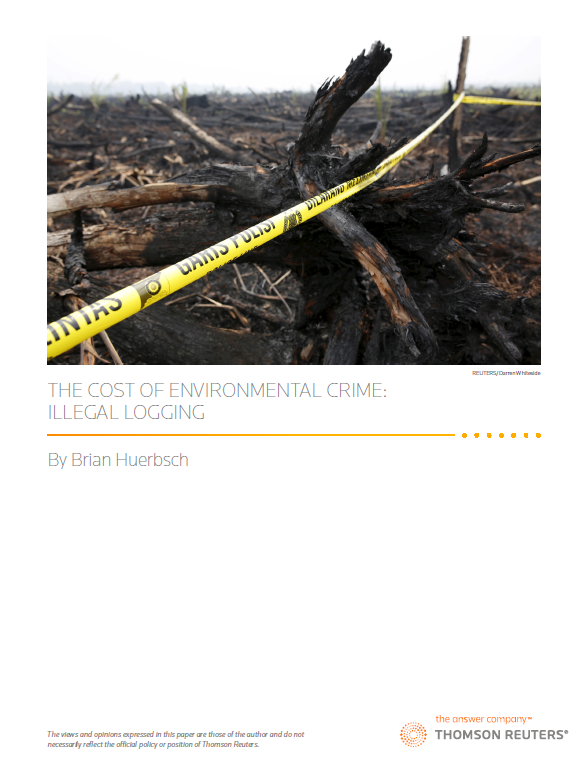
Illegal logging poses real and significant regulatory risk for international financial institutions and corporations, especially those connected, either directly or indirectly, with the global timber industry, or that operate in areas where the industry is prevalent and important to the local economy. Considering the notable increase in regulatory activity over the past decade, the amount of enforcement actions given, and the ballooning size of fines over the past several years, it is clear that illegal logging is a crime that cannot be ignored anymore. Fortunately, this risk can be mitigated properly if strong third-party risk and know your customer (KYC) processes are in place, including enhanced due diligence (EDD) and anti-money laundering (AML) protocols.

The cost of environmental crime: Illegal Logging - Thomson Reuters, 2016 DOWNLOAD

post

page

attachment

revision

nav_menu_item

custom_css

customize_changeset

oembed_cache

user_request

wp_block

wp_template

wp_template_part

wp_global_styles

wp_navigation

wp_font_family

wp_font_face

acf-taxonomy

acf-post-type

acf-field-group

acf-field

ai1ec_event

exactmetrics_note

Investor Toolkit On Human Rights
COVID-19 resourcesPublications

Among countless severe consequences, the current international COVID-19 emergency has created a global financial crisis of a scale rarely encountered in modern history. Systemic economic and social inequalities across societies are being laid bare a...Read More

Forced Labour in the Global Economy
Publications

Edited by Genevieve LeBaron and Neil Howard. This is the second volume of the series Beyond Trafficking and Slavery Short Course. There is a growing and sober awareness among international policymakers and within global civil society that hum...Read More

Lessons from the Survivor Inclusion Initiative (SII) in the UK, US, and Canada
GuidanceGood PracticesPublications

To find out more about how the SII has been experienced, the Expert Review gathered information from two surveys and 10 interviews with key stakeholders. There were 14 SSO (all US-based) and 10 FI survey respondents (seven US, two Canada, and on...Read More

Current and emerging forms of slavery
Publications

Annual Report of the Special Rapporteur on contemporary forms of slavery, including its causes and consequences Each year the Special Rapporteur on contemporary forms of slavery, its causes and consequences is requested by the Human Rights Counci...Read More