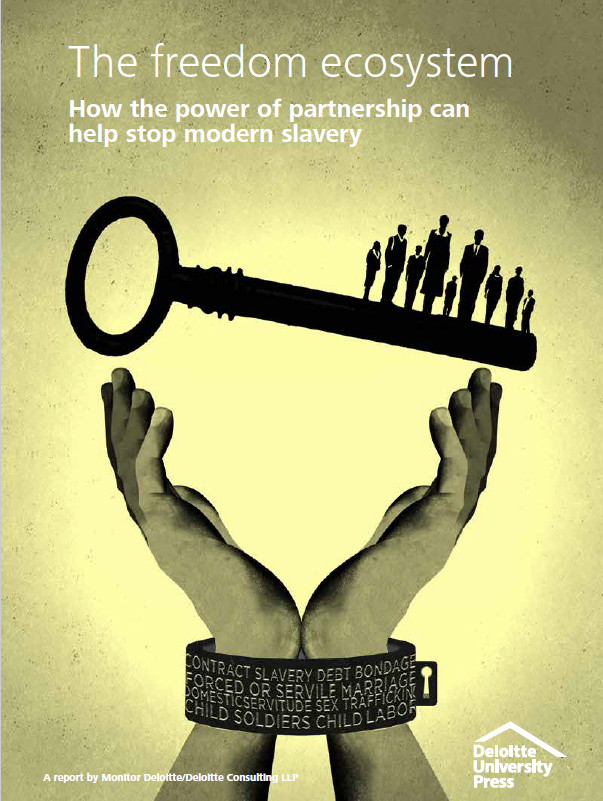
While the problem of modern slavery is a persistent and hidden crime, those working to end it are crippled by three significant challenges: prevailing gaps in collecting and sharing data, limited resources to address slavery, and a challenging policy environment.

The freedom ecosystem comprises a dynamic and diverse network of actors, with the shared goal of removing the conditions that allow slavery to persist and empowering slavery’s victims and survivors to own their personal path to freedom. Anti-slavery allies from the private, public, and nonprofit sectors converge to advance freedom in the face of predators and accomplices who engage in the illicit networks that allow slavery to persist.

It will likely take the entire freedom ecosystem—businesses, governments, NGOs, academia, multilateral organizations, private investors, civil-society groups, and consumers—working together to abolish practices that challenge the best intentions to promote a freer world.

post

page

attachment

revision

nav_menu_item

custom_css

customize_changeset

oembed_cache

user_request

wp_block

wp_template

wp_template_part

wp_global_styles

wp_navigation

wp_font_family

wp_font_face

acf-taxonomy

acf-post-type

acf-field-group

acf-field

ai1ec_event

exactmetrics_note

Understanding and Responding to Modern Slavery within the Homelessness Sector
GuidancePublications

Homelessness organisations and anti-slavery organisations have both been aware of links between modern slavery and homelessness, yet there has been little research into how these issues overlap and impact on one another. An initial scoping exercise ...Read More

What Works: Lessons in the Use of Cash Transfers
Publications

Cash transfers are used as a tool to empower and protect vulnerable individuals, households, and other groups from shocks and to mitigate vulnerabilities, such as low and variable income. These transfers can also be used to encourage positive change...Read More

Impact of the CARE Tipping Point Program in Nepal on adolescent girls’ agency and risk of child, early, or forced marriage: Results from a cluster-randomized controlled trial
Publications

ackground: Girl child, early, and forced marriage (CEFM) persists in South Asia, with long-term effects on well- being. CARE’s Tipping Point Initiative (TPI) sought to address the gender norms and inequalities underlying CEFM by engaging part...Read More

TAGS:
Discouraging the demand that fosters trafficking for the purpose of sexual exploitation
Publications

This Occasional Paper highlights the importance of addressing the demand that fosters trafficking for sexual exploitation, in particular the exploitation of the prostitution of others. In doing so, it puts a spotlight on the role of demand in encour...Read More