
Human Trafficking 101
The slideshow below is a basic overview of human trafficking. We welcome the public to use it for educational purposes.
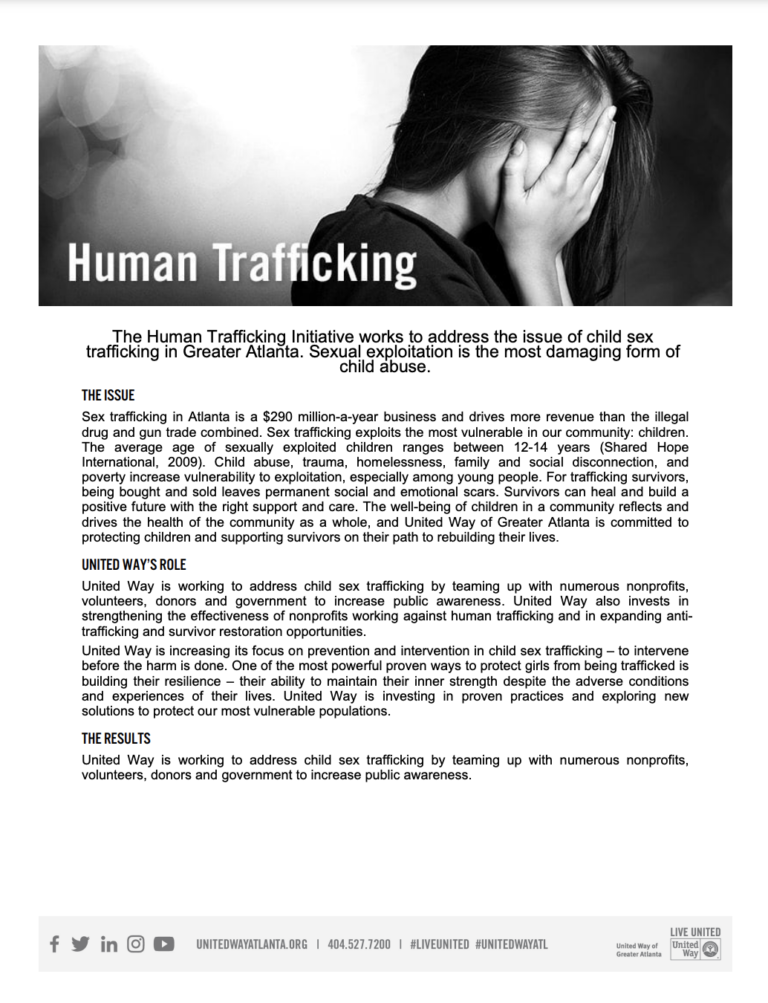
The Human Trafficking Initiative works to address the issue of child sex trafficking in Greater Atlanta. Sexual exploitation is the most damaging form of child abuse.
The slideshow below is a basic overview of human trafficking. We welcome the public to use it for educational purposes.
On 24–25 March 2021, the UNODC Civil Society Unit (CSU) and the Human Trafficking and Migrant Smuggling Section (HTMSS) with support from the Regional Office for Southeast Asia and the Pacific (ROSEAP) in Bangkok and the Regional office for South ...Read More
This briefing forms part of a broader five session series ofwebinars standing to tackle contemporary issues impactingmodern slavery in supply chains, calling for candid discussionand pragmatic solutions. ...Read More
This report was prepared by Dr. Lisa Rende Taylor and Ohnmar Ei Ei Chaw, Issara Institute. Issara Institute programming in Myanmar and Thailand over the past year has focused on driving more ethical recruitment systems, down to the ‘first mileâ...Read More
The data in this report represents signals and cases from January 1, 2019 through December 31, 2019 and is accurate as of July 30, 2020. Cases of trafficking may be ongoing or new information may revealed to the National Hotline over time. Consequen...Read More


2025 © Copyright, RESPECT International. All Rights Reserved. Website Disclaimer | Privacy Policy