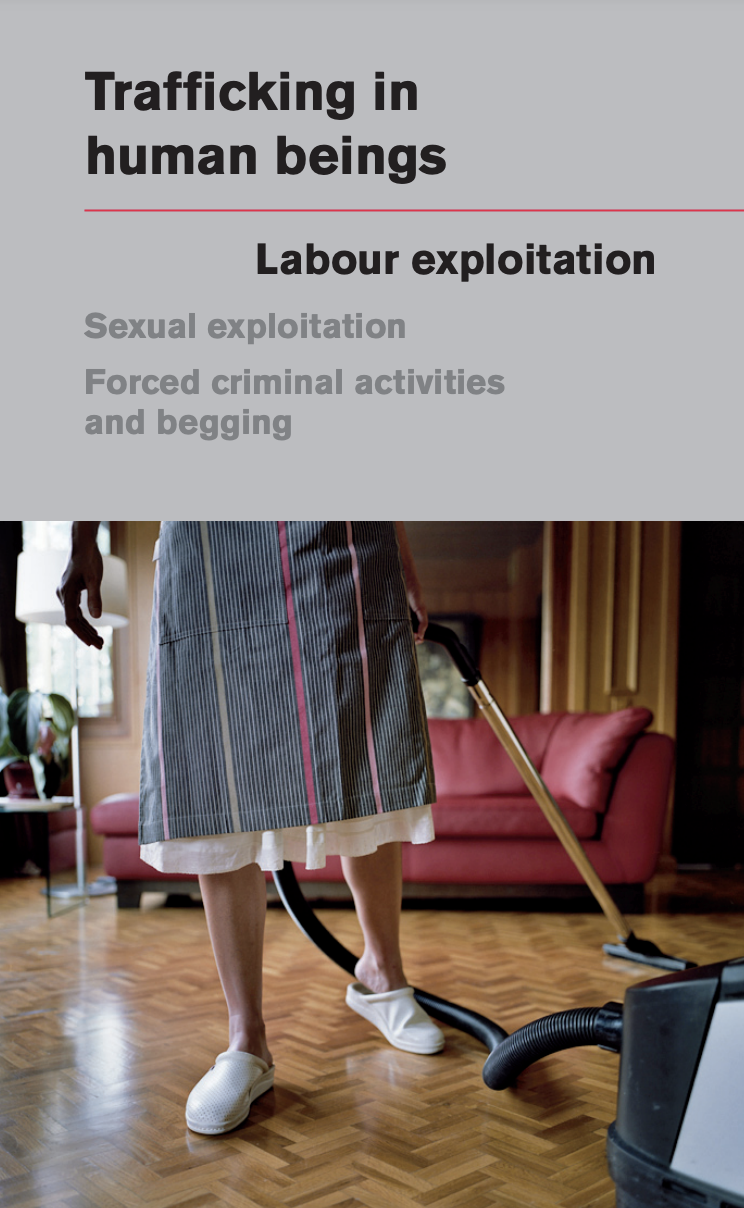
Trafficking in human beings is defined as a situation whereby a person’s predicament is used to trap them in an exploitative situation. This can take various forms and occurs in different areas:

• Labour exploitation

• Sexual exploitation

• Exploitation in marriage

• Forced begging

• Forced criminal activities

• Forced removal of organs

Trafficking in human beings constitutes a serious human rights violation and an offence to the dignity and the integrity of the human being.

For many years, specialised counselling centres have addressed trafficking for the purpose of labour exploitation or exploitative employment relationships as part of their everyday work, alongside cases of trafficking in human beings for sexual exploitation. We are seeing an increasing number of cases in which persons are exploited by being coerced into begging or criminal activities.

This brochure is part of a range of information brochures. Each one aims to take a closer look at a form of exploitation and to provide information about the counselling options and support structures available to trafficked persons in Germany. In particular they will present the services and work carried out by KOK’s members.

This brochure focuses on the phenomenon of trafficking in human beings for labour exploitation.

Trafficking in Human Beings – Labour Exploitation - German NGO Network against Trafficking in Human Beings, 2018 DOWNLOAD

post

page

attachment

revision

nav_menu_item

custom_css

customize_changeset

oembed_cache

user_request

wp_block

wp_template

wp_template_part

wp_global_styles

wp_navigation

wp_font_family

wp_font_face

acf-taxonomy

acf-post-type

acf-field-group

acf-field

ai1ec_event

exactmetrics_note

Child Labour Practical Guide
GuidancePublications

Stakeholders and individuals can take action and make a difference for children in 2021. To find out how to make an Action Pledge, share your journey, and scale up, browse this Practical Guide. Flip through this guide to find examples of 2021 Act...Read More

TAGS: Global
Mapping of Slums and identifying children engaged in worst forms of child labour living in slums and working in neighbourhood areas
Guidance

The National Child Labour Survey 2013 estimated that Bangladesh is home to 3.45 million working children, including 1.28 million engaged in hazardous labour. Low commitment from the Ministry of Labour and Employment to tackling hazardous child labou...Read More

Case Study on Improving Management of Human Rights Risk in the Extended Palm Oil Supply Chain
Guidance

In recent years, as high-profile stakeholder actions and consumer campaigns have increasingly shined an international spotlight on human rights issues in the palm oil sector, various frameworks and initiatives have emerged through which industry has...Read More

TAGS:
Business and human rights: Navigating a changing legal landscape
Guidance

Businesses are increasingly required to implement human rights due diligence process and/or to report on how they manage human rights-related issues. In our third joint briefing, the global business initiative on human rights and Clifford Chance con...Read More