
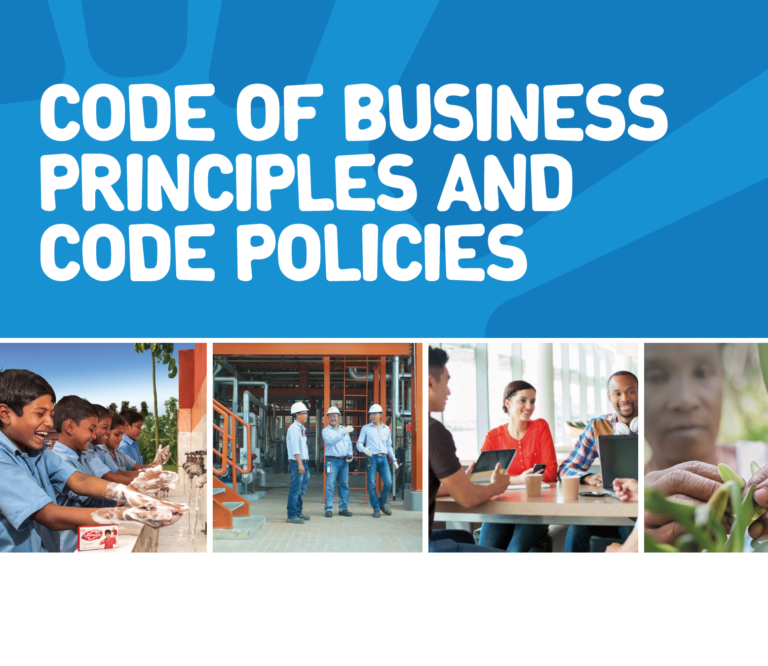
This document is an ethical statement on Unilever’s business practices, highlighting its commitment to the rule of law, diversity in employment, and dedication to consumers and community involvement.

Unilever Code of Business Principles and Code Policies- Unilever, 2016 DOWNLOAD

post

page

attachment

revision

nav_menu_item

custom_css

customize_changeset

oembed_cache

user_request

wp_block

wp_template

wp_template_part

wp_global_styles

wp_navigation

wp_font_family

wp_font_face

acf-taxonomy

acf-post-type

acf-field-group

acf-field

ai1ec_event

exactmetrics_note

Global Guidelines on the Prevention of Forced Labour Through Lifelong Learning and Skills Development Approaches
GuidanceStandards & Codes of Conduct

Quality education and training lays the foundation for the economic and social development not only of individuals but of society as a whole. Yet, many lack opportunities to acquire relevant knowledge and skills that would allow them to earn a decen...Read More

Effectiveness of Public Procurement Measures in addressing Modern Slavery
News & AnalysisStandards & Codes of ConductLegislation

This Modern Slavery PEC Policy Brief is the third in a series of Policy Briefs that assess the evidence base on the effectiveness of different regulatory interventions to address modern slavery in global supply chains, a key research priority for th...Read More

TAGS:
Responsible Business Conduct in Times of War: Implications For Essential Goods and Services Providers in Ukraine
News & AnalysisGuidanceStandards & Codes of Conduct

Access to essential goods and services during war is critical. In many cases, people’s lives depend on it. The subject introduces many complex questions. What goods and services are essential in the war? Is it the exclusive responsibility of the s...Read More

TAGS: Europe
Corporate Human Rights Benchmark 2022: Insights Report
News & AnalysisGuidanceStandards & Codes of Conduct

The Corporate Human Rights Benchmark (CHRB) assessed three sectors in 2022: food and agricultural products (57 companies), ICT manufacturing (43 companies) and automotive manufacturing (29 companies). The revised CHRB methodology devotes more at...Read More

TAGS: Global