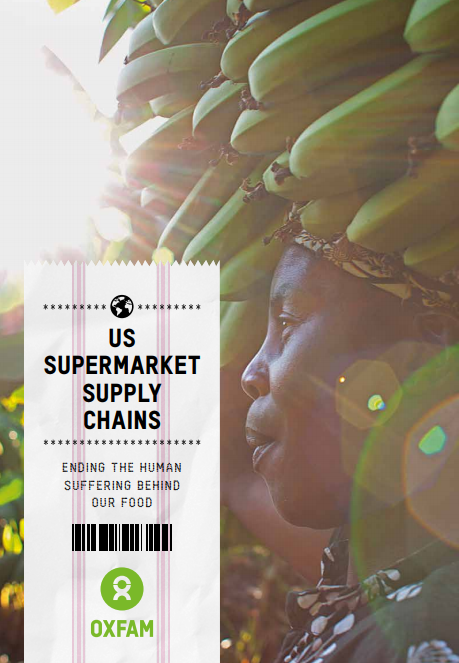
Inequality is rampant across the global economy, and the agro-food sector is no exception. At the top, big supermarkets and other corporate food giants dominate global food markets, allowing them to squeeze value from vast supply chains that span the globe, while at the bottom the bargaining power of small-scale farmers and workers has been steadily eroded in many of the countries from which US supermarkets and others from around the world source. The result is widespread human suffering among the women and men producing our food.

This reports put key findings of the global campaign report Ripe for Change: Ending human suffering in supermarket supply chains in a US context.

US Supermarket Supply Chains: End the Human Suffering Behind our Food - Oxfam America, 2018 DOWNLOAD

post

page

attachment

revision

nav_menu_item

custom_css

customize_changeset

oembed_cache

user_request

wp_block

wp_template

wp_template_part

wp_global_styles

wp_navigation

wp_font_family

wp_font_face

acf-taxonomy

acf-post-type

acf-field-group

acf-field

ai1ec_event

exactmetrics_note

Human Trafficking 101
Publications

The slideshow below is a basic overview of human trafficking. We welcome the public to use it for educational purposes.

Leaning In: Advancing the Role of Finance Against Modern Slavery
Publications

This report on modern slavery and financial institutions by the Royal United Services Institute for Defence and Security Studies and the Freedom Fund considers the role that the financial sector can play in reducing human trafficking and modern slave...Read More

2017 Findings on the Worst Forms of Child Labor
Publications

The Findings on the Worst Forms of Child Labor, mandated by the Trade and Development Act of 2000, is the most comprehensive research product on the state of child labour worldwide. This year, the report uses more stringent criteria to assess the eff...Read More

TAGS: Global
The Corporate Social Responsibility Mirage
Publications

An article by Garrett Brown MPH, CIH Corporate social responsibility (CSR) programs began in the early 1990s with the promise of eliminating dangerous and illegal “sweatshops” in the global supply chains of world-renown corporations selling ...Read More