
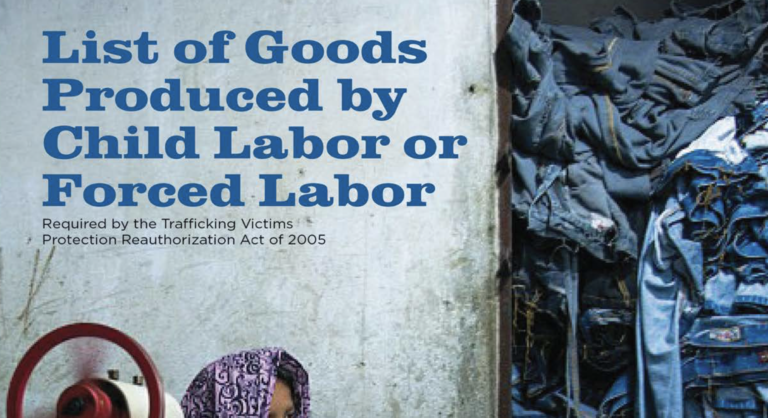
This is the seventh edition of the List of Goods Produced by Child Labor or Forced Labor, mandated by the Trafficking Victims Protection Reauthorization Act (TVPRA) of 2005 (TVPRA List). The list has a total of 139 goods produced by child labour and/or forced labour in violation of international standards in 75 countries around the world.

2016 List of Goods Produced by Child Labor or Forced Labor - U.S. Department of Labour DOWNLOAD

post

page

attachment

revision

nav_menu_item

custom_css

customize_changeset

oembed_cache

user_request

wp_block

wp_template

wp_template_part

wp_global_styles

wp_navigation

wp_font_family

wp_font_face

acf-taxonomy

acf-post-type

acf-field-group

acf-field

ai1ec_event

exactmetrics_note

People for Profit: North Korean Forced Labour on a Global Scale
Publications

The practice of sending large numbers of labourers abroad is a direct consequence of the situation the Democratic People’s Republic of Korea (DPRK) faces domestically and is made possible by the international networks that DPRK institutions, busin...Read More

TAGS: Asia
Agriculture and Modern Slavery Act Reporting: Poor Performance Despite High Risks
Publications

Authors: Andrew Phillips, Dr Alexander Trautrims Editor: Emily Kenway Agriculture is a high-risk sector for potential modern slavery and human trafficking. The International Labour Organisation places agriculture, alongside forestry and fishing, as...Read More

Summary paper: Sexual Exploitation of Children in Travel and Tourism
Publications

The ECPAT Summary Papers explore what we've learned over 30 years of working to protect children from sexual exploitation. The papers offer a stocktake of what has changed in the way the crimes are committed, how our understanding has developed, and...Read More

From Labour of Love to Decent Work: Protecting the Human Rights of Migrant Caregivers in Canada
Publications

This article examines Canada’s federal Live-in Caregiver Program (LCP) from the perspective of international human-rights and labour norms pertaining to the protection of migrant workers. Showing that the current legal framework of the LCP restric...Read More