
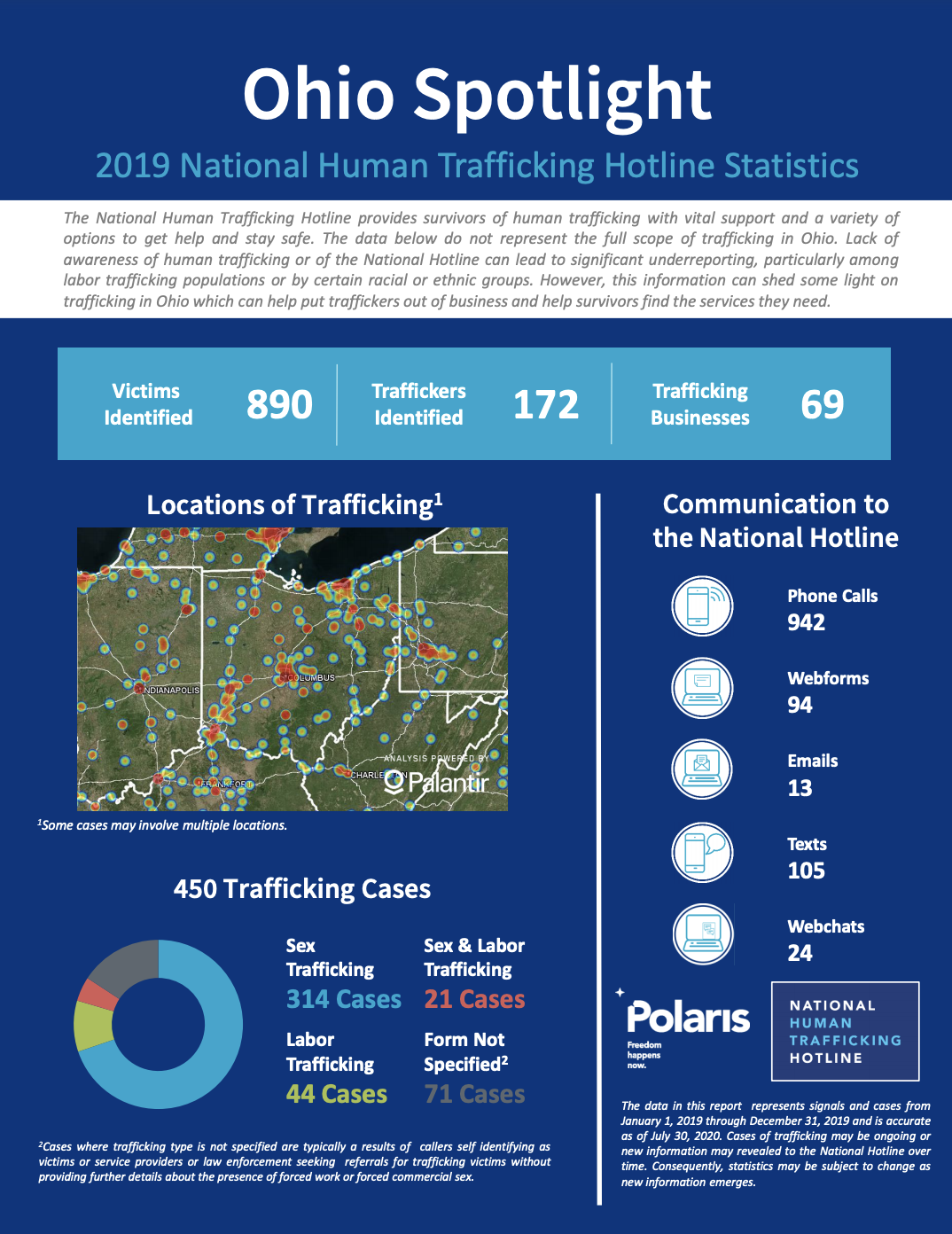
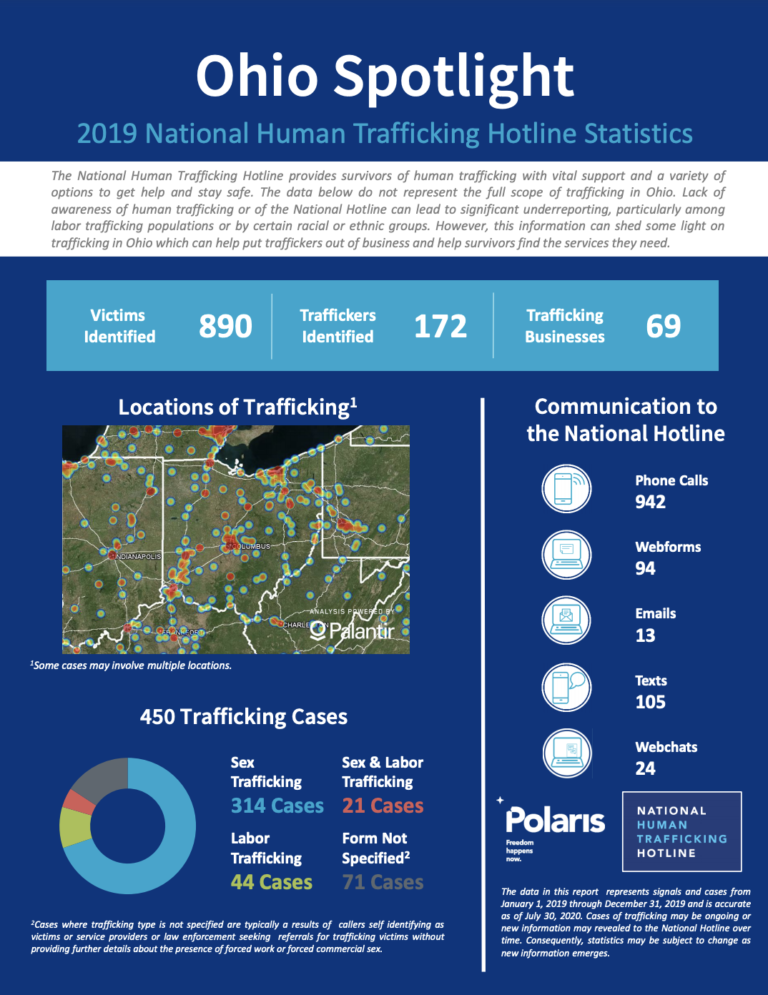
The data in this report represents signals and cases from January 1, 2019 through December 31, 2019 and is accurate as of July 30, 2020. Cases of trafficking may be ongoing or new information may revealed to the National Hotline over time. Consequently, statistics may be subject to change as new information emerges.

You can download the report infographic below.

National Hotline 2019 Ohio State Report - National Human Trafficking Hotline, 2020 DOWNLOAD

post

page

attachment

revision

nav_menu_item

custom_css

customize_changeset

oembed_cache

user_request

wp_block

wp_template

wp_template_part

wp_global_styles

wp_navigation

wp_font_family

wp_font_face

acf-taxonomy

acf-post-type

acf-field-group

acf-field

ai1ec_event

exactmetrics_note

Non-lea Overview of Live Modern Slavery Investigations (MSID) in UK Policing
Publications

This update provides a monthly overview of live police investigations being undertaken by police/ ROCUs across the UK, including PSNI and Police Scotland. This only includes those investigations that the Modern Slavery Insight Team have been made aw...Read More

TAGS:
Trafficking in Persons Report 2023
Publications

Based on the theme of partnership, this year’s report examines the ways in which governments and other stakeholders have collaborated to advance anti-trafficking priorities and goals, and emphasizes the importance of including a breadth of groups ...Read More

TAGS: Global
Pervasive, punitive, and predetermined: Understanding modern slavery in North Korea
Publications

By Remco E. Breuker & Imke van Gardingen It has long been known, though difficult to verify, that citizens of North Korea are forced to work by the State on a far greater scale than seen elsewhere in the world. Recent estimates reveal that 1 in ...Read More

TAGS: Asia
Fishing For Data
Publications

Marine fisheries are critical resources for coastal developing countries. They are also difficult to manage sustainably. Almost a third of global fish stocks are degraded from overfishing, and a further 60% are ‘fully exploited’ (FAO, 2016). Ille...Read More