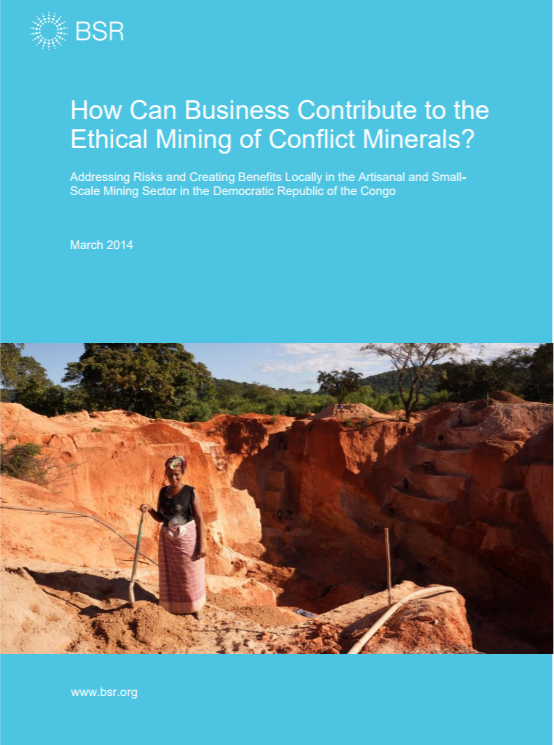
Tremendous strides have been made in recent years to raise awareness of the ethical and sustainability concerns in sourcing so-called conflict minerals (tin, tantalum, tungsten, or gold [3TG]) from the Democratic Republic of the Congo (DRC) and the African Great Lakes region. These minerals’ extraction and trade may illegally finance armed groups, conflict, and related atrocities in the region. This working paper reviews the key opportunities and challenges facing the ASM production of 3TG. It takes a new approach to current business risks related to sourcing conflict minerals from the DRC by looking beyond the practices of supply chain traceability to highlight the ways in which global businesses could begin to address and mitigate risks at the root level.

How Can Businesses Contribute to the Ethical Mining of Conflict Minerals? Addressing Risks and Creating Benefits Locally in the Artisanal and Small-Scale Mining Sector in the Democratic Republic of the Congo DOWNLOAD

post

page

attachment

revision

nav_menu_item

custom_css

customize_changeset

oembed_cache

user_request

wp_block

wp_template

wp_template_part

wp_global_styles

wp_navigation

wp_font_family

wp_font_face

acf-taxonomy

acf-post-type

acf-field-group

acf-field

ai1ec_event

exactmetrics_note

National Hotline 2017 Vermont State Report
Graphics & InfographicsPublications

The data in this report represents signals and cases from January 1, 2017 through December 31, 2017 and is accurate as of July 11, 2018. Cases of trafficking may be ongoing or new information may be revealed to the National Hotline over time. Conseq...Read More

Food & Beverage Benchmark Findings Report
Publications

According to the International Labour Organization (ILO), an estimated 21 million people are victims of forced labor around the world. As defined by the ILO, forced labor refers to “situations in which persons are coerced to work through the use o...Read More

Child Labour: Global estimates 2020, trends and the road forward
Publications

This report warns that global progress to end child labour has stalled for the first time in 20 years. The number of children aged 5 to 17 years in hazardous work – defined as work that is likely to harm their health, safety or morals – has rise...Read More

Survival at the Expense of the Weakest? Managing Modern Slavery Risks in Supply Chains During COVID-19
COVID-19 resourcesPublications

This paper reflects on the implications of the Coronavirus (COVID-19) pandemic on modern slavery risks in supply chains. We first reason that the global supply and demand shock resulting from COVID-19 exacerbates workers’ vulnerability to modern s...Read More

TAGS: Global