This Learning Paper Series was developed by the USAID Asia Counter Trafficking in Persons (CTIP) project with the overall aim to learn from our current and previous programming to better inform our future work. Winrock In- ternational is the implementing partner of this USAID-funded regional project. Winrock also implements six other USAID CTIP projects in nine countries: Bangladesh, Cambodia, Lao PDR, Kazakhstan, Kyrgyzstan, Nepal, Thailand, Turkmenistan, and Uzbekistan. In addition to this, Winrock is the implementing partner to an additional CTIP proj- ect in Bangladesh, generously funded by the Swiss Agency for Development and Cooperation (SDC).

Based on the wealth of experience coming from the region and the unique perspective of the regional project, USAID Asia CTIP decided to develop the Learning Paper Series to pull out crucial learnings that can be widely disseminated to funders, our teams at home office, our project staff in the field, and anyone else working in CTIP that wants to ensure the highest quality program delivery.

The papers in this series are meant to be small in scope, tackling specific areas of concern in the general program- ming models. In the future, the aim is to tackle the identified shortcomings with CTIP partners and ensure that ways of working are evidence based and impactful for survivors.

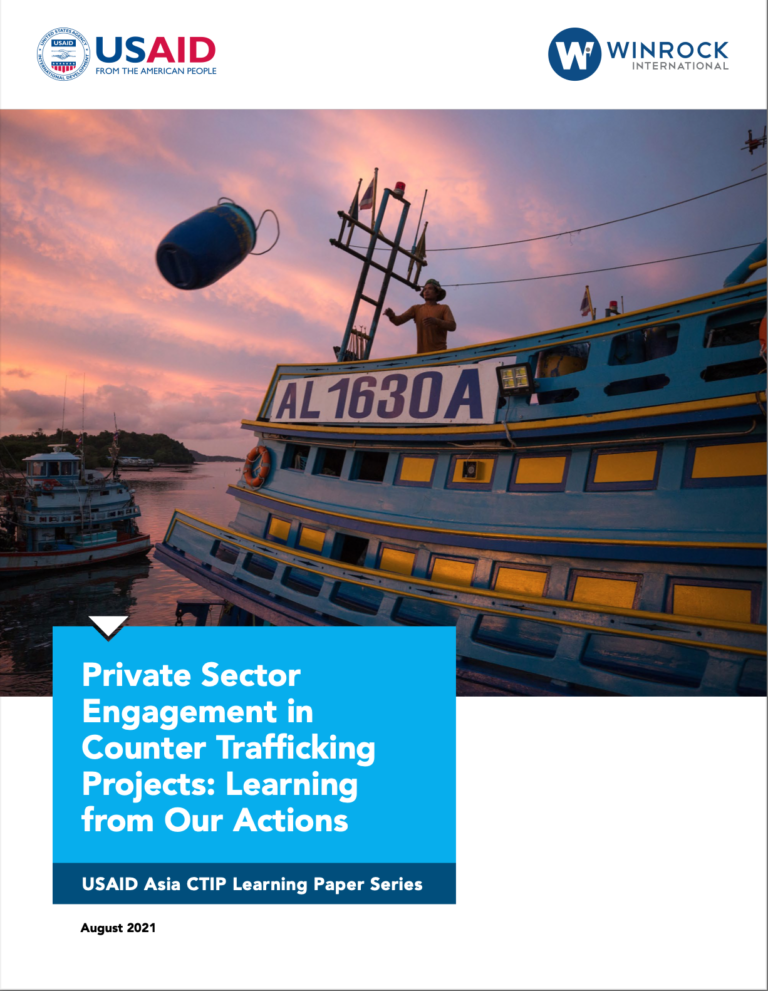
Private Sector Engagement in Counter Trafficking Projects: Learning from Our Actions - USAID and Winrock International, August 2021 DOWNLOAD

post

page

attachment

revision

nav_menu_item

custom_css

customize_changeset

oembed_cache

user_request

wp_block

wp_template

wp_template_part

wp_global_styles

wp_navigation

wp_font_family

wp_font_face

acf-taxonomy

acf-post-type

acf-field-group

acf-field

ai1ec_event

exactmetrics_note

Sustainable fisheries and human rights: Opportunities to address the true cost of Thailand’s seafood
GuidancePublications

The fishing industry in Thailand fell under global scrutiny in 2014 for the significant human rights violations at sea. Personal stories of victims who had worked for years at sea with little food and constant physical abuse created enough global at...Read More

Accountability and Remedy in Global Supply Chains: Considerations for Workers and Unions
GuidancePublications

For decades, workers, unions, students, and labour NGOs have joined together to try to hold global corporations accountable for the labour violations that have routinely taken place in their supply chains. Multi-faceted and often lengthy corporate c...Read More

TAGS: Global
Towards EU Mandatory Due Diligence Legislation
Guidance

The COVID-19 crisis has exposed once more the vulnerabilities in value chains and precarity of global business operations – and the weakness of voluntary corporate action in addressing these issues. The devastating consequences are felt most by mi...Read More

Guidance on responding to victims in forced scam labour
Guidance

In September 2022, HRC published a briefing addressing the emerging organised crime of victims systematically trafficked to scamming compounds in Southeast Asia. The briefing led to many inquiries from journalists and a subsequent growth in media co...Read More

TAGS: