
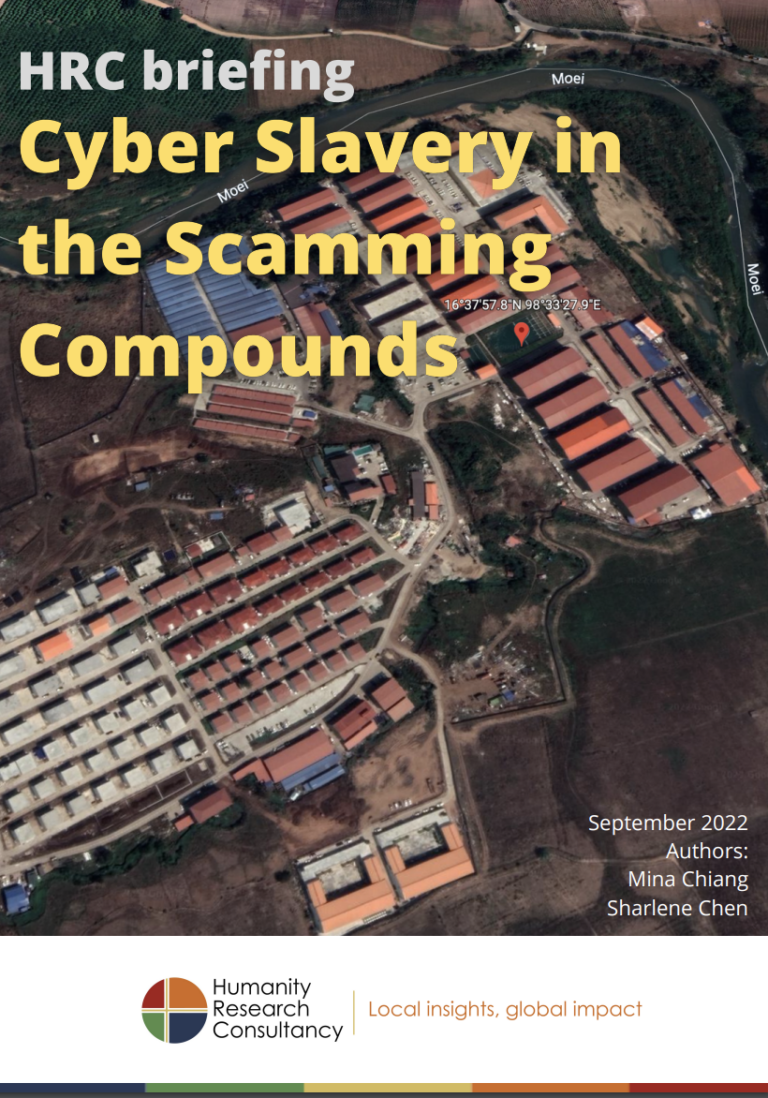
Cyber slavery is emerging as a form of organized crime of unprecedented severity and scale. Conservative estimates suggest that tens of thousands of victims are held captive in scamming compounds.

While getting spammed with fraudulent messages is now an everyday occurrence, this inconvenience may actually be rooted in a malignant new form of modern slavery.

As the scamming activities operate virtually, those running the rackets can easily shift their operations from one country to another. This makes it extremely hard to combat the crime by physically arresting the criminals (e.g. raid and rescue). We urgently need a systemic and coordinated approach from governments and NGOs.

Cyber Slavery in the Scamming Compounds - Humanity Research Consultancy, 2022 DOWNLOAD

post

page

attachment

revision

nav_menu_item

custom_css

customize_changeset

oembed_cache

user_request

wp_block

wp_template

wp_template_part

wp_global_styles

wp_navigation

wp_font_family

wp_font_face

acf-taxonomy

acf-post-type

acf-field-group

acf-field

ai1ec_event

exactmetrics_note

Hospitality, tourism, human rights and the impact of COVID-19
News & Analysis

COVID-19 engulfed the world in a matter of weeks, threatening the health and lives of millions of people worldwide and with particular early concentrations among mobile, relatively affluent communities in East Asia, Europe and North America although...Read More

Children hidden in plain sight: A report on the state of child labour in the fishing industry of Lake Volta (Ghana)
News & Analysis

Child Labour is a widespread problem in various sectors of Ghana’s economy. Especially in the fishing industry, child labour is common, and children are involved in hazardous task that are detrimental to their physical or psychological well-b...Read More

Letting exploitation off the hook? Evidencing labour abuses in UK fishing
News & Analysis

Year-on-year, the number of migrant fishers crewing United Kingdom-flagged fishing vessels is seemingly increasing. Primarily from European states, the Philippines, and Ghana with fewer numbers of fishers from Indonesia, India, and Sri Lanka, there ...Read More

Was Your Seafood Caught With Slave Labor? New Database Helps Retailers Combat Abuse
News & AnalysisOnline Tools

The NPR article highlights ongoing forced labor and human trafficking in the global seafood industry, especially in Thailand. In response, the Monterey Bay Aquarium’s Seafood Watch launched the Seafood Slavery Risk Tool to help retailers assess an...Read More