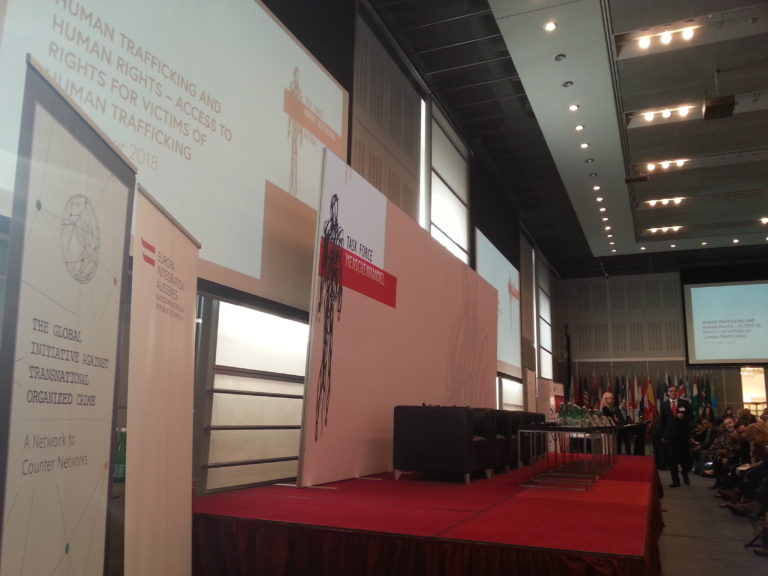
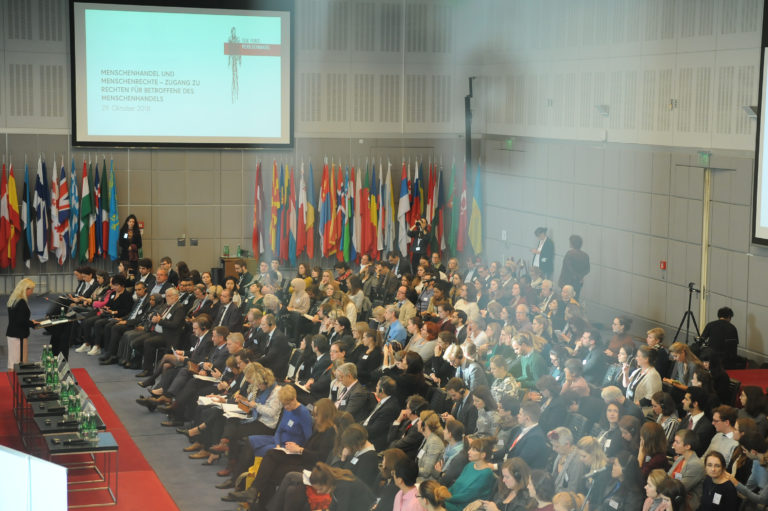
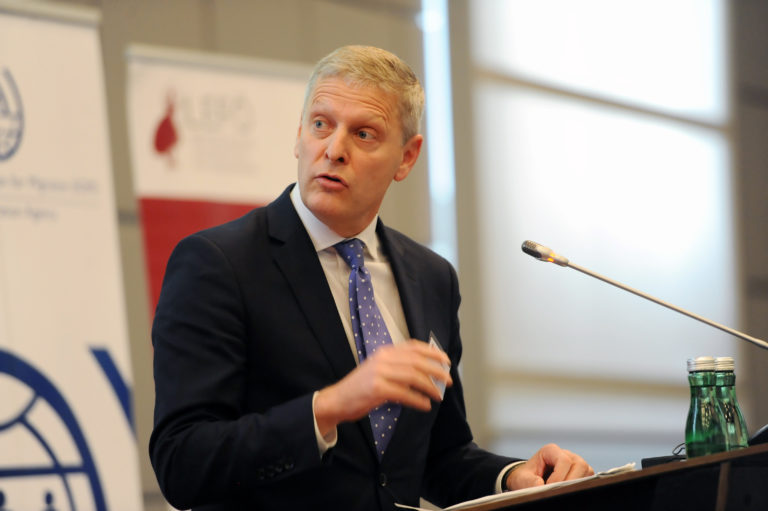
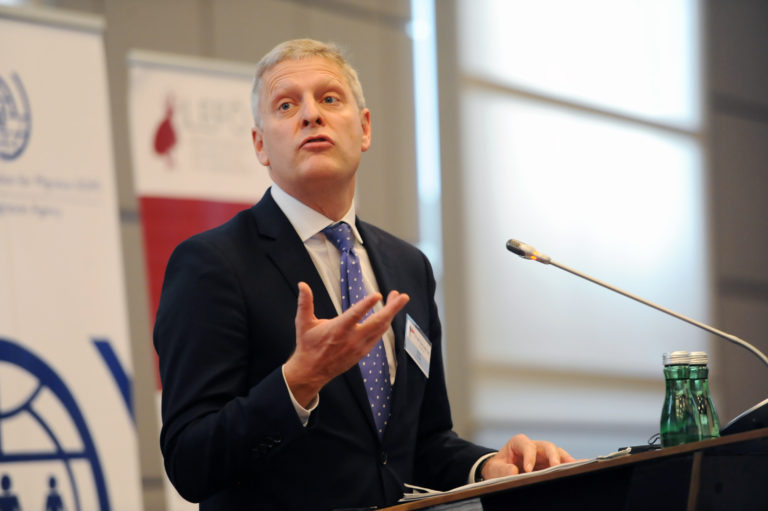
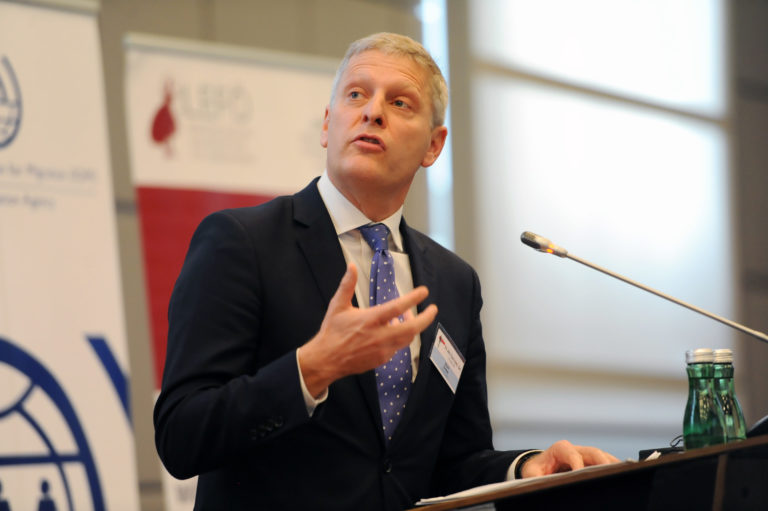
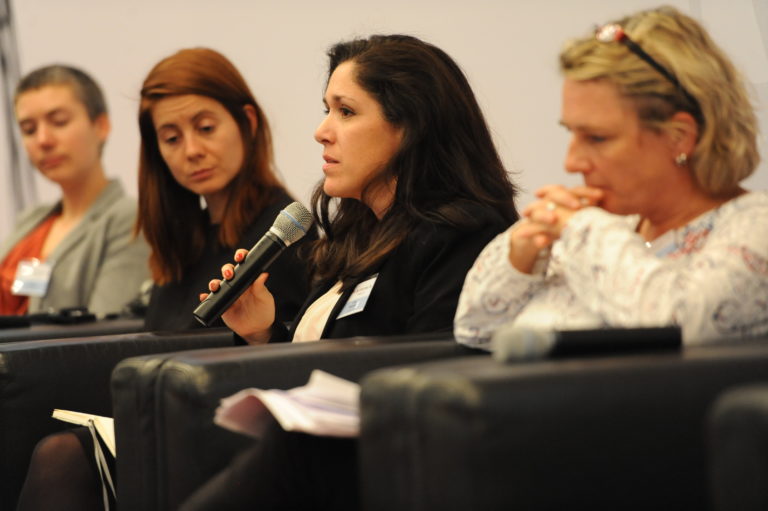
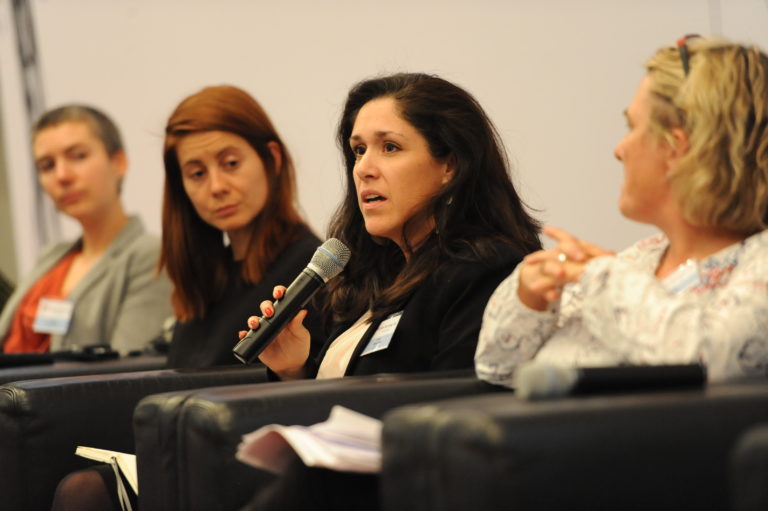
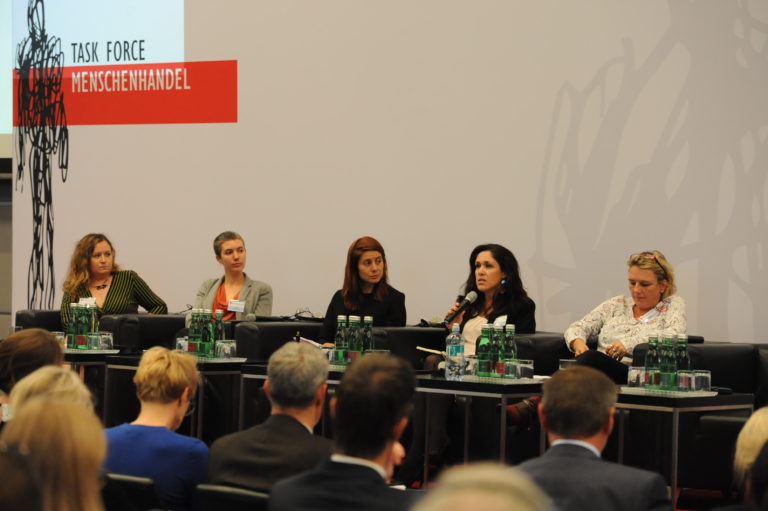
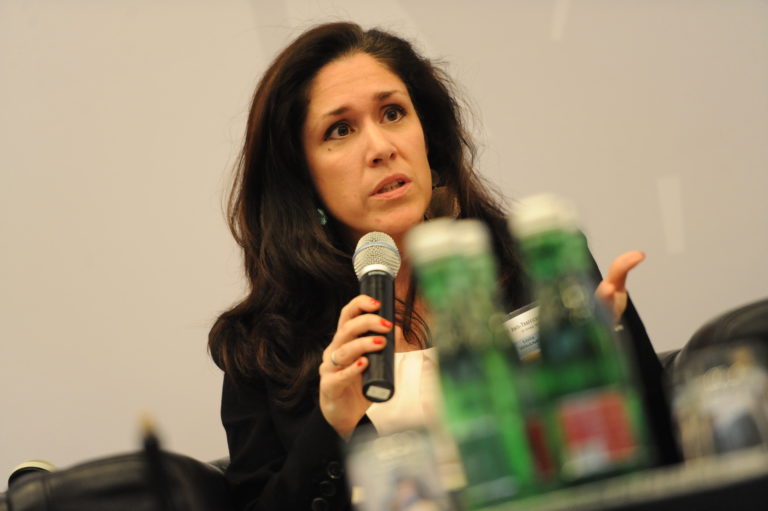
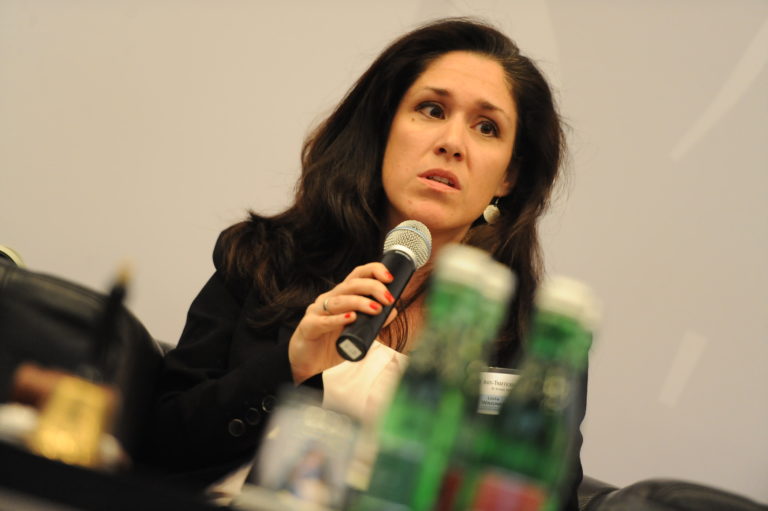
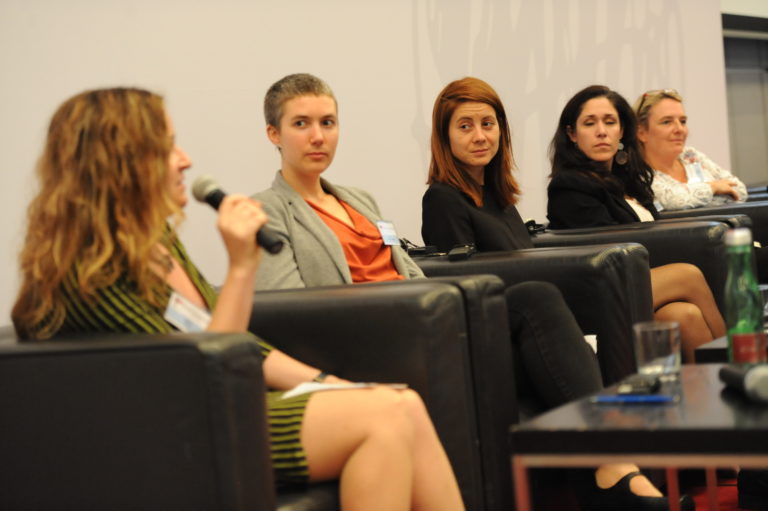
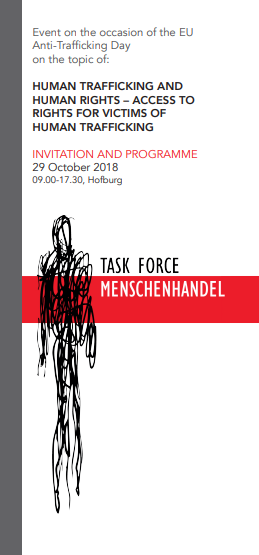
On the occasion of the EU Anti-Trafficking Day, one of the RESPECT founding organisations, the Global Initiative against Transnational Organized Crime co-organized a high-level conference on “Human Trafficking and Human Rights – Access to Rights for Victims of Human Trafficking” with the OSCE Office of the Special Representative and Co-ordinator for Combating Trafficking in Human Beings, the Austrian Task Force on Combating Human Trafficking, the Italian Chairmanship, the Vienna Institute for International Dialogue and Cooperation (VIDC), the International Organization of Migration (IOM) and the International Centre for Migration Policy Development (ICMPD).
Mark Shaw, the Global Initiative’s Director, chaired the first panel on “Access to Rights from National and International Perspectives” and Livia Wagner, our coordinator, organized the fourth workshop on “The Roles and Responsibilities of the Private Sector in the Fight against Human Trafficking“. The recordings of Panel I and concluding remarks of the workshops are available below (video credits: OSCE).
(Photos: Micky Kroell/OSCE)
EU Anti-Trafficking Day Conference Programme 2018 (German & English)DOWNLOAD
Child Labour is a widespread problem in various sectors of Ghana’s economy. Especially in the fishing industry, child labour is common, and children are involved in hazardous task that are detrimental to their physical or psychological well-b...Read More
This update provides a monthly overview of live police investigations being undertaken by police/ ROCUs across the UK, including PSNI and Police Scotland. This only includes those investigations that the Modern Slavery Insight Team have been made aw...Read More
FLEX has published a new report revealing a range of labour abuses and risk of exploitation in London’s construction sector, including workers not being paid, being physically and verbally abused, and being forced to work in dangerous conditions. T...Read More
The global economy is becoming increasingly reliant upon rare earth minerals, the ores of 17 metallic elements that are a key part of renewable energy solutions to climate change, enabling us to reduce our reliance on fossil fuels.
Two of these ...Read More