
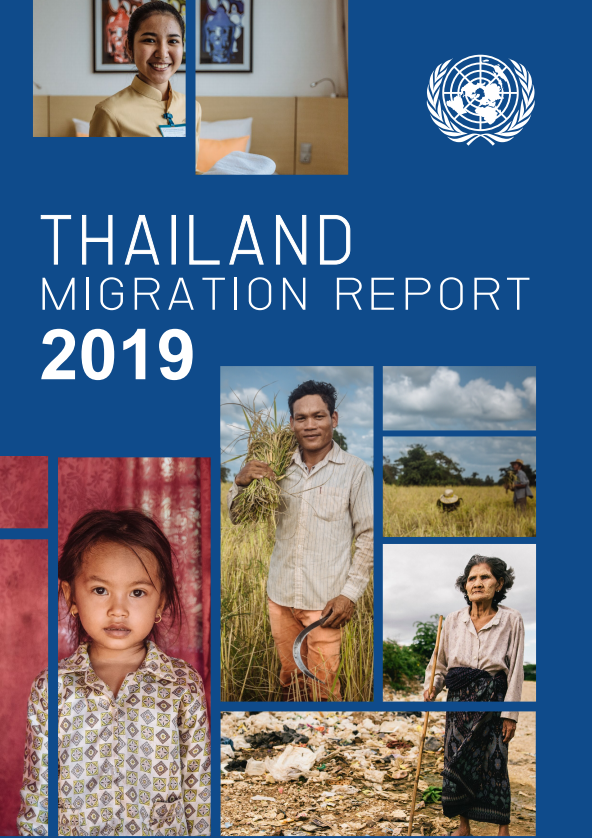
The Thailand Migration Report 2019 contains 11 chapters that delve into themes such as working conditions, access to services, remittances, human trafficking and exploitation. Each chapter, written by a specific UN agency, provides up-to-date information on migration trends and patterns in Thailand, as well as independent analysis of migration-related issues and policy developments. Recommendations for policy and programmatic changes to improve migration governance are also included.

Thailand Migration Report 2019 - IOM, 2019 DOWNLOAD
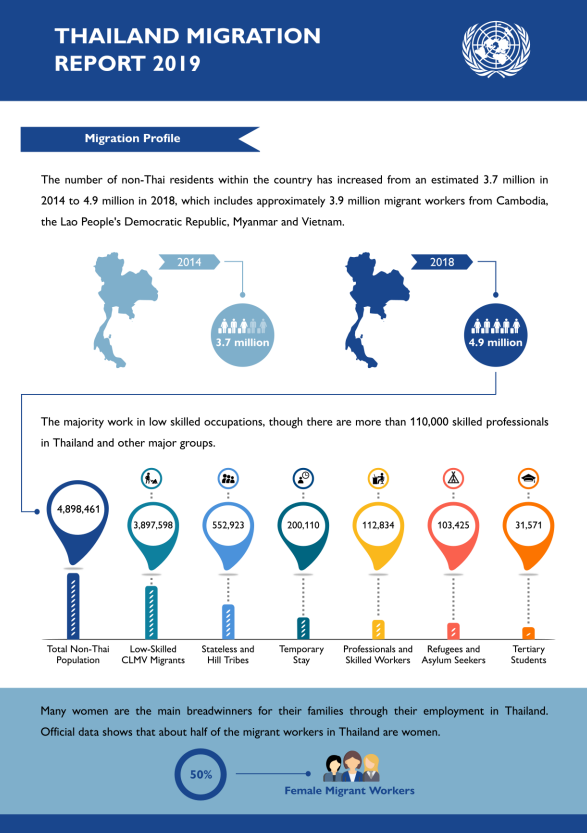
Infographics (English) - Thailand Migration Report 2019 - IOM, 2019 DOWNLOAD
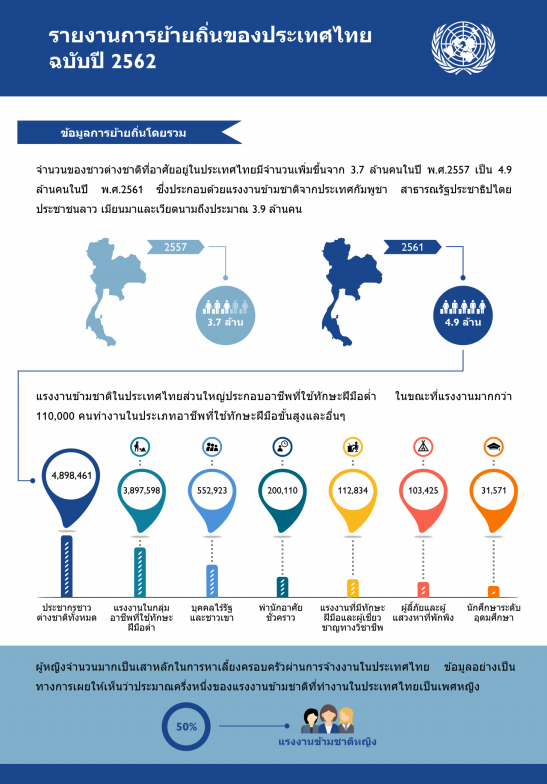
Infographics (Thai) - Thailand Migration Report 2019 - IOM, 2019 DOWNLOAD
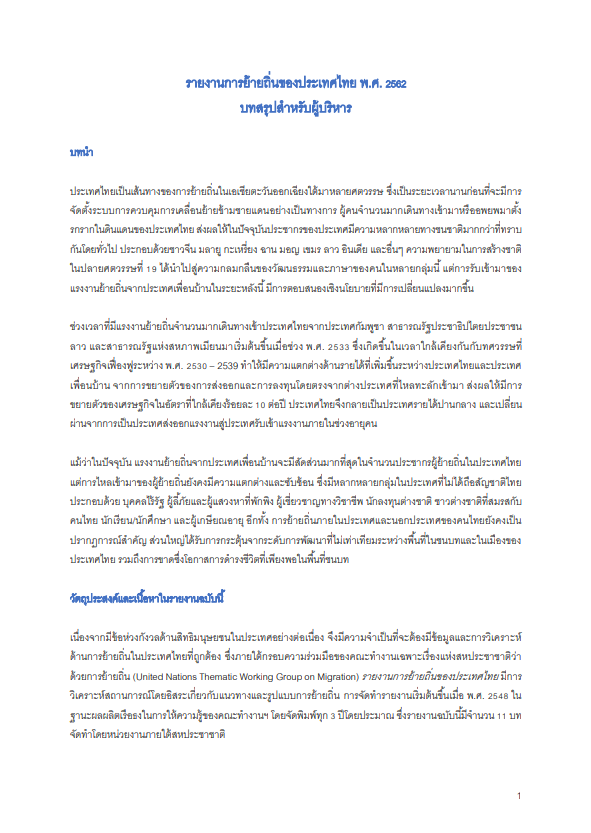
Executive Summary (Thai) - Thailand Migration Report 2019 - IOM, 2019 DOWNLOAD

post

page

attachment

revision

nav_menu_item

custom_css

customize_changeset

oembed_cache

user_request

wp_block

wp_template

wp_template_part

wp_global_styles

wp_navigation

wp_font_family

wp_font_face

acf-taxonomy

acf-post-type

acf-field-group

acf-field

ai1ec_event

exactmetrics_note

Hidden Chains: Rights Abuses and Forced Labour in Thailand’s Fishing Industry
Publications

The report by Human Rights Watch describes how migrant fishers from neighboring countries in Southeast Asia are often trafficked into fishing work, prevented from changing employers, not paid on time, and paid below the minimum wage. Migrant workers ...Read More

An Alternative Anti-Trafficking Action Plan: A Proposed Model Based on a Labor Approach to Trafficking
Publications

TraffLab’s Alternative Anti-Trafficking Action Plan (the “Alternative Plan”) provides a labor-based alternative approach to the new Israeli national plan to address human trafficking 2019-2024, published by the Ministry of Justice in January 2...Read More

The Behind the Brands: Food Companies Scorecard
Publications

The Behind the Brands Scorecard assesses the agricultural sourcing policies of the world's ten largest food and beverage companies. It exclusively focuses on publicly available informa- tion that relates to the policies of these companies on their so...Read More

Impact of the CARE Tipping Point Program in Nepal on adolescent girls’ agency and risk of child, early, or forced marriage: Results from a cluster-randomized controlled trial
Publications

ackground: Girl child, early, and forced marriage (CEFM) persists in South Asia, with long-term effects on well- being. CARE’s Tipping Point Initiative (TPI) sought to address the gender norms and inequalities underlying CEFM by engaging part...Read More

TAGS: