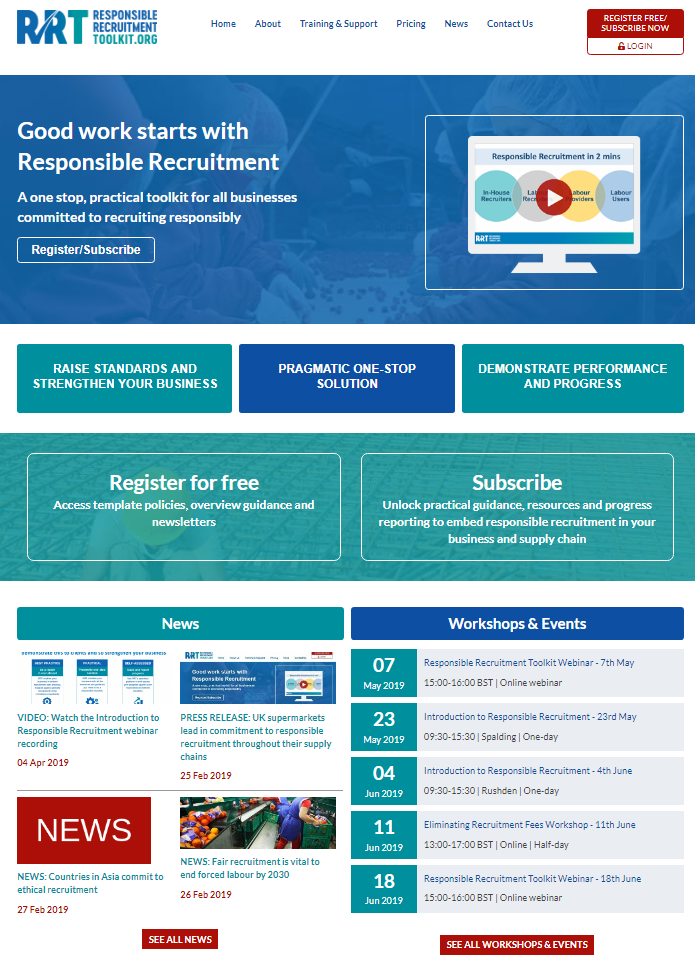
RRT is a pioneering, interactive, one-stop online toolkit that provides comprehensive and practical step by step guidance, tools and resources to support your business to embed responsible recruitment practices. The RRT platform enables each business to self-assess, track and report, internally and externally to clients, their progress made in embedding ethical and responsible management systems and business practices.
The "FREEDOM!" app is a globally available human trafficking mobile application that empowers individual victims and communities to anonymously and safely report cases of human/child sex trafficking in 10 languages at three main levels: victims, tr...Read More
Given the rapid development of initiatives aimed at helping businesses fight human trafficking, the RESPECT Initiative (comprising Babson College's Initiative on Human Trafficking and Modern Slavery, the Global Initiative Against Transnational Organi...Read More
The Slavery Research Library is a free online tool, developed by the Freedom Fund and currently collects over 480 resources on modern slavery, child slavery, child sexual exploitation, domestic servitude, forced and bonded labour and human trafficki...Read More
A growing number of global brands and retailers are adopting ethical recruitment policies stipulating, among other things, that all costs and fees related to labour recruitment are paid by the employer and not by the workers being recruited. Employe...Read More