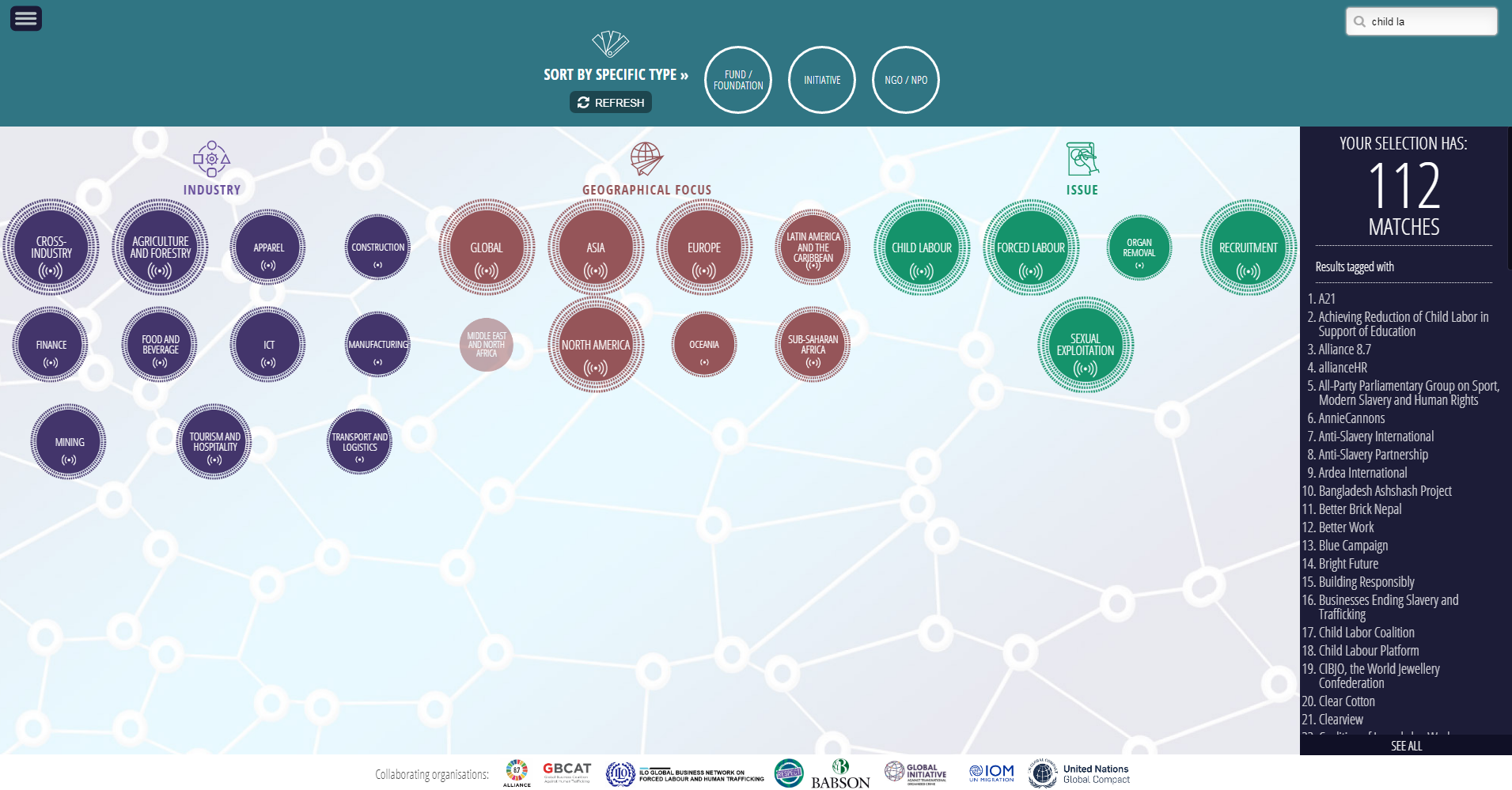
We have updated our Interactive Map for Business of Anti-Human Trafficking Organisations (www.modernslaverymap.org). The Map currently includes 112 initiatives and organisations who are working on five human-trafficking-related issues (child labour, forced labour, etc.), covering eleven industries and eight regions. Since its launch in May 2018, the Map has had 13,397 visits, among which 10,266 users visited the site at least twice.
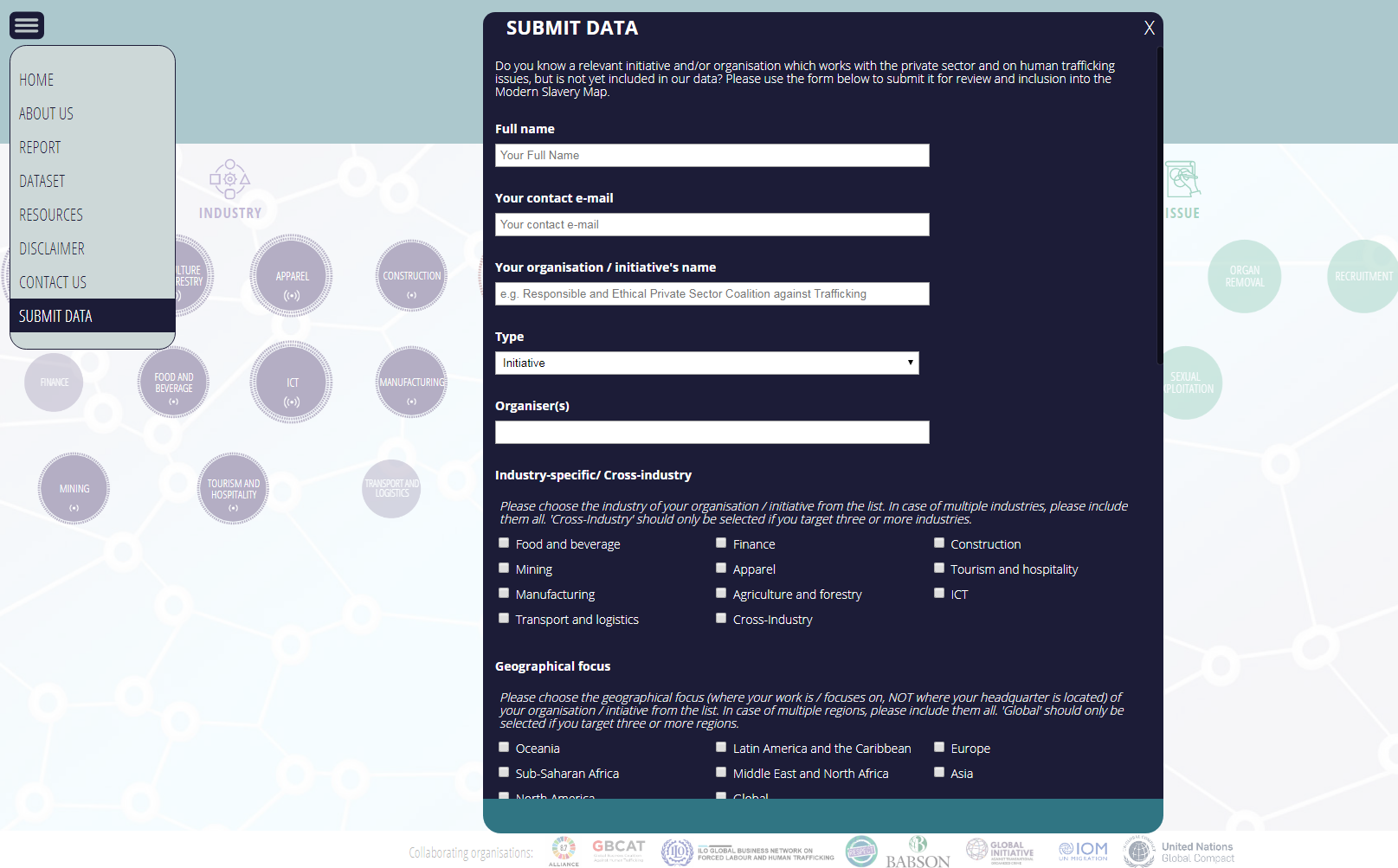
One of the new features of the Map enables users to directly submit new initiatives and organisations for review:
The Interactive Map provides brands, suppliers and stakeholders across geographies and industries with a list of organisations around the world that can help business identify, prevent and remediate human trafficking in global supply chains. Being the only one consolidated resource for business to access this critical information, the Map aims to improve coordination on the eradication of modern slavery, providing a unique baseline from which existing and newly formed initiatives can move forward.
Given the rapid development of initiatives aimed at helping businesses fight human trafficking, the RESPECT Initiative (comprising Babson College’s Initiative on Human Trafficking and Modern Slavery, the Global Initiative Against Transnational Organized Crime and the International Organization for Migration (IOM)),...
Authors: Livia Wagner, Thi Hoang
The policy brief was originally posted here on GI-TOC website, as part of its #CovidCrimeWatch initiative.
The coronavirus is not only claiming hundreds of thousands of lives, but is also causing a global econo...Read More
A UK House of Lords report is highly critical of the apathy shown by the private sector towards combating modern slavery in their supply chains.
Over 40 million people around the world are believed to work in conditions constituting modern slave...Read More
This app allows the user to take pictures of a hotel room and record the city and room number of the hotel.
This is important because much of the sex trafficking that happens in the U.S. happens in hotel rooms and many of the ads posted contain...Read More
Aangan works with children who are vulnerable to trafficking, hazardous or exploitative work, early marriage, violence and neglect. These children live in isolated rural settlements, urban unauthorized bastis, impoverished migrant communities – by...Read More