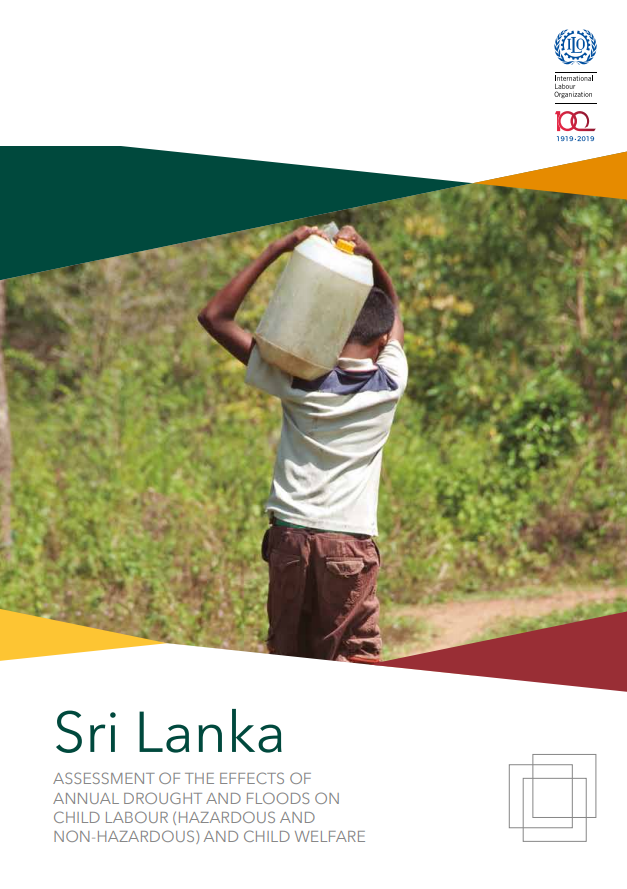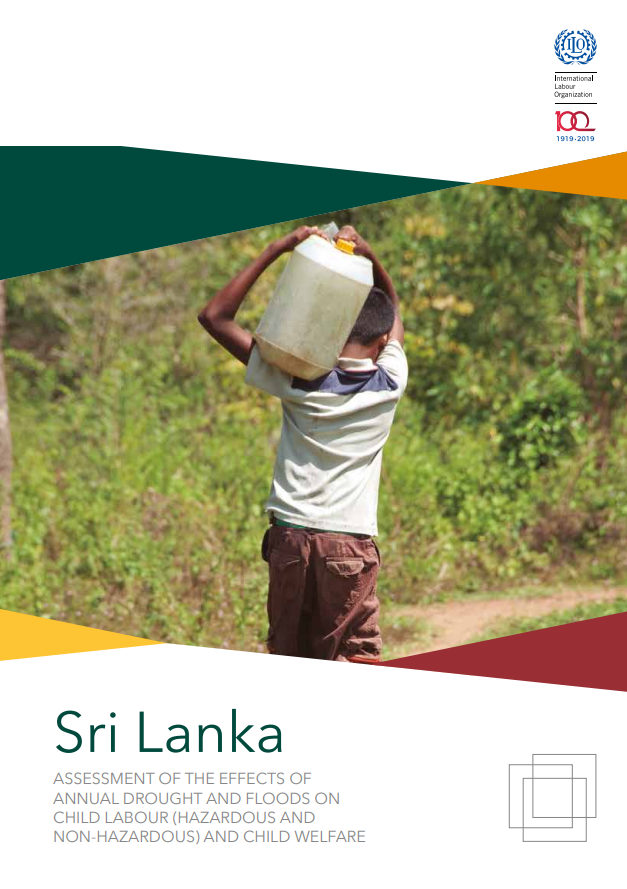
The study aims at understanding some of the disaster-related issues and location-specific, local dynamics that impact on the communities, village households, householder livelihoods and daily survival difficulties, which directly affects the well-being of their children and increase their vulnerability to child labour.

Assessment of the effects of annual drought and floods on child labour (hazardous and non-hazardous) and child welfare in Sri Lanka,International Labour Organization (ILO), 2018 DOWNLOAD

post

page

attachment

revision

nav_menu_item

custom_css

customize_changeset

oembed_cache

user_request

wp_block

wp_template

wp_template_part

wp_global_styles

wp_navigation

wp_font_family

wp_font_face

acf-taxonomy

acf-post-type

acf-field-group

acf-field

ai1ec_event

exactmetrics_note

New Study on Human Trafficking for Labour Exploitation in Peru’s Logging and Gold Mining Sectors.
News & AnalysisPublications

A new study conducted by IOM and the Catholic University of Peru sheds new light on human trafficking for labour exploitation in illegal logging and gold mining in the Madre de Dios region of the country. Peru is a country of origin, transit and de...Read More

Reflecting on the year that was: Lessons from the covid frontlines
COVID-19 resourcesPublications

Covid-19 has had a devastating impact on those most vulnerable to forced labour and human trafficking. Around the world, communities already suffering from poverty and exploitation have borne the brunt of the pandemic and its economic fallout. Th...Read More

Assessing forced labour risks in the palm oil sector in Indonesia and Malaysia
Publications

This report highlights the critical role the Consumer Goods Forum (CGF) can play in mitigating forced labour risks in the production of palm oil by leveraging its industry leadership to spur the collective action of its members. There is strong int...Read More

Tobacco’s Hidden Children: Hazardous Child Labour in United States Tobacco Farming
Publications

Methodology This report is based on interviews with 141 children ages 7 to 17 who said they had worked in tobacco farming in the United States in 2012 or 2013. During multiple field research trips between May and October 2013, Human Rights Watch ...Read More