
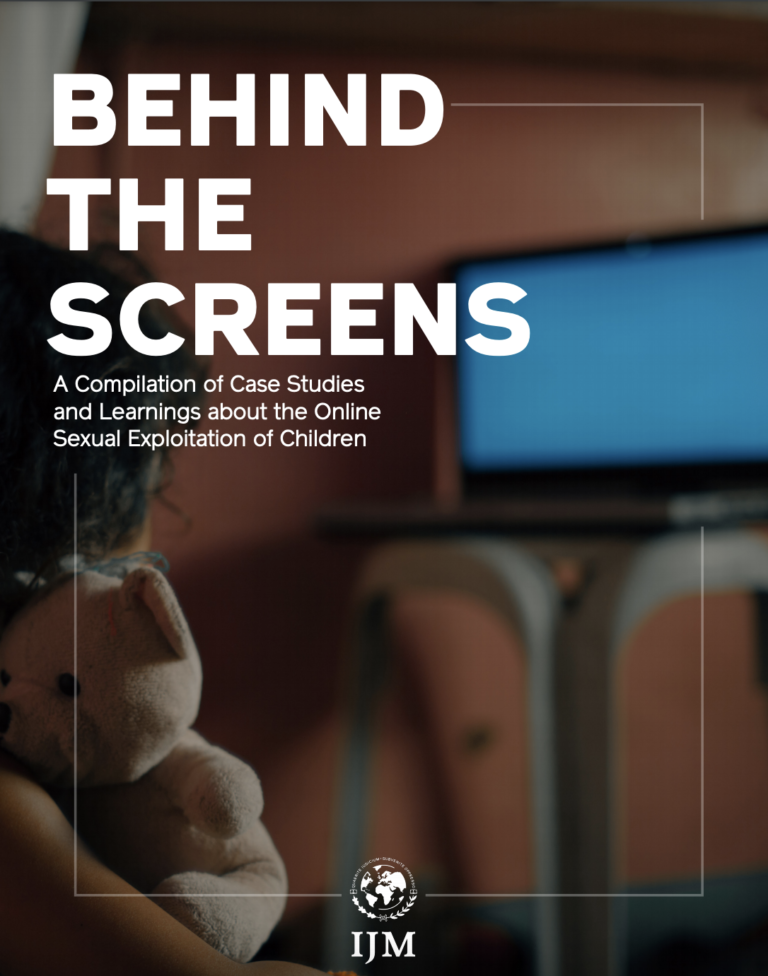
End online sexual exploitation of children. Online sexual exploitation of children (OSEC) includes a range of in-person and online harms that were unimaginable before the digital age. In fact, the trafficking of children to create new child sexual exploitation material, including through livestreaming, is a form of modern slavery growing globally. And this crime is driven and fueled by demand-side sex offenders who pay for, direct, and view the abuse online.

Behind the Screens: A Compilation of Case Studies and Learning about the Online Sexual Exploitation of Children - International Justice Mission - November, 2020 DOWNLOAD

post

page

attachment

revision

nav_menu_item

custom_css

customize_changeset

oembed_cache

user_request

wp_block

wp_template

wp_template_part

wp_global_styles

wp_navigation

wp_font_family

wp_font_face

acf-taxonomy

acf-post-type

acf-field-group

acf-field

ai1ec_event

exactmetrics_note

Protecting Asian Trafficking Victims in Europe – In Focus: Czech Republic, Poland and Romania
News & Analysis

This research project focussed on Asian trafficking victims in Europe, especially in The Czech Republic, Poland, and Romania. Increasingly, Asian migrants are recruited to work in Europe. Among them are many people from the Philippines and Vietnam. ...Read More

TAGS: Europe
Modern slavery and the Global Reporting Initiative – A bridge too far?
News & Analysis

As the Global Reporting Initiative currently provides the most widely used set of voluntary sustainability reporting standards, the question arises as to the extent to which the Initiative's multi-stakeholder governance is helping towards ending mod...Read More

TAGS: Global
Modern Slavery Bill: Strengthening Transparency in Supply Chains (TISC)
News & AnalysisGuidance

The forthcoming Modern Slavery Bill, announced in the 2022 Queen’s Speech, presents a significant opportunity for the UK Government to implement its outstanding commitments in relation to strengthening Transparency in Supply Chains (TISC) provisio...Read More

TAGS: Europe
Sustainability Reporting and Human Rights: What Can Big Data Analysis Tell Us About Corporate Respect for Human Rights?
News & Analysis

Since the adoption of the UN Guiding Principles on Business and Human Rights (UNGPs) in 2011, corporate respect for human rights has become an expected standard of conduct for businesses, discharged primarily through the process of human rights due ...Read More

TAGS: Global