
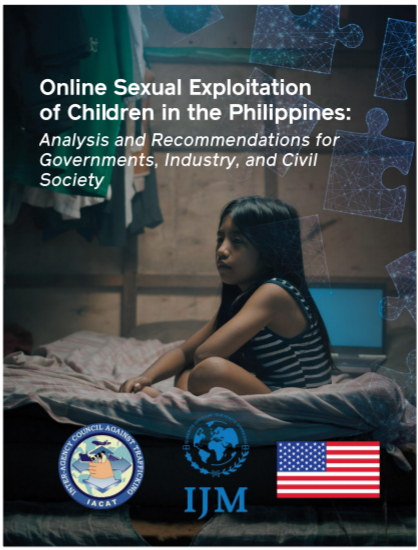
This report presents the results of a study into the nature and scale of OSEC in the Philippines. This study was led by IJM, in partnership with the Philippine Government and a variety of stakeholders, under the U.S.-Philippine Child Protection Compact (CPC) Partnership between the U.S. Department of State Office to Monitor and Combat Trafficking in Persons and the Government of the Philippines.

Online Sexual Exploitation of Children in the Philippines - International Justice Mission, 2020 DOWNLOAD

post

page

attachment

revision

nav_menu_item

custom_css

customize_changeset

oembed_cache

user_request

wp_block

wp_template

wp_template_part

wp_global_styles

wp_navigation

wp_font_family

wp_font_face

acf-taxonomy

acf-post-type

acf-field-group

acf-field

ai1ec_event

exactmetrics_note

A practical guide for SMEs on how to mitigate the risk of modern slavery in their operations.
GuidancePublications

This toolkit, jointly developed by STOP THE TRAFFIK and Shiva Foundation, seeks to provide practical guidance for small and medium-sized enterprises (SMEs) on how they can prevent modern slavery in their business operations. We recognise that many u...Read More

TAGS: Europe
Special and Additional Measures for Child Trafficking Victims: A Practitioner Guide
Guidance

This Practitioner Guide presents existing research and evidence on the needs and experiences of child trafficking victims, including challenges faced and the special and additional measures needed to assist and protect them. It is part of the NEXUS/...Read More

Organising precarious workers in the Global South
Guidance

The workers of the world face numerous challenges. Many debates around the future of labour, such as the rise of the so called ‘gig economy’, tend to focus on experiences and trends within the Global North. The shortcomings of the present are of...Read More

Measuring the ‘S’ in ESG related to Modern Slavery
Guidance

Globally, it is estimated that there are over 40 million men, women and children in modern slavery today. Two thirds of these victims are in Asia. These victims, who can be found in factories, construction sites, fisheries and sex venues, are forced...Read More

TAGS: Global