
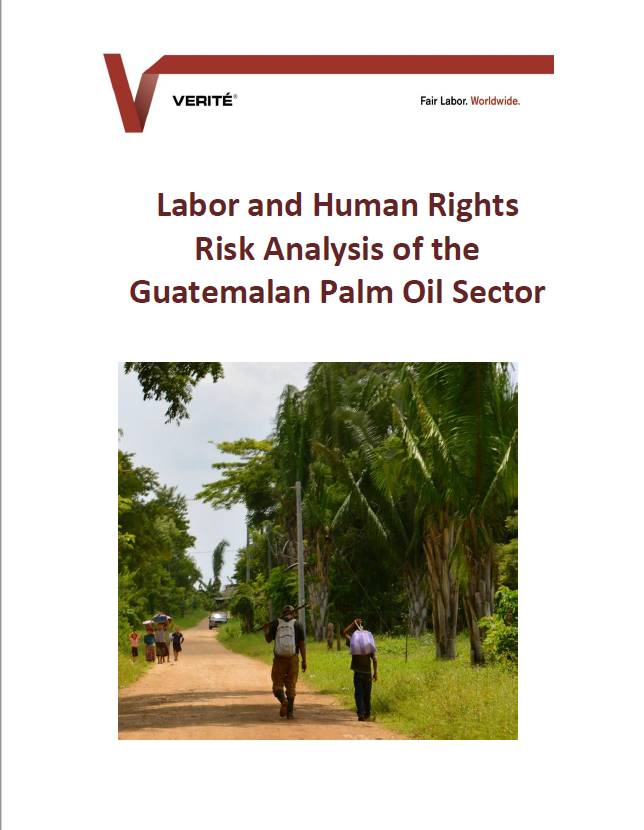
This report provides information on labour and human rights risks linked to palm oil production in Guatemala. These risks include land grabs and displacement, unethical recruitment and hiring practices, indicators of forced labour, wage and hour violations, child labour, violations of women’s rights, unacceptable living conditions, a lack of grievance mechanisms, and environmental damage. This report also includes recommendations for the Guatemalan government and palm oil producers and buyers on steps that they can take to reduce these risks.

Labor and Human Rights. Risk Analysis of the Guatemalan Palm Oil Sector - Verité, 2013 DOWNLOAD

post

page

attachment

revision

nav_menu_item

custom_css

customize_changeset

oembed_cache

user_request

wp_block

wp_template

wp_template_part

wp_global_styles

wp_navigation

wp_font_family

wp_font_face

acf-taxonomy

acf-post-type

acf-field-group

acf-field

ai1ec_event

exactmetrics_note

Beyond Compliance in the Hotel Sector: A Review of UK Modern Slavery Act Statements
Publications

There is a highrisk of exploitation within the hotel sector due to its vulnerable workforce, complex supply chains with little transparency, and limited oversight from brands and multinational hotel companies as a result of extensive franchising. In...Read More

2018 Food and Beverage Benchmark Findings Report
Publications

Executive Summary The risk of forced labour is pervasive across today’s food and beverage supply chains: from tea pickers on tea estates to crew members on fishing vessels and labourers on cattle and poultry ranches, cocoa farms, and rice mills. ...Read More

Developing Freedom: The Sustainable Development Case for Ending Modern Slavery, Forced Labour and Human Trafficking
Publications

40.3 million people – around 1 in every 185 people alive – experienced modern slavery or forced labour in 2016. States have committed to take immediate and effective measures to end modern slavery, forced labour and human trafficking by 2030, an...Read More

Governing Global Supply Chain Sustainability through the Ethical Audit Regime
Publications

Over the past two decades multinational corporations have been expanding ‘ethical’ audit programs with the stated aim of reducing the risk of sourcing from suppliers with poor practices. A wave of government regulation—such as the California T...Read More