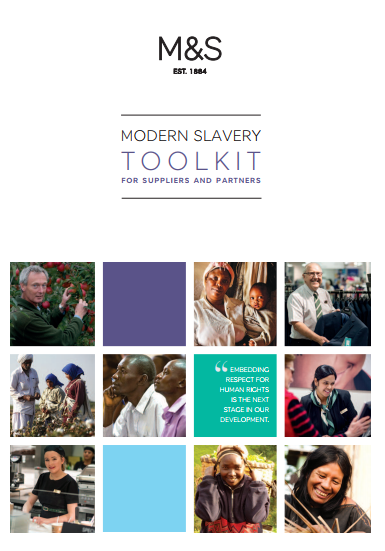
This toolkit is intended to support M&S suppliers and partners to implement a strategy for their business and their supply chains to tackle modern slavery, as well as make clear M&S’ expectations. Increasing legal requirements and expectations from consumers, customers, employees and stakeholders mean that responsible businesses need to place tackling modern slavery at the heart of their corporate social responsibility activities.

Implementing the steps outlined in the toolkit:

  • Demonstrates a commitment to tackle modern slavery
  • Determines proactive measures that can be taken in a business’s own operations and their supply chains to reduce the risk of modern slavery and manage incidences where they occur
  • Supports engagement with employees, employee representatives and suppliers and partners to protect workers and prevent exploitation.

Marks & Spencer Modern Slavery Toolkit for Supplier and Partners, 2017 DOWNLOAD

post

page

attachment

revision

nav_menu_item

custom_css

customize_changeset

oembed_cache

user_request

wp_block

wp_template

wp_template_part

wp_global_styles

wp_navigation

wp_font_family

wp_font_face

acf-taxonomy

acf-post-type

acf-field-group

acf-field

ai1ec_event

exactmetrics_note

Applying Gender-Sensitive Approaches in Combating Trafficking in Human Beings
Guidance

By ratifying the international instruments related to combating trafficking in human beings (THB) and adopting the OSCE commitments regarding the same, all of the OSCE’s 57 participating States have committed themselves to implementing gender-sens...Read More

Code of Practice Guide to tackling Modern Slavery and Human Rights Abuses
Guidance

The Welsh Government is committed to ensuring workers are treated fairly and with respect and to making Wales hostile to slavery. The Code of Practice – Ethical Employment in Supply Chains is designed to help ensure workers in public sector supply...Read More

Regulating labour recruitment to prevent human trafficking and to foster fair migration: Models, challenges and opportunities
Good Practices

This working paper presents the role of international labour standards in regulating recruitment and provides a preliminary overview of national laws, policies, regulations and enforcement mechanism which aim to prevent fraudulent recruitment practi...Read More

TAGS: Global
Repayment of Recruitment Fees to Workers: 4 Emerging Best Practices
Online ToolsGuidanceGood PracticesPublications

A growing number of global brands and retailers are adopting ethical recruitment policies stipulating, among other things, that all costs and fees related to labour recruitment are paid by the employer and not by the workers being recruited. Employe...Read More

TAGS: Asia