
Since 2018, with the first change of the federal government after 60 years of independence, Malaysia has seen notable policy shifts in labour policy. These include amendments of employment and social protection regulations, as well as the strengthening of national action plans in addressing trafficking in persons and forced labour. All of which aimed to further strengthen workers’ protection and access to justice and remedies. Despite these efforts, forced labour and trafficking in persons continue to emerge.

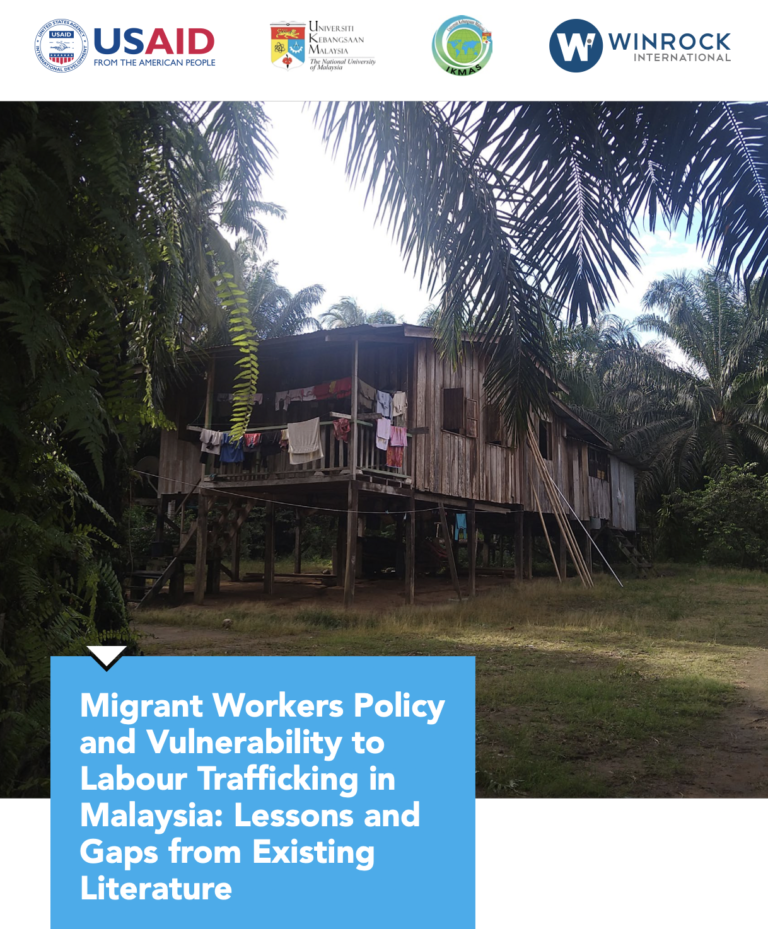
Migrant Workers Policy and Vulnerability to Labour Trafficking in Malaysia: Lessons and Gaps from Existing Literature - Winrock International, 2023 DOWNLOAD

post

page

attachment

revision

nav_menu_item

custom_css

customize_changeset

oembed_cache

user_request

wp_block

wp_template

wp_template_part

wp_global_styles

wp_navigation

wp_font_family

wp_font_face

acf-taxonomy

acf-post-type

acf-field-group

acf-field

ai1ec_event

exactmetrics_note

Abandoned? The Impact of Covid-19 on Workers and Businesses at the Bottom of Global Garment Supply Chains
COVID-19 resourcesPublications

The global Covid-19 pandemic has had a devastating impact on global garment supply chains, and the situation will get far worse before it gets better. As clothing outlets have been shut by lockdowns in developed market economies, sinking demand for ...Read More

Global Report on Trafficking in Persons 2018
Publications

The 2018 UNODC Global Report on Trafficking in Persons is the fourth of its kind mandated by the General Assembly through the 2010 United Nations Global Plan of Action to Combat Trafficking in Persons. The report, produced by UNODC every two years, s...Read More

TAGS: Global
Disposable Workers the Future of the UK’s Migrant Workforce
Publications

Government plans for two temporary migration programmes to bring workers to the UK after Brexit present significant risks of labour abuse and exploitation, including human trafficking. This briefing describes the two proposed programmes, explains th...Read More

Corporate Human Rights Benchmark – 2018 Key Findings
Publications

The 2018 Corporate Human Rights Benchmark assesses 101 of the largest publicly traded companies in the world on a set of human rights indicators. The companies from 3 industries – Agricultural Products, Apparel, and Extractives – were chosen fo...Read More